Rajasthan Cabinet clears Tree Outside Forest Policy
Synopsis
The Rajasthan State Cabinet, chaired by Chief Minister Bhajanlal Sharma, approved the Tree Outside Forest Policy on 7 August 2026, aiming to expand green cover on private, agricultural, and non-forest land across the arid state — a move aligned with India's broader agroforestry push.
Key Takeaways
The Rajasthan State Cabinet approved the Tree Outside Forest Policy on 7 August 2026 at a meeting chaired by Chief Minister Bhajanlal Sharma .
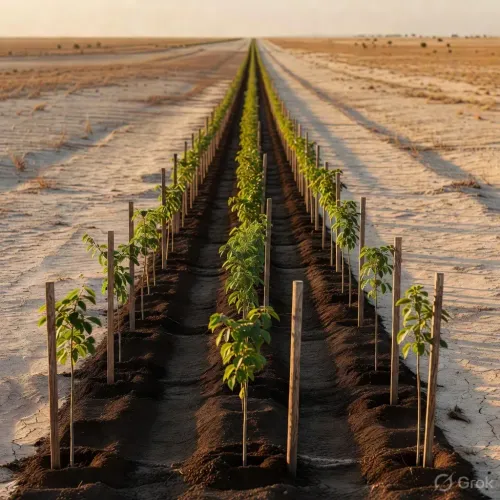
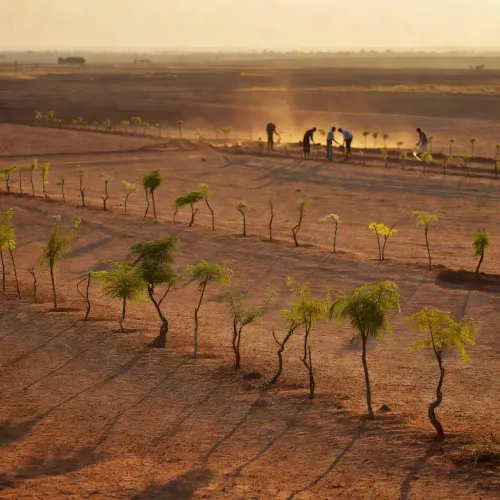
The policy targets green cover expansion on non-forest lands — including private, agricultural, and community areas — outside officially designated forest boundaries.
Rajasthan is one of India's most arid states, with historically low natural forest density, making non-forest land the primary available canvas for large-scale tree planting.
The initiative aligns with India's National Agroforestry Policy of 2014 and follows a broader national pattern of states adopting Trees Outside Forests frameworks.
Key stakeholders include farmers, rural landowners, and the state forest department ; detailed implementation guidelines, targets, and budget allocations are yet to be released.
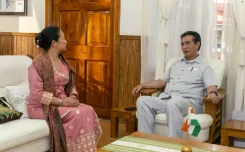
In a state where desert swallows more land than any forest ever could, Rajasthan has just made a significant bet on green. The State Cabinet of Rajasthan, chaired by Chief Minister Bhajanlal Sharma, approved the 'Tree Outside Forest Policy' at a meeting held at the Chief Minister's Office — a move designed to push green cover well beyond the boundaries of officially designated forest land.
What the Cabinet approved — and why it matters for a desert state
The policy, announced on 7 August 2026, targets non-forest land — private holdings, agricultural fields, community tracts, and roadside corridors — as the next frontier for tree cover expansion. The Chief Minister's Office posted in Hindi: 'वन क्षेत्र के बाहर, हरित क्षेत्र को और अधिक विस्तार देने के लिए' ('to further expand the green zone outside forest areas'), framing the decision as a deliberate push to green land that conventional forest policy simply cannot reach.
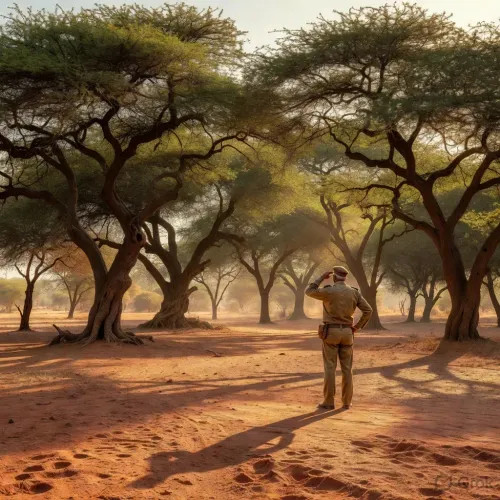
Rajasthan's challenge is structural. The state is dominated by arid and semi-arid terrain — the Thar Desert alone covers a vast western sweep — and its natural forest density has historically ranked among the lowest in India. Planting trees inside designated forests solves only part of the problem. The real opportunity, and the real scale, lies outside those boundaries.
Fitting into India's agroforestry push
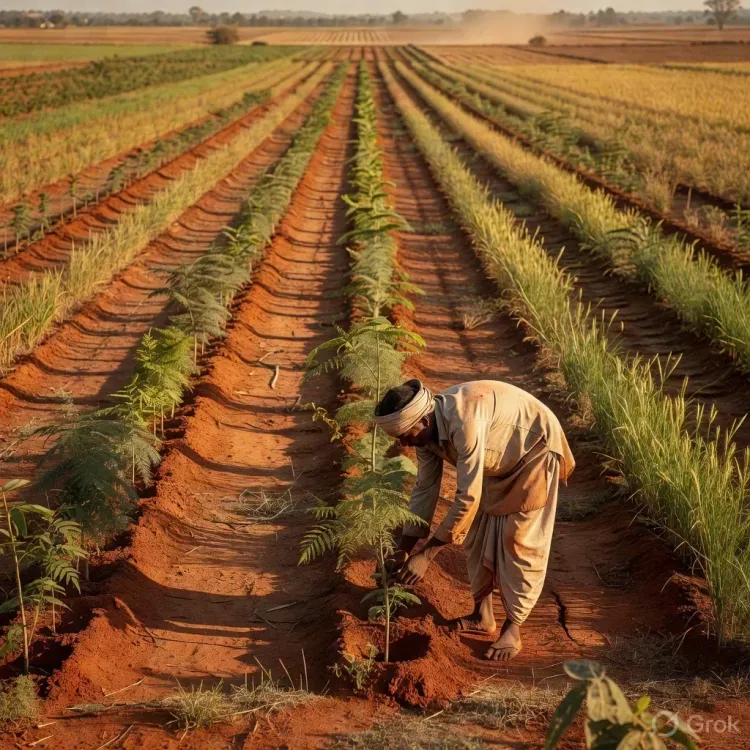
Rajasthan's move is not happening in a vacuum. Indian states have increasingly turned to Trees Outside Forests frameworks — a category tracked in successive India State of Forest Reports — precisely because official forest land has limited room to grow. The approach draws from the National Agroforestry Policy of 2014, which encouraged integrating trees into farmland and non-forest landscapes to simultaneously boost green cover, support rural livelihoods, and advance carbon sequestration goals.
For farmers and rural landowners — the most immediate stakeholders — the policy signals potential incentives and support structures for planting trees on private and agricultural land. The state forest department will be central to implementation. Concrete details: the plantation targets, budget allocations, and operational guidelines, are the next critical piece of the puzzle.
Sharma's green agenda takes shape
Chief Minister Bhajanlal Sharma, who took office in December 2023 heading a BJP-led government, has now placed an environmental policy marker that carries both ecological and political weight. The hashtag #आपणो_अग्रणी_राजस्थान ('Our Leading Rajasthan') signals how the government wants this framed — as a forward-looking, governance-first administration delivering on development beyond the obvious infrastructure beats.
The real test will come in the rollout. A policy approval is the starting gun, not the finish line — and in a state the size of Rajasthan, the distance between a cabinet decision and a tree in the ground is long.
Point of View
The move serves a dual purpose: it addresses a genuine ecological deficit in one of India's most arid states while projecting a governance identity around proactive environmental action. The policy's lineage traces directly to the National Agroforestry Policy of 2014, suggesting continuity with central government priorities — a politically convenient alignment. The harder question is implementation: past agroforestry initiatives in Rajasthan have struggled with farmer uptake and budget follow-through, making the upcoming guidelines and targets the true measure of ambition.
NationPress
22 Sept 2026
Frequently Asked Questions
What is the Tree Outside Forest Policy in Rajasthan?
The Tree Outside Forest Policy is a state government initiative approved by the Rajasthan Cabinet in August 2026 to promote tree planting on non-forest lands — including private, agricultural, and community areas — in order to expand the state's overall green cover beyond officially designated forest boundaries.
Who approved the Tree Outside Forest Policy in Rajasthan?
The policy was approved by the State Cabinet of Rajasthan, chaired by Chief Minister Bhajanlal Sharma, at a meeting held at the Chief Minister's Office on 7 August 2026.
Why does Rajasthan need a Trees Outside Forest policy?
Rajasthan has historically low natural forest cover due to its large arid and semi-arid terrain, including the Thar Desert. Expanding tree cover on non-forest land is seen as the most practical way to significantly raise the state's overall greenery and support carbon sequestration goals.
How does this policy relate to India's National Agroforestry Policy?
India's National Agroforestry Policy of 2014 encouraged integrating trees into farmland and non-forest landscapes to boost green cover and rural livelihoods. Rajasthan's new policy is aligned with that national framework and follows similar initiatives adopted by other Indian states.
Who benefits from the Rajasthan Tree Outside Forest Policy?
Farmers and rural landowners are the most direct beneficiaries, as the policy targets private and agricultural land for tree planting. The broader public benefits through improved green cover, carbon sequestration, and potential agroforestry income for rural communities.