Rajasthan CM launches 'Mission Hariyalo Rajasthan' green drive
Synopsis
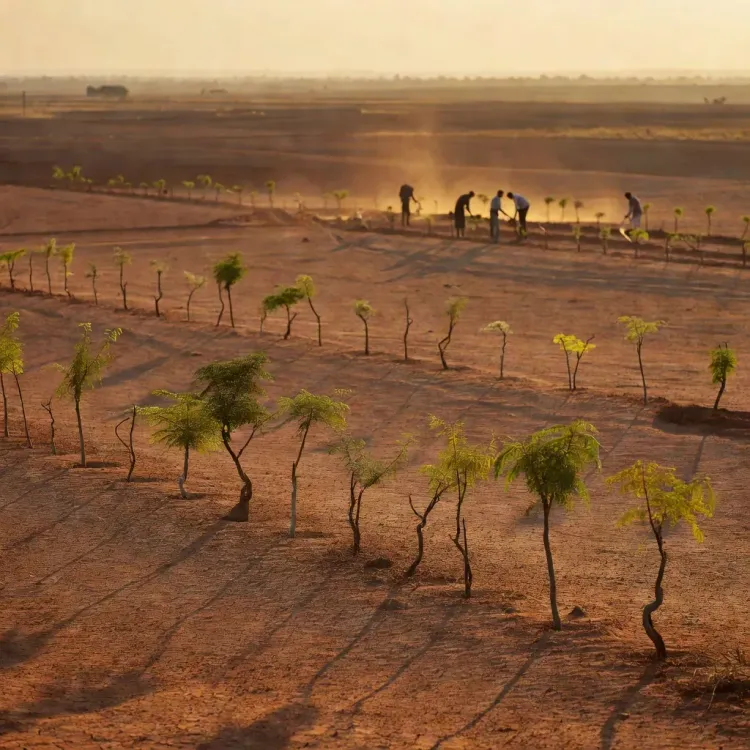
The Rajasthan government has launched 'Mission Hariyalo Rajasthan', a state-level green cover initiative attributed to CM Bhajanlal Sharma and framed as inspired by central government environmental programmes, targeting afforestation in one of India's most arid states.
Key Takeaways
The Chief Minister's Office of Rajasthan announced the launch of 'Mission Hariyalo Rajasthan' on 2 August 2026 .
Chief Minister Bhajanlal Sharma of the BJP, in office since December 2023 , is credited with initiating the mission.
The mission is explicitly framed as inspired by central government initiatives , signalling alignment with national climate and afforestation targets.
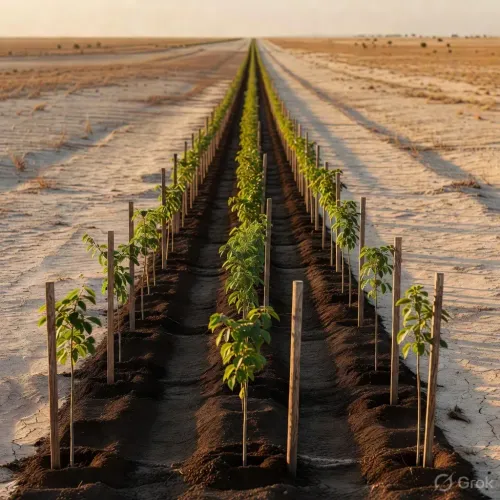
Rajasthan's geography — dominated by the Thar Desert — makes afforestation a critical tool against desertification and water stress.
The national Mission for a Green India , part of the 2008 National Action Plan on Climate Change , forms the broader policy backdrop.
Specific plantation targets, district coverage, and funding details are yet to be officially announced.
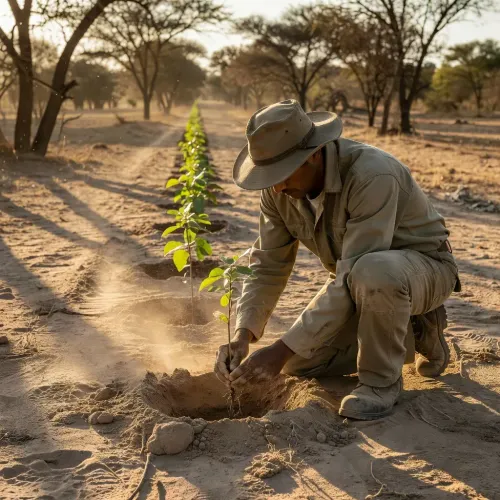
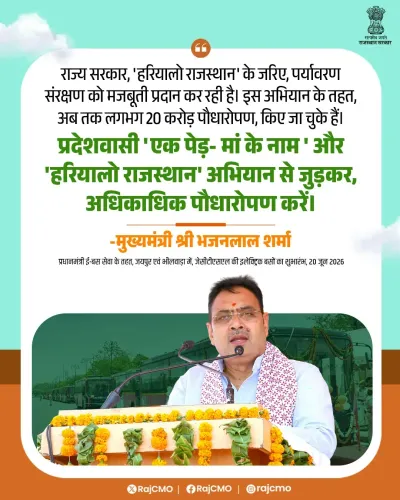
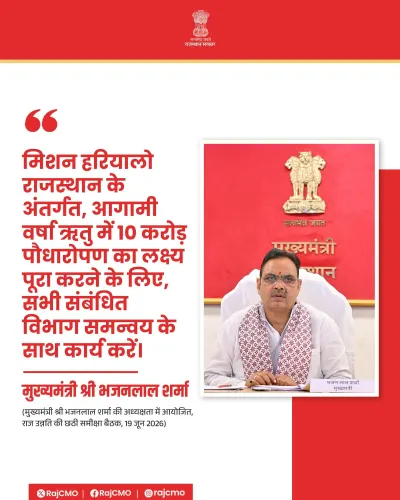
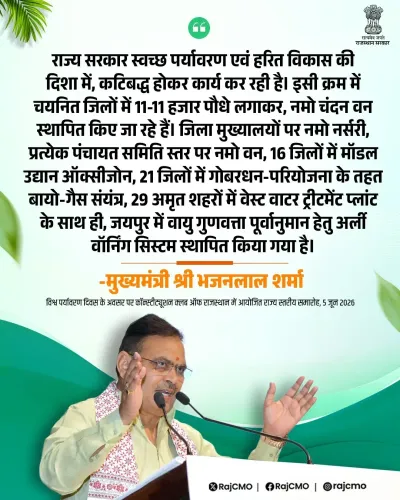
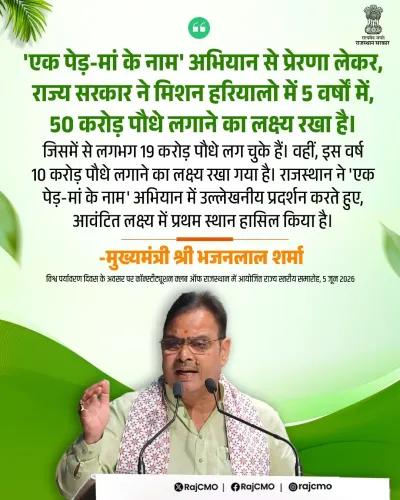
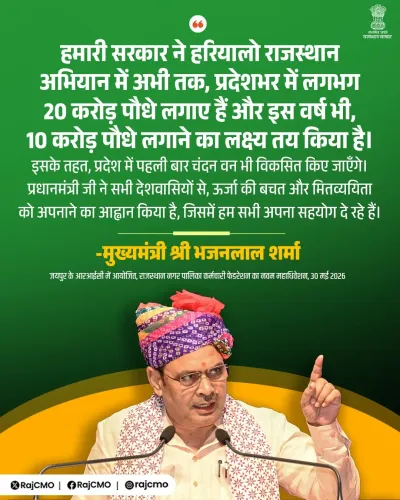
Rajasthan is going green — on a mission. The Chief Minister's Office of Rajasthan announced on Sunday, 2 August 2026 that the state government has launched 'Mission Hariyalo Rajasthan' ('Mission Green Rajasthan'), drawing inspiration from central government initiatives to expand the state's tree and forest cover.
The CMO's post, attributing the drive to Chief Minister Bhajanlal Sharma, stated: 'Taking inspiration from the central government's initiatives, the state government has launched Mission Hariyalo Rajasthan.' The hashtag #आपणो_अग्रणी_राजस्थान — meaning 'Our Leading Rajasthan' — frames the mission as a marker of the state's ambition to set a benchmark in environmental action.
Rajasthan's long fight against the desert
The backdrop matters. Rajasthan is India's largest state by area and home to the Thar Desert — a landscape that has long made afforestation a survival imperative, not just a policy checkbox. Successive state governments have run plantation drives to counter desertification, protect water tables, and restore degraded land in drought-prone districts. The new mission slots into that lineage, with the Sharma administration positioning it as a step up from routine annual plantation campaigns.
At the national level, India's climate commitments have been underpinned since 2008 by the National Action Plan on Climate Change, which includes the National Mission for a Green India — a programme targeting the expansion and improvement of forest and tree cover. The CMO's framing of 'Mission Hariyalo Rajasthan' as inspired by central initiatives signals an intent to align state action with that national architecture, potentially unlocking central funding streams and coordinated targets.
What the mission means for arid-zone communities
The stakes are human as well as ecological. Rural communities and arid-region farmers across Rajasthan's western and central districts face chronic water stress, soil erosion, and crop vulnerability — all conditions that sustained green cover can meaningfully ease. Plantation missions in the state have historically combined social forestry with water-conservation works, making them dual-purpose interventions in the most climate-exposed pockets of the country.
Specific targets — how many trees, which districts, what survival-rate guarantees, and how central funds will be routed — are yet to be detailed in official releases. Those numbers will determine whether this mission lands as a structural shift or another well-intentioned seasonal drive.
Point of View
The move also serves a political optics purpose — demonstrating environmental credentials in a state where desertification and water scarcity are lived realities for millions of voters. The real test will come in the details: credible plantation targets with measurable survival rates have historically been the weak link in India's afforestation drives. If this mission publishes auditable numbers and links them to water-conservation outcomes, it could mark a genuine step forward for Rajasthan's ecological resilience.
NationPress
16 Sept 2026
Frequently Asked Questions
What is Mission Hariyalo Rajasthan?
'Mission Hariyalo Rajasthan' is a state government afforestation and green cover initiative launched by the Rajasthan government under Chief Minister Bhajanlal Sharma, inspired by central government environmental programmes.
Who launched Mission Hariyalo Rajasthan?
The mission was launched by the Rajasthan state government under Chief Minister Bhajanlal Sharma of the BJP, as announced by the Chief Minister's Office on 2 August 2026 .
What does 'Hariyalo' mean?
'Hariyalo' is a Rajasthani word meaning 'green' or 'verdant', making 'Mission Hariyalo Rajasthan' roughly equivalent to 'Mission Green Rajasthan'.
Why does Rajasthan need an afforestation mission?
Rajasthan is India's largest state and includes the Thar Desert, making it highly vulnerable to desertification, soil erosion, and water scarcity. Afforestation drives are critical for ecological restoration and protecting rural and farming communities.
Is Mission Hariyalo Rajasthan linked to a central government scheme?
The CMO's announcement states the mission is inspired by central government initiatives. India's National Mission for a Green India , part of the 2008 National Action Plan on Climate Change , is the relevant national framework, though specific central funding linkages have not yet been officially detailed.