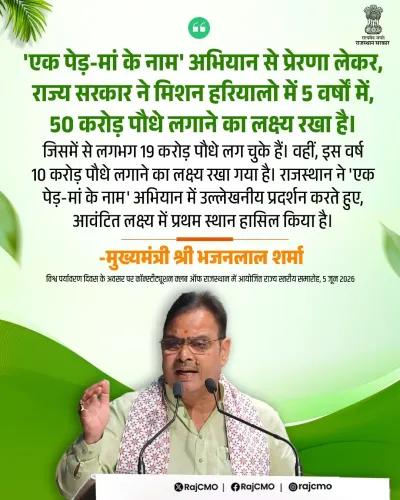
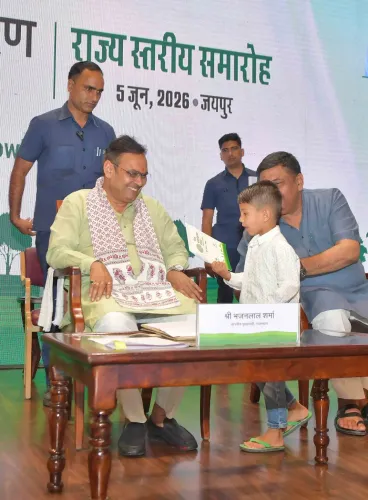
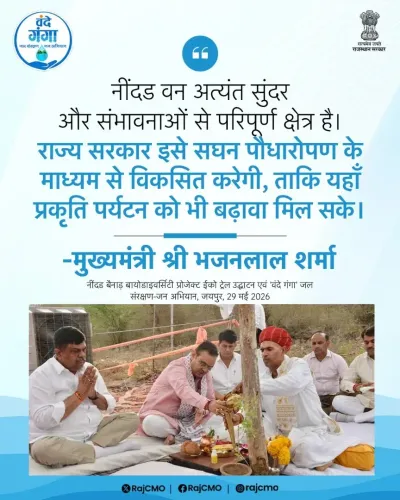
Rajasthan CM Bhajanlal flags green push via Nagar Van, CAMPA, GIM
Synopsis
The Rajasthan Chief Minister's Office spotlighted four central schemes — Nagar Van Yojana, CAMPA Fund, Green India Mission, and the National Afforestation Programme — as collectively accelerating India's environmental conservation, with CM Bhajanlal Sharma positioned as the state's champion of the green push.
Key Takeaways
The Rajasthan CMO credited four national schemes with giving 'new momentum' to environmental conservation across India on 2 August 2026 .
The Nagar Van Yojana focuses on creating urban forests inside Indian cities under the Union Ministry of Environment.
The CAMPA Fund , established by the 2016 Compensatory Afforestation Fund Act, redirects money from forest-land diversion into fresh afforestation.
The Green India Mission was launched in 2014 as one of eight missions under India's National Action Plan on Climate Change.
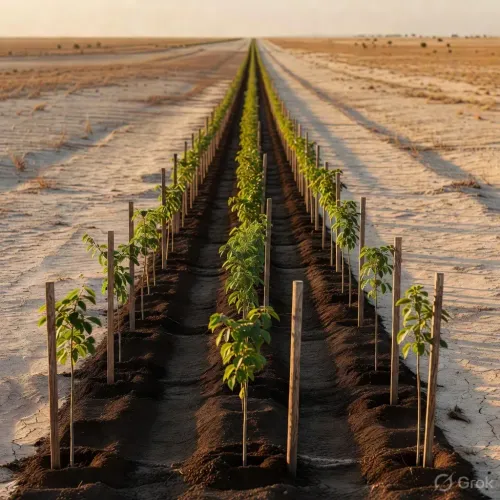
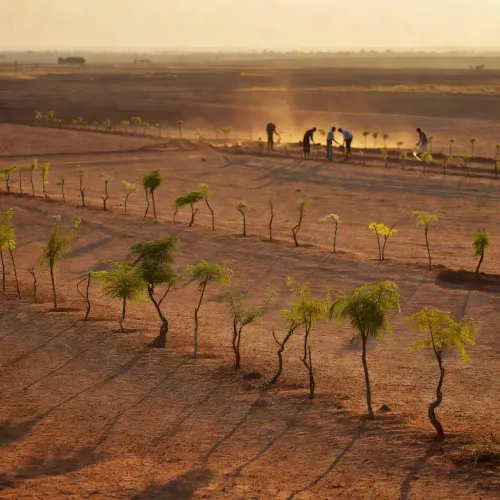
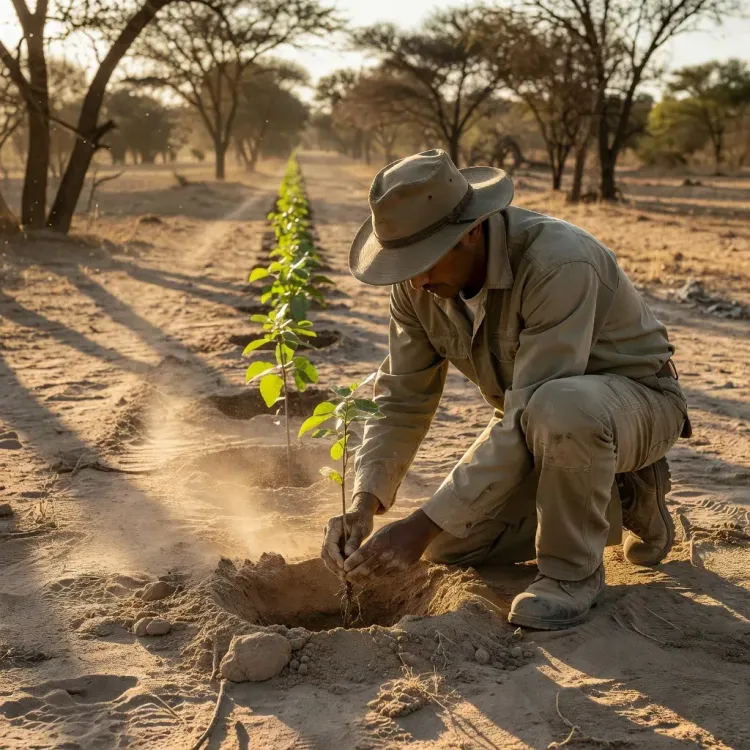
Rajasthan's arid and semi-arid landscape makes it a high-stakes testing ground for all four afforestation programmes.
State forest departments and urban local bodies are the primary ground-level executors of these centrally funded schemes.
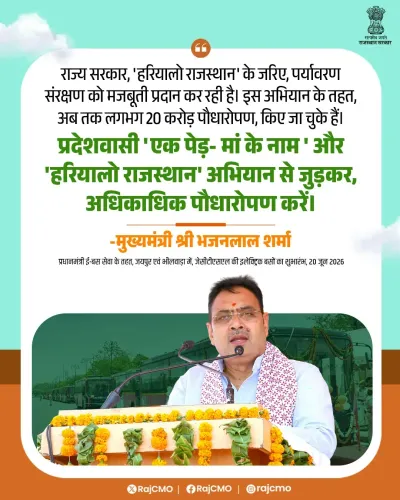
Four national schemes — and the arid state of Rajasthan at their centre. The Chief Minister's Office of Rajasthan on Sunday, 2 August 2026, highlighted how programmes spanning urban forestry, compensatory afforestation, and climate-linked green cover are collectively reshaping the country's environmental trajectory, with Chief Minister Bhajanlal Sharma named as the driving face of the state's commitment.
The post, shared under the hashtag #आपणो_अग्रणी_राजस्थान ('Our Leading Rajasthan'), cited four flagship initiatives: the Nagar Van Yojana, the CAMPA Fund, the Green India Mission, and the National Afforestation Programme — asserting that together they have given 'new momentum' (नई गति) to environmental conservation across India.
What each scheme actually does
The Nagar Van Yojana, run by the Union Ministry of Environment, Forest and Climate Change, targets the creation of urban forests inside and around Indian cities — green lungs in concrete landscapes. The CAMPA Fund, established under the Compensatory Afforestation Fund Act of 2016, channels money collected from industries and agencies that divert forest land for development, redirecting it into fresh tree-planting and eco-restoration. The Green India Mission — one of eight missions under the National Action Plan on Climate Change, launched in 2014 — aims to expand and improve forest and ecosystem services nationwide. The National Afforestation Programme, the oldest of the four, works through state forest development agencies to scale up tree cover in degraded landscapes.Why Rajasthan is a critical test case
Rajasthan is not an easy canvas. The state's vast arid and semi-arid zones — the Thar Desert alone covers roughly 60 per cent of its area — make afforestation both harder and more consequential than in greener states. Successful plantation drives here carry outsized ecological weight: stabilising sand dunes, recharging groundwater, and buffering communities against extreme heat. State forest departments and urban local bodies are the ground-level executors of all four schemes, translating central funding into saplings in the soil.Layered funding, shared accountability
The broader pattern these schemes represent is deliberate policy layering — successive governments stacking complementary mechanisms so that no single funding gap kills the overall effort. CAMPA ensures that development-linked deforestation is offset in real time. GIM provides the long-horizon climate frame. Nagar Van brings the mission into cities. The National Afforestation Programme fills the rural and degraded-land gaps. Together, they form an interlocking architecture rather than a single top-down directive. For Rajasthan's forest department, the pressure now is to translate that architecture into measurable canopy. The CMO's post signals political ownership of that goal — and in a state where every tree planted against a desert backdrop is a visible act of will, that signal matters.Point of View
Cross-partisan policy agenda (environmental conservation) ahead of what is likely a period of heightened scrutiny on Rajasthan's development footprint. By naming four distinct central schemes rather than a single state initiative, the messaging borrows credibility from the Union government's policy architecture while positioning Sharma as an active participant rather than a passive beneficiary. The 'Leading Rajasthan' hashtag reinforces a broader brand-building exercise the BJP government in Jaipur has been running since taking office in December 2023. The absence of any state-specific targets or numbers, however, means the post is aspirational rather than accountable — a distinction that opposition parties and civil-society observers are likely to press on.
NationPress
16 Sept 2026
Frequently Asked Questions
What is the Nagar Van Yojana?
The Nagar Van Yojana is a central government scheme run by the Ministry of Environment, Forest and Climate Change to develop urban forests — green spaces and wooded areas — within and around Indian cities, improving air quality and biodiversity in urban zones.
What is the CAMPA Fund and how does it work?
The CAMPA Fund, established under the Compensatory Afforestation Fund Act of 2016, collects money from industries and government agencies that divert forest land for non-forest uses such as mining or infrastructure, and channels those funds into compensatory tree-planting and eco-restoration projects across India.
What is the Green India Mission?
The Green India Mission is one of eight national missions under India's National Action Plan on Climate Change, launched in 2014. It aims to protect, restore, and expand India's forest cover while enhancing ecosystem services such as water availability and carbon sequestration.
Why is afforestation important for Rajasthan specifically?
Rajasthan contains large arid and semi-arid zones, including the Thar Desert, making it especially vulnerable to land degradation, dust storms, and extreme heat. Successful afforestation in the state stabilises soil, recharges groundwater, and provides climate resilience for local communities.
Who is Bhajanlal Sharma?
Bhajanlal Sharma is the Chief Minister of Rajasthan, representing the BJP, and has been in office since December 2023. He was named in the CMO's post as the face of Rajasthan's commitment to the national environmental conservation programmes.