Rajasthan CM Orders Bimonthly Tribal Advisory Council Meets

Synopsis
The Rajasthan CMO has directed that the state's Scheduled Tribe Advisory Council — a Fifth Schedule constitutional body — must convene at Chief Secretary level every two months, signalling a push to keep tribal governance machinery active under CM Bhajan Lal Sharma.
Key Takeaways
The Rajasthan CMO issued a directive on 3 August 2026 mandating bimonthly meetings of the Rajasthan Scheduled Tribe Advisory Council .
Meetings are to be held at the Chief Secretary level , ensuring senior civil service ownership of the process.
The council is a Fifth Schedule constitutional body tasked with advising on tribal welfare, land rights, and development.
The directive is addressed to Chief Minister Bhajan Lal Sharma of the BJP , in office since December 2023 .
Rajasthan's tribal population is concentrated in southern districts including Udaipur, Dungarpur, Banswara, and Pratapgarh .
Whether the bimonthly schedule is actually implemented and what recommendations follow will determine the directive's real impact.
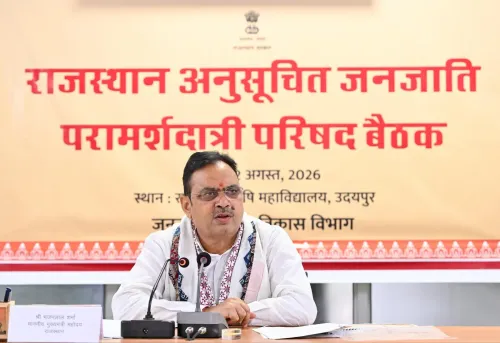
A constitutional body for Rajasthan's Scheduled Tribes is getting a firm new heartbeat. The Chief Minister's Office of Rajasthan directed on Monday, 3 August 2026 that the Rajasthan Scheduled Tribe Advisory Council must convene at the Chief Secretary level once every two months — a move that signals the state intends to keep its tribal governance machinery in active motion.
The directive, shared by the CMO and addressed to Chief Minister Bhajan Lal Sharma, carries a single, unambiguous instruction: 'Har 2 maah mein mukhya sachiv star par, Rajasthan Anusuchit Janjati Paramarshdata Parishad ki baithak aayojit ki jaye' — 'The Rajasthan Scheduled Tribe Advisory Council meeting shall be held at the Chief Secretary level every two months.'
What the Fifth Schedule Actually Demands
The Rajasthan Scheduled Tribe Advisory Council is not a new creation — it is a statutory body mandated by the Fifth Schedule of the Constitution of India, applicable to states that contain Scheduled Areas. Its mandate is to advise the state government on the welfare and advancement of Scheduled Tribes, covering land rights, forest access, education, and livelihood. The council is constitutionally required to exist; whether it meets regularly is a matter of political will and administrative priority. State governments across India have periodically had to issue fresh directives simply to activate bodies like this — councils that exist on paper but drift into dormancy between election cycles. Anchoring meetings at the Chief Secretary level is a deliberate elevation: it ensures the state's most senior civil servant chairs or convenes the sessions, making it harder for the process to be delegated into irrelevance.Rajasthan's Tribal Population and the Stakes
Rajasthan is home to a substantial Scheduled Tribe population, concentrated largely in the southern and southeastern districts — including Udaipur, Dungarpur, Banswara, and Pratapgarh, areas that fall within the Fifth Schedule's ambit. For communities in these regions, the Advisory Council is one of the few formal institutional channels through which tribal concerns can be escalated directly to senior state administration. A council that meets regularly is one that can actually track whether welfare schemes are reaching their intended beneficiaries. For CM Bhajan Lal Sharma, whose Bharatiya Janata Party government took office in December 2023, the directive also carries political weight: tribal constituencies in Rajasthan have historically been competitive, and visible institutional action on tribal welfare sends a clear signal heading into the next governance cycle. The real test now is implementation. Directives are issued; meetings must actually be convened, agendas set, and recommendations followed through. Whether the bimonthly schedule holds — and what the council recommends when it does sit — will be the measure of this order's worth.Point of View
It fits a pattern of using administrative instructions to signal institutional seriousness toward tribal constituencies — groups that carry significant electoral weight in Rajasthan's southern belt. The elevation to Chief Secretary level is the meaningful detail: it insulates the process from mid-level bureaucratic neglect. The broader question is whether this directive becomes a live governance mechanism or joins a long list of well-intentioned orders that fade without follow-through.
NationPress
17 Sept 2026
Frequently Asked Questions
What is the Rajasthan Scheduled Tribe Advisory Council?
It is a statutory advisory body established under the Fifth Schedule of the Constitution of India, mandated in states with Scheduled Areas to advise the government on the welfare, rights, and development of Scheduled Tribes.
Why must the council meet at the Chief Secretary level?
Anchoring meetings at the Chief Secretary level — the most senior civil servant in the state — ensures the sessions carry administrative authority and cannot be delegated to lower-level officials, reducing the risk of the council becoming inactive.
How often will the Rajasthan Tribal Advisory Council meet now?
The CMO's directive mandates a meeting every two months, meaning at least six sessions per year.
Which areas of Rajasthan are covered under the Fifth Schedule?
Rajasthan's Fifth Schedule areas are primarily in the southern and southeastern districts, including Udaipur, Dungarpur, Banswara, and Pratapgarh, which have significant Scheduled Tribe populations.
Who is the Chief Minister of Rajasthan in 2026?
Bhajan Lal Sharma of the Bharatiya Janata Party is the Chief Minister of Rajasthan, having assumed office in December 2023.