Rajasthan Chief Secretary orders stronger Janani Express support for pregnant women
Synopsis
Rajasthan's Chief Secretary has ordered an operational overhaul of the 104 Janani Express service — which has served nearly 19 lakh pregnant women since 2021 — directing better ambulance utilisation, tighter call-centre oversight, and improved coordination for high-risk pregnancies, with all 600 ambulances to be fully operational by July 2026.
Key Takeaways
Srinivas reviewed the 104 Janani Express service on 3 October at the Government Secretariat, Jaipur.
He directed stronger coordination between maternal healthcare services and the ambulance network, especially for high-risk pregnancies .
The service has 600 ambulances across Rajasthan and has served 18,86,048 beneficiaries from January 2021 to 10 December 2025 .
All 600 ambulances are expected to be fully operational by July 2026 ; the service is currently run through the Rajasthan Medicare Relief Society .
Officials discussed shifting management to an open tender or public sector undertaking model for future operations.
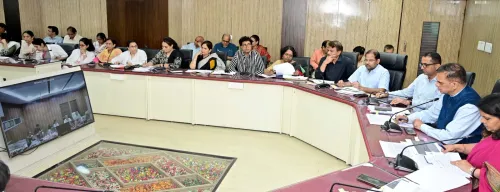
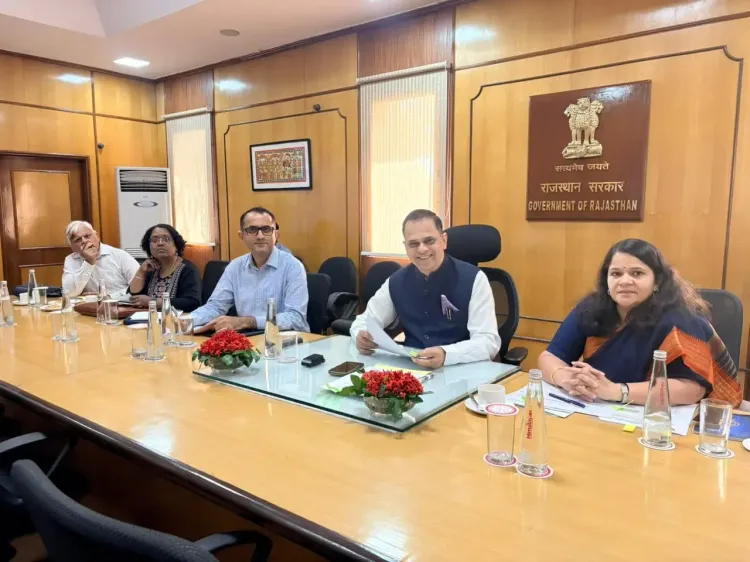
Rajasthan Chief Secretary V. Srinivas on Saturday, 3 October chaired a review of the '104 Janani Express' ambulance service at the Government Secretariat, Jaipur, directing officials to reinforce arrangements for transporting pregnant women — especially those with high-risk pregnancies — to hospitals in a timely manner. The review underscores the state government's push to close gaps in maternal healthcare logistics across Rajasthan.
Key Directives from the Review
Chief Secretary Srinivas stressed the need for tighter coordination between maternal healthcare services and the Janani Express network to ensure ambulances reach women during emergencies without delay. He instructed officials to regularly assess ambulance utilisation at the individual vehicle level and to identify underperforming areas using field reports.
Srinivas also called for strengthening local-level operational arrangements so that available ambulances are deployed more efficiently. He directed a detailed review of the Janani Express call centre's day-to-day functioning — covering the full workflow from receiving distress calls to dispatching vehicles — and asked that call records be linked with monthly reports for scrutiny at the level of the Director of Reproductive and Child Health.
Scale of the Service
Mission Director of the National Health Mission (NHM), Jogaram, told the meeting that 600 ambulances are currently deployed under the Janani Express network across Rajasthan. According to data presented at the meeting, the service has served 18,86,048 beneficiaries between January 2021 and 10 December 2025. The service is presently operated through the Rajasthan Medicare Relief Society, and all 600 ambulances are expected to be fully operational by July 2026.
Future Management Under Discussion
Officials at the meeting also deliberated on options for restructuring the service's management model — including operating it through an open tender process or via a public sector undertaking — as part of forthcoming operational arrangements. No final decision on the model was announced at the meeting.
Who Attended
The meeting was attended by Gayatri A. Rathore, Chief Government Secretary of the Medical and Health, Family Welfare and Medical Education Department, along with representatives from the Finance Department, the Director of Public Health, the Additional Mission Director of NHM, the Director Finance, Project Director, Store Officer, State Nodal Officer, and other senior officials.
With all 600 ambulances targeted to be fully operational by mid-2026, the state's ability to translate these directives into measurable improvements in maternal health outcomes will be closely watched.
Point of View
But the numbers reveal a service under pressure: nearly 19 lakh beneficiaries over four years across a geographically vast state means operational gaps are not hypothetical — they are maternal mortality risks. The discussion around shifting to an open tender or PSU model signals that the current Rajasthan Medicare Relief Society arrangement may not be scaling adequately. The real accountability test will come in July 2026, when all 600 ambulances are due to be operational — and whether that milestone is met with verifiable utilisation data, not just fleet counts.
NationPress
3 Oct 2026
Frequently Asked Questions
What is the 104 Janani Express service in Rajasthan?
The 104 Janani Express is a state-run ambulance service in Rajasthan designed to transport pregnant women, particularly those with high-risk pregnancies, to hospitals free of cost. It operates a fleet of 600 ambulances and has served over 18.86 lakh beneficiaries since January 2021.
Why did the Chief Secretary review the Janani Express service?
Chief Secretary V. Srinivas convened the review to identify operational gaps and strengthen arrangements for timely transportation of pregnant women, especially in emergencies involving high-risk pregnancies. He directed improvements in ambulance utilisation, call-centre oversight, and coordination with maternal health programmes.
How many ambulances does the Janani Express service have?
The Janani Express service has 600 ambulances deployed across Rajasthan. All 600 are expected to be fully operational by July 2026, according to NHM Mission Director Jogaram.
Who currently operates the Janani Express service?
The service is currently operated through the Rajasthan Medicare Relief Society. Officials are exploring future management options including an open tender process or a public sector undertaking model.
What changes were directed after the review?
Chief Secretary Srinivas directed regular ambulance utilisation assessments, a detailed review of the call centre workflow, linking call records to monthly reports for the Director of Reproductive and Child Health, and strengthening local operational arrangements to improve ambulance deployment efficiency.