Rajasthan maternal deaths drop 40% in Aug–Oct 2026, October sees 59% fall
Synopsis
Rajasthan has cut maternal deaths by nearly 40% in just three months — with October alone seeing a 59% drop, from 87 deaths to 36. Behind the numbers: a push on antenatal care, crackdowns on quacks, and a sharp accountability directive that includes an FIR order over IVIG injection irregularities at a Jodhpur medical college.
Key Takeaways
Maternal deaths in Rajasthan fell from 270 (Aug–Oct 2025) to 163 (Aug–Oct 2026), a drop of 107 cases or approximately 39.6% .
October 2026 saw the steepest decline — 87 deaths in 2025 versus 36 in 2026, a reduction of approximately 59% .
Principal Secretary Gayatri Rathore ordered an FIR over irregularities in IVIG injection distribution at Umaid Medical College Hospital, Jodhpur .
Notices issued to officials in four districts and eight blocks for poor early pregnancy registration progress.
Officials directed to verify proper deployment of NASG garments in all 108 emergency ambulances for Postpartum Haemorrhage management.
CMHOs warned they will be held personally accountable if quacks are found operating in their districts.
Maternal deaths in Rajasthan declined by nearly 40% between August and October 2026 compared to the same period in 2025, according to a state health department review, with the sharpest single-month reduction of approximately 59% recorded in October. The improvement is attributed to strengthened antenatal care, timely identification of high-risk pregnancies, and rigorous monitoring across the state's healthcare network.
Month-by-Month Decline
The data presented at Tuesday's review paints a consistent downward trend. August 2026 recorded 73 maternal deaths, down from 100 in August 2025 — a reduction of 27%. September 2026 saw 54 deaths against 83 the previous year, a fall of approximately 35%. The steepest drop came in October, when deaths plummeted from 87 in 2025 to just 36 in 2026, a decline of roughly 59%.
In aggregate, maternal deaths fell from 270 during August–October 2025 to 163 during the corresponding period in 2026 — a reduction of 107 cases, or approximately 39.6%.
What the Government Said
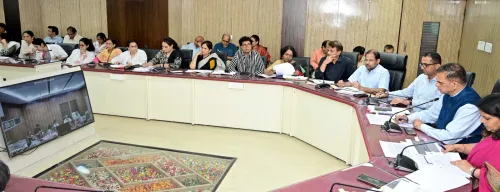
Principal Secretary (Medical and Health) Gayatri Rathore conducted a detailed review of maternal and child health services on Tuesday, 17 November 2026, through a video conference. While acknowledging the encouraging decline, she stressed that sustained efforts at every level were essential to prevent every maternal death.
Rathore directed officials to conduct a rigorous analysis of each maternal death, examining causes, delays in treatment, referral mechanisms, and medical management, and to implement corrective measures based on the findings. She also instructed all Chief Medical and Health Officers (CMHOs) and Block Chief Medical Officers to take strict action against quacks and unqualified practitioners operating in their jurisdictions, warning that CMHOs would be held personally accountable if unlicensed practitioners were found operating in their districts.
IVIG Irregularity at Jodhpur Hospital
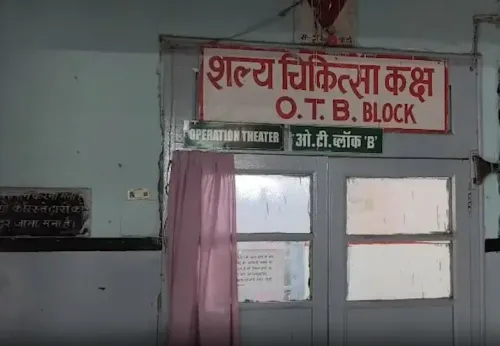
Taking serious note of irregularities in the distribution of IVIG injections at Umaid Medical College Hospital in Jodhpur, Rathore directed the officer concerned to immediately lodge an FIR with the police, based on the findings of a preliminary investigation. The directive signals zero tolerance for supply-chain misuse in a programme directly tied to maternal survival outcomes.
Key Operational Directives
Officials were directed to verify the proper use of Non-Pneumatic Anti-Shock Garments (NASG) — provided across all 108 emergency ambulances — for managing Postpartum Haemorrhage (PPH), and to ensure that personnel are adequately trained in their application. Mission Director (NHM) Jogaram emphasised regular monitoring of referral services to improve their effectiveness.
Notices were ordered for officials in four districts — Udaipur-I, Ajmer, Beawar, and Jaipur-I — and eight blocks for unsatisfactory progress in early pregnancy registration. A separate set of notices was issued to officials in five districts — Bhilwara, Jodhpur-II, Salumbar, Beawar, and Jaipur-I — and seven blocks for inadequate completion of mandatory antenatal check-ups.
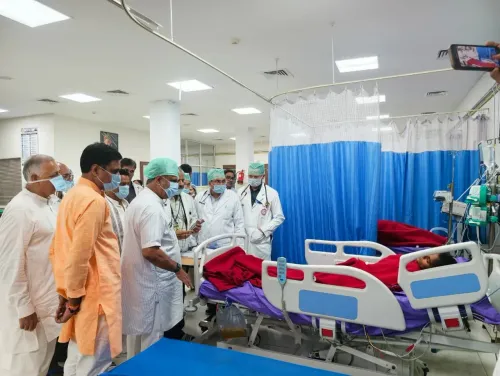
Director of Public Health Ravi Prakash Sharma directed regular hospital inspections covering medicine availability, diagnostic services, cleanliness, equipment functionality, and staff deployment, with specific personnel assigned accountability for each ward.
Patient Safety and Infrastructure
Rathore underscored patient safety as the highest institutional priority, instructing officials to prevent stray animals from entering hospital wards, maintain cleanliness, enforce pest and rodent control, ensure safe food storage, and monitor ward entrances. She made clear that negligence at any level would not be tolerated.
With the October numbers signalling a possible inflection point, the state's ability to sustain this trajectory through the winter months — when healthcare utilisation typically rises — will be closely watched.
Point of View
But Rajasthan's baseline remains a concern — 270 deaths in just three months of 2025 reflects deep structural gaps in maternal care. The October figure of 36 deaths is the most striking data point, but it demands scrutiny: was it a genuine systemic improvement or a reporting artefact from a single high-impact intervention? The FIR over IVIG irregularities at Jodhpur is the most underreported element here — supply-chain corruption in maternal health programmes directly costs lives, and an accountability signal from the top is overdue. The notices to districts for lagging antenatal registration also reveal that the gains are uneven, and the state's weakest links remain unaddressed.
NationPress
17 Nov 2026
Frequently Asked Questions
By how much have maternal deaths declined in Rajasthan in 2026?
Maternal deaths in Rajasthan fell by approximately 39.6% — from 270 cases during August–October 2025 to 163 cases during the same period in 2026, a reduction of 107 deaths. October 2026 recorded the sharpest monthly drop of roughly 59%.
What action was taken over IVIG injection irregularities in Jodhpur?
Principal Secretary Gayatri Rathore directed the officer concerned to immediately file an FIR with the police following a preliminary investigation into irregularities in the distribution of IVIG injections at Umaid Medical College Hospital in Jodhpur.
Which districts were issued notices for poor antenatal care progress?
Notices were issued to officials in four districts — Udaipur-I, Ajmer, Beawar, and Jaipur-I — for unsatisfactory progress in early pregnancy registration, and to officials in five districts — Bhilwara, Jodhpur-II, Salumbar, Beawar, and Jaipur-I — for inadequate completion of mandatory antenatal check-ups.
What are Non-Pneumatic Anti-Shock Garments (NASG) and why are they relevant?
NASGs are emergency compression garments used to manage Postpartum Haemorrhage (PPH), a leading cause of maternal death. Rajasthan has deployed them across all 108 emergency ambulances, and officials have been directed to verify their proper use and ensure personnel are trained in their application.
What accountability measures have been announced for quacks operating in Rajasthan?
Chief Medical and Health Officers (CMHOs) have been warned they will be held personally accountable if unqualified medical practitioners are found operating in their districts. Officials were also advised to seek support from local administration and police to curb such practices.