Rajasthan launches 5-day maternal health screening drive for all pregnant women
Synopsis
Rajasthan has ordered a five-day intensive antenatal screening blitz covering every pregnant woman in the state — a response, in part, to a string of maternal deaths linked to post-surgical kidney failure across five districts. With accountability now being fixed on ASHA workers and ANMs, and Maternal Death Reviews mandated within 24 hours of every death, this is the state's most structured push yet to close its maternal mortality gap.
Key Takeaways
A five-day statewide antenatal screening campaign begins 16 July 2025 , covering all pregnant women in Rajasthan .
Every pregnancy must be registered within the first 12 weeks and entered into the PCTS portal ; a minimum of four ANC check-ups are mandatory.
Districts must establish dedicated tracking systems for High-Risk Pregnancies (HRPs) , including cases of anaemia, hypertension, diabetes, and twin pregnancy.
A formal Maternal Death Review (MDR) must be completed within 24 hours of every maternal death, with weekly HRP reviews.
Maternal deaths linked to kidney failure post-surgery have been reported in Bhilwara, Banswara, Jodhpur, Bikaner, and Kota in recent months.
Strict accountability, including possible punitive action, has been fixed on ASHA workers, ANMs, CHOs , and district officials for negligence.
The Rajasthan government will launch a five-day statewide campaign beginning Wednesday, 16 July 2025, to conduct intensive antenatal health screening of all pregnant women across the state, officials announced on Tuesday, 15 July 2025. The drive, aimed at reducing the maternal mortality rate (MMR), will cover critical antenatal parameters, maintain prenatal records, and establish continuous monitoring of pregnant women through frontline health workers.
Key Directions Issued
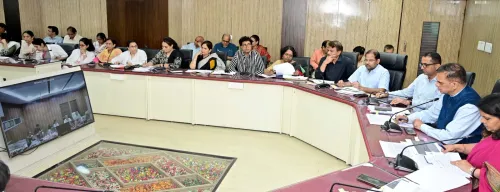
Gayatri Rathore, Principal Secretary of the Rajasthan Medical and Health Department, issued detailed directives to medical officers statewide during a video conference held at Swasthya Bhawan in Jaipur on Tuesday. She instructed that the screening drive be conducted with 'utmost sensitivity and seriousness' through ASHA workers, Auxiliary Nurse Midwives (ANMs), and Community Health Officers (CHOs).
Rathore directed that every pregnancy must be registered within the first 12 weeks of conception, with all data entered promptly into the Pregnancy, Child Tracking and Health Services Management System (PCTS) portal. She also mandated that every pregnant woman receive a minimum of four quality Antenatal Care (ANC) check-ups, covering blood pressure, haemoglobin, weight, urine, blood sugar, and other essential investigations.
High-Risk Pregnancies in Focus
A central thrust of the campaign is the timely identification and continuous management of High-Risk Pregnancies (HRPs). Rathore directed all districts to build dedicated tracking systems for women with conditions including anaemia, hypertension, diabetes, previous Caesarean section, twin pregnancy, and excessive bleeding. Name-wise lists of all HRP cases must be maintained from the sub-health centre to the district level, with regular review by specialist doctors.
She further directed that a preliminary review and a formal Maternal Death Review (MDR) be conducted within 24 hours of every maternal death, with weekly reviews of HRP cases and strict accountability fixed wherever negligence is established.
Infrastructure and Compliance Requirements
All healthcare facilities have been directed to ensure the availability of essential life-saving medicines, adequate blood supply, fully functional labour rooms and operation theatres, and neonatal resuscitation equipment. 100 per cent compliance with Standard Operating Procedures (SOPs) and national safe motherhood guidelines has been made mandatory.
Ravi Prakash Sharma, Director of Public Health at the Medical and Health Department, reviewed ANC and HRP-related issues with district medical officers and stressed the need for complete medical records to accompany every referral case. Jogaram, National Health Mission (NHM) Mission Director, noted that detailed guidelines for labour rooms and operation theatres had already been issued and directed Chief Medical and Health Officers to ensure strict compliance.
Context: Recent Maternal Deaths in Rajasthan
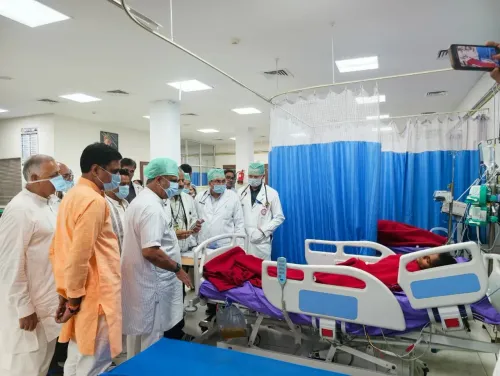
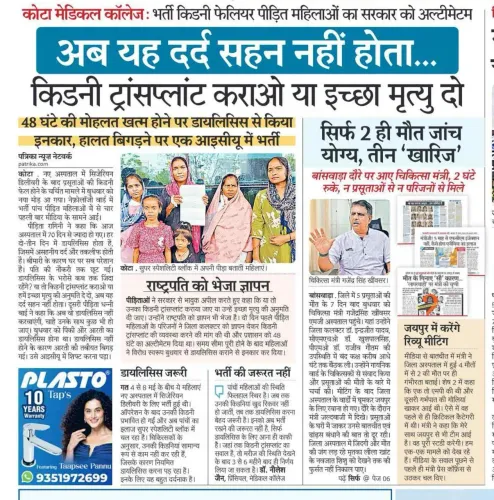
The campaign comes against a troubling backdrop. In recent months, maternal deaths linked to kidney failure following surgeries have been reported in Bhilwara, Banswara, Jodhpur, Bikaner, and Kota, according to officials. Rathore described every maternal death as 'a matter of grave concern' and said that ensuring quality healthcare throughout pregnancy, childbirth, and the postnatal period remains the state government's highest priority.
With accountability mechanisms now being formalised and a statewide screening drive underway, the coming weeks will test whether these directives translate into measurable improvements in maternal health outcomes across Rajasthan's vast rural and urban landscape.
Point of View
But the harder question is whether district hospitals have the infrastructure — functional OTs, blood banks, neonatal equipment — to act on what the screening uncovers. Directives without resource backing risk turning a well-intentioned campaign into a data-collection exercise. The 24-hour Maternal Death Review mandate is a meaningful accountability lever, but only if findings are acted upon rather than filed.
NationPress
13 Oct 2026
Frequently Asked Questions
What is the Rajasthan maternal health screening campaign announced in July 2025?
It is a five-day statewide drive beginning 16 July 2025 to conduct intensive antenatal health screening of all pregnant women in Rajasthan. The campaign covers critical health parameters, mandates at least four ANC check-ups per woman, and focuses on identifying and managing High-Risk Pregnancies through ASHA workers, ANMs, and Community Health Officers.
Why has Rajasthan launched this maternal health drive?
The drive is aimed at reducing Rajasthan's maternal mortality rate and improving antenatal care quality. It also follows reported maternal deaths linked to kidney failure after surgeries in Bhilwara, Banswara, Jodhpur, Bikaner, and Kota in recent months, prompting the state to tighten oversight and accountability.
What are High-Risk Pregnancies and how will they be tracked?
High-Risk Pregnancies (HRPs) include cases involving anaemia, hypertension, diabetes, previous Caesarean section, twin pregnancy, and excessive bleeding. Districts have been directed to maintain name-wise HRP lists from sub-health centre to district level, with weekly reviews by specialist doctors and continuous follow-up.
What happens when a maternal death occurs under the new directives?
A preliminary review and a formal Maternal Death Review (MDR) must be conducted within 24 hours of every maternal death. Weekly reviews of HRP cases are also mandated, with strict accountability — including punitive action — fixed on officials found negligent.
Who is responsible for implementing the screening drive?
Implementation rests with ASHA workers, Auxiliary Nurse Midwives (ANMs), and Community Health Officers (CHOs) at the field level, under the oversight of Chief Medical and Health Officers (CMHOs) and district officials. Principal Secretary Gayatri Rathore has warned of strict action against personnel found negligent at any level.