8 women dead after C-sections in Bhilwara, Banswara; Gehlot demands central probe
Synopsis
Eight women are dead after C-sections at Rajasthan government hospitals — six in Bhilwara, two in Banswara — with OT infection confirmed and the facility reportedly conducting 30–40 daily caesarean surgeries with just five surgical sets. Former CM Gehlot has called it gross negligence and demanded a central expert team, as the deaths add to a growing list of maternal tragedies in Kota, Bikaner, and Jodhpur.
Key Takeaways
Six women died at Mahatma Gandhi Government Hospital, Bhilwara following C-section deliveries between 6 July and Friday .
Two more women died in Banswara on Friday after C-section deliveries — one anaemic, one with high blood pressure.
Hospital authorities confirmed OT infection ; surgeries in the affected theatre have been suspended.
The hospital reportedly performs 30–40 caesarean surgeries daily with only five surgical sets , raising sterilisation concerns.
A five-member inquiry committee has been formed; microbiological samples from the OT and instruments are under examination.
Former CM Ashok Gehlot has urged Union Health Minister J.P.
Nadda to depute a central expert team for an independent assessment.
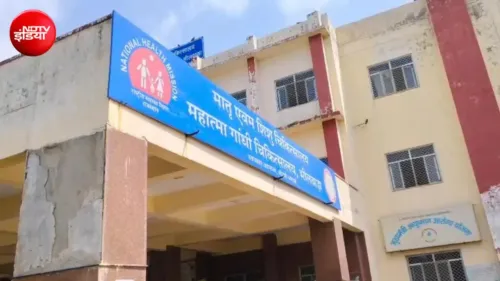
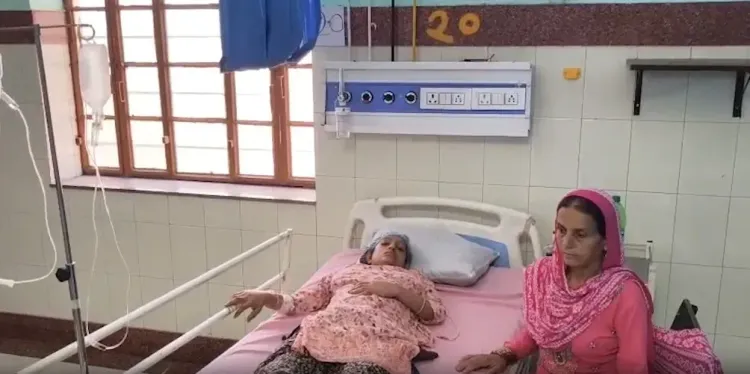
Eight women have died following Caesarean-section deliveries at government hospitals in Rajasthan — six at the Mahatma Gandhi Government Hospital in Bhilwara within five days of 6 July, and two in Banswara on Friday — triggering a public health alarm over infection control failures and chronic resource shortfalls in the state's public healthcare system. Hospital authorities have confirmed the detection of infection inside the operation theatre (OT), and investigations are underway to determine whether it directly contributed to the deaths.
What Happened in Bhilwara
The sixth and final death in Bhilwara was recorded on Friday, bringing the toll to six since 6 July. All the deceased women had undergone C-section deliveries before their conditions deteriorated. Following reports of OT infection, surgeries in the affected theatre were suspended and several patients were shifted to other facilities as a precautionary measure.
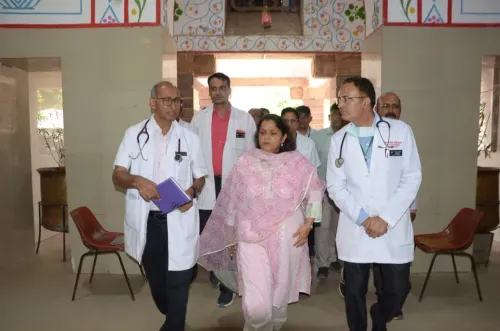
Hospital officials confirmed that samples from the operation theatre, surgical instruments, and equipment have been dispatched for microbiological examination. A five-member inquiry committee has been constituted to investigate the deaths and identify any lapses in infection control and hospital protocols. Samples of injections administered to the patients have also been collected.
A particularly alarming detail to emerge is the hospital's workload-to-resource ratio: the facility reportedly performs 30 to 40 caesarean surgeries every day while possessing only five surgical sets, raising acute concerns over sterilisation cycles and infection management.
Two Deaths in Banswara
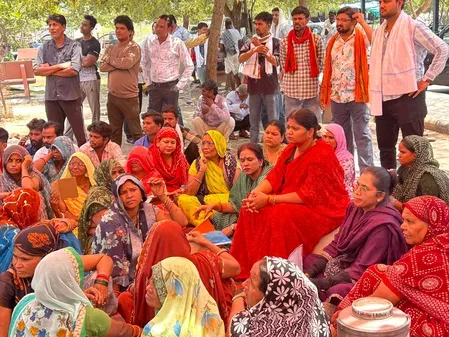
Separately, two new mothers died in Banswara on Friday after delivering their first babies via C-section. According to hospital reports, one of the women was anaemic, while the other had high blood pressure. Authorities have not yet confirmed whether the Banswara deaths are linked to the same infection strain identified in Bhilwara.
A Pattern Across Rajasthan
The Bhilwara and Banswara deaths do not stand in isolation. Similar concerns over maternal healthcare had previously surfaced in Kota, Bikaner, and Jodhpur, intensifying scrutiny of Rajasthan's public health infrastructure. This is the latest in a series of institutional failures that critics argue points to systemic underfunding and inadequate oversight of government hospitals in the state.
Gehlot Calls for Central Intervention
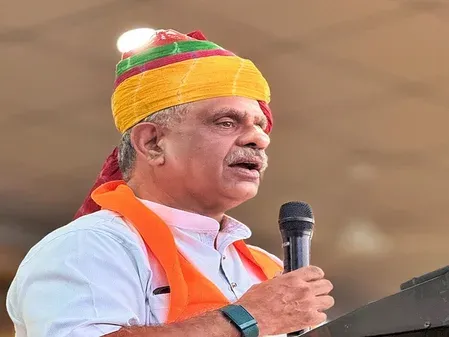
Former Rajasthan Chief Minister Ashok Gehlot, a senior Indian National Congress (INC) leader, described the deaths as ‘heart-rending and extremely alarming’ and alleged they reflected serious shortcomings in the state’s healthcare system under the current Bharatiya Janata Party (BJP) government.
‘The deaths of postpartum women in Bhilwara and Banswara are heartbreaking and deeply worrying. Continuing caesarean operations despite reports of infection in the operation theatre and performing 30–40 surgeries with only five surgical sets clearly reflects gross negligence and the deteriorating state of the healthcare system. After Kota, Bikaner and Jodhpur, the situation in Bhilwara is equally disturbing. Has the BJP government left Rajasthan’s healthcare system to fate?’ Gehlot said.
Gehlot urged the Union Ministry of Health and Family Welfare to immediately depute an expert team to Rajasthan for an independent assessment of government hospitals and a comprehensive probe into recent maternal deaths. He also tagged Union Health Minister J.P. Nadda in his appeal, calling for urgent intervention to prevent further fatalities.
Government Response and Next Steps
Health Department officials stated that the inquiry is ongoing and that action will be taken based on its findings. Authorities are awaiting laboratory reports to establish the exact cause of the infections and the deaths. Until those results are available, the affected OT in Bhilwara remains suspended for surgeries. The coming days will be critical in determining whether the state government acts on calls for systemic reform or limits its response to the immediate incident.
Point of View
Bikaner, Jodhpur, and now Bhilwara and Banswara form a pattern that points to chronic underfunding and absent oversight, not isolated lapses. Gehlot’s demand for a central probe is politically convenient, but the underlying ask — independent verification of hospital infection controls — is entirely legitimate. The BJP state government’s credibility now rests on whether its inquiry produces accountability or a whitewash.
NationPress
9 Oct 2026
Frequently Asked Questions
How many women have died after C-sections in Rajasthan and where?
Eight women have died — six at Mahatma Gandhi Government Hospital in Bhilwara between 6 July and Friday, and two in Banswara on Friday — all reportedly following Caesarean-section deliveries. Authorities have confirmed the presence of infection in the Bhilwara operation theatre.
What caused the deaths at Bhilwara hospital?
Hospital authorities have confirmed an infection in the operation theatre, and microbiological samples from the OT, surgical instruments, and equipment have been sent for examination. A five-member inquiry committee is investigating whether the infection and lapses in sterilisation protocols directly caused the deaths; lab results are awaited.
Why is the surgical set shortage significant?
The hospital reportedly conducts 30 to 40 caesarean surgeries every day but has only five surgical sets, which raises serious questions about sterilisation cycles between procedures. Inadequate sterilisation is a known risk factor for post-surgical infections, and critics argue this resource gap may have contributed to the outbreak.
What has Ashok Gehlot demanded?
Former Rajasthan Chief Minister Ashok Gehlot has called the deaths an instance of 'gross negligence' and urged the Union Ministry of Health and Family Welfare to immediately send an expert team to Rajasthan for an independent assessment of government hospitals. He specifically tagged Union Health Minister J.P. Nadda in his appeal.
Is this an isolated incident or part of a wider pattern in Rajasthan?
This is not isolated. Similar maternal healthcare concerns have previously emerged in Kota, Bikaner, and Jodhpur, making Bhilwara and Banswara the latest additions to a recurring pattern of institutional failures in Rajasthan’s public hospital system. Critics argue the repeated incidents indicate systemic underfunding and inadequate oversight rather than one-off lapses.