Rajnath Singh flags indigenous aero-engine push, ₹335 crore HAL capacity boost
Synopsis
India's defence engine story hit a quiet but significant inflection point in Odisha on Tuesday: HAL Koraput rolled out its 2,000th aero-engine, and Rajnath Singh followed up with ₹553 crore in fresh investments to accelerate production of AL-31FP and Shakti engines. With the AMCA programme looming and a ₹5,000 crore propulsion push on the drawing board, India is signalling it wants to stop renting its aircraft hearts from abroad.
Key Takeaways
HAL Koraput Division delivered its 2,000th aero-engine on 6 October 2026 , witnessed by Defence Minister Rajnath Singh .
A ₹335 crore investment will raise annual AL-31FP engine production from 30 to 50 units .
A second Shakti engine production line worth ₹218 crore will produce up to 100 engines annually and is targeted for completion by 2028–29 .
Singh cited a proposed ₹5,000 crore investment and India's first indigenous high-thrust engine testing facility to support the AMCA programme .
HAL delivered 63 AL-31FP engines against a target of 60 in the second year of a 240-engine order placed in 2024 .
More than 9,000 engines have been overhauled at HAL Koraput since the division's establishment in 1964 .
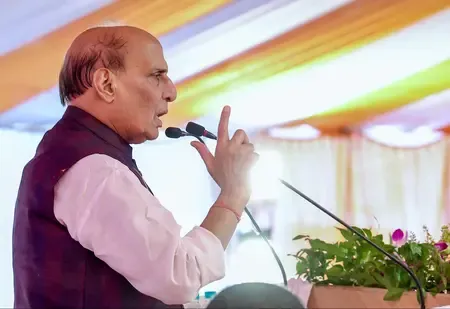
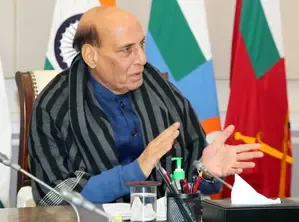
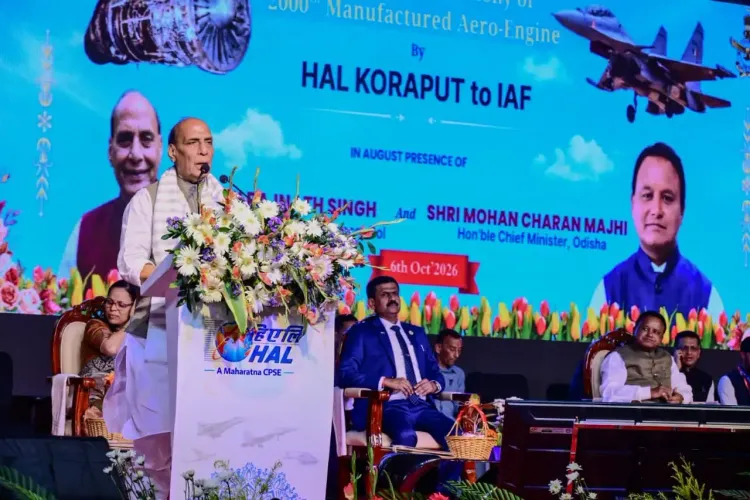
Defence Minister Rajnath Singh on Tuesday, 6 October 2026, called for a decisive strengthening of India's indigenous capabilities in the design, development, testing, and manufacture of advanced aero-engines, asserting that mastery over propulsion technology is indispensable to achieving true self-reliance in the aerospace and defence sector. Singh made the remarks at HAL Koraput Division in Odisha, where he witnessed the delivery of the 2,000th aero-engine manufactured by Hindustan Aeronautics Limited (HAL).
A Milestone Six Decades in the Making
Describing the delivery as a landmark in India's aerospace journey, Singh congratulated the engineers, technicians, scientists, and skilled workers of HAL Koraput, noting that the achievement embodies six decades of engineering expertise since the division was established in 1964. The division has powered frontline military aircraft including the MiG-21, MiG-27, MiG-29, and the Su-30MKI. According to Singh, more than 9,000 engines have been overhauled at the facility to date, underscoring its critical role in maintaining the operational readiness of India's Armed Forces.
Key Investments and Capacity Expansion
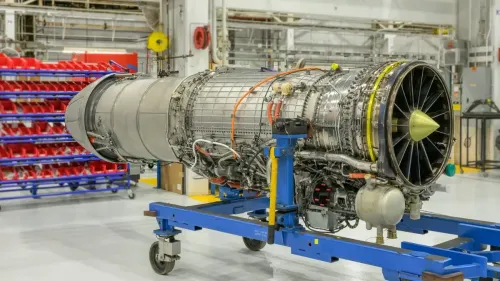
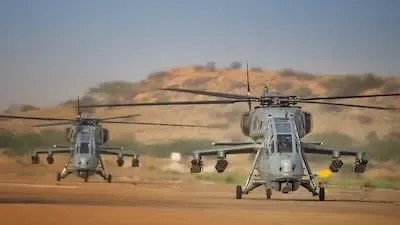
Singh announced a ₹335 crore investment to raise HAL's annual production capacity of AL-31FP engines — which power the Su-30MKI fleet — from 30 to 50 units per year. He also confirmed the establishment of a second Shakti engine production line at an outlay of ₹218 crore, which will have an annual capacity of up to 100 engines and is expected to be fully operational by 2028–29. The Shakti line will support indigenous helicopter platforms, including the Dhruv Advanced Light Helicopter (ALH) and the Prachand Light Combat Helicopter (LCH).
Notably, the government had placed an order for 240 AL-31FP engines with HAL in 2024 for the Su-30MKI fleet. Despite global supply-chain disruptions and raw-material challenges, HAL delivered the first engine ahead of schedule and supplied 63 engines against a target of 60 by the close of the second year — a delivery record Singh highlighted as evidence of the organisation's growing execution capability.
The AMCA Imperative and Indigenous Engine Testing
Singh stressed that self-reliance in aerospace must encompass indigenous aero-engine capabilities, particularly for the Advanced Medium Combat Aircraft (AMCA) programme. He referenced a proposed investment of approximately ₹5,000 crore, ongoing efforts to indigenise raw materials in collaboration with Mishra Dhatu Nigam Limited (MIDHANI), and the establishment of India's first indigenous high-thrust engine testing facility. Describing the aero-engine as the 'heart' of an aircraft, he emphasised that reliable propulsion is foundational to leveraging advanced airframes, radars, weapons, and avionics — areas where India has made measurable gains in recent years.
Odisha's Emerging Aerospace Role
Singh highlighted Odisha's expanding footprint in the aerospace and defence sector, citing the state's strategic location, ports, mineral resources, industrial infrastructure, and skilled workforce. He also referenced the approved Aerospace and Defence Equipment Manufacturing Complex at Gajamara in Dhenkanal, and urged HAL to develop Koraput into a broader aerospace propulsion ecosystem by partnering with MSMEs, start-ups, universities, and research institutions. Odisha Chief Minister Mohan Charan Majhi, Secretary (Defence Production) Sanjeev Kumar, and Deputy Chief of the Air Staff Air Marshal Tejpal Singh were also present at the event.
What Comes Next
With the second Shakti production line targeted for completion by 2028–29 and the AMCA programme gaining momentum, the Koraput facility is set to become an increasingly central node in India's propulsion supply chain. The broader ambition — reducing dependence on foreign engine suppliers, particularly for combat aircraft — will be tested by how quickly indigenisation targets translate into certified, flight-ready hardware.
Point of View
High-thrust engine that India has yet to produce at any stage of certification. The ₹5,000 crore propulsion outlay and the proposed high-thrust testing facility are the more consequential signals here, yet both remain 'proposed' and 'ongoing' rather than contracted. HAL's record of delivering 63 engines against a target of 60 shows execution is improving — the harder question is whether the indigenisation timeline for AMCA-grade engines can survive the gap between political intent and engineering reality.
NationPress
7 Oct 2026
Frequently Asked Questions
What is the significance of HAL Koraput's 2,000th aero-engine delivery?
The delivery marks six decades of continuous aero-engine manufacturing at HAL's Koraput Division in Odisha, which was established in 1964. The facility has powered frontline Indian Air Force jets including the MiG-21, MiG-27, MiG-29, and Su-30MKI, and has overhauled more than 9,000 engines to date.
What investments did Rajnath Singh announce at HAL Koraput?
Singh announced two investments: ₹335 crore to increase annual AL-31FP engine production from 30 to 50 units, and ₹218 crore for a second Shakti engine production line with a capacity of up to 100 engines per year, targeted for completion by 2028–29.
How does the Shakti engine production line support India's helicopter fleet?
The new Shakti line will supply engines for indigenous helicopter platforms, specifically the Dhruv Advanced Light Helicopter (ALH) and the Prachand Light Combat Helicopter (LCH). It is expected to be fully operational by 2028–29.
Why is indigenous aero-engine capability important for the AMCA programme?
The Advanced Medium Combat Aircraft (AMCA) — India's next-generation stealth fighter — requires a domestically developed high-thrust engine to achieve true self-reliance. Singh referenced a proposed ₹5,000 crore investment, raw-material indigenisation efforts with MIDHANI, and the planned establishment of India's first indigenous high-thrust engine testing facility to support this goal.
How has HAL performed on the 240 AL-31FP engine order placed in 2024?
HAL delivered the first AL-31FP engine ahead of schedule and supplied 63 engines against a target of 60 by the end of the second year, despite global supply-chain disruptions and raw-material challenges, according to Rajnath Singh.