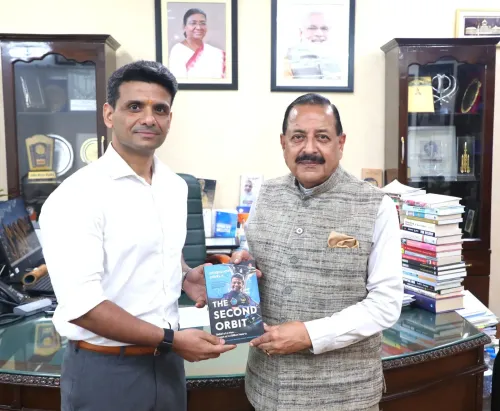
Rajnath Singh receives Shubhanshu Shukla's book 'The Second Orbit'
Synopsis
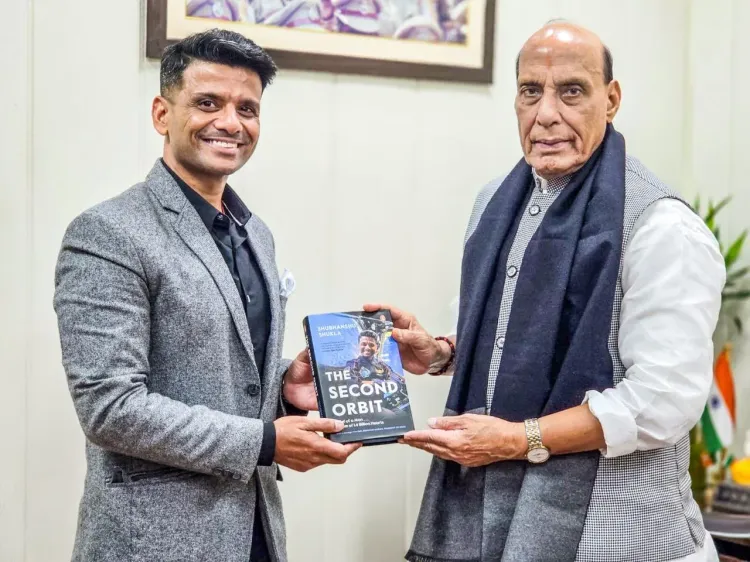
Defence Minister Rajnath Singh received 'The Second Orbit' from IAF Group Captain and Gaganyaan astronaut-designate Shubhanshu Shukla on November 12, 2026, praising the book as an inspiration for India's youth to dream fearlessly.
Key Takeaways
Rajnath Singh received a copy of The Second Orbit from Group Captain Shubhanshu Shukla on November 12, 2026 .
The book chronicles Shukla's journey of 'courage, determination and achievement' as an IAF test pilot and astronaut-designate.
Shukla is a crew candidate for India's Gaganyaan human spaceflight programme , approved by the Cabinet in 2018 .
Singh called the story an inspiration for young Indians to 'dream fearlessly' and 'push boundaries.' IAF test pilots are integral to Gaganyaan's crew architecture, reflecting India's integration of military aviation expertise with its space programme.
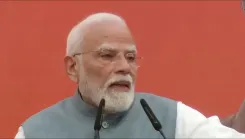
A book, a uniform, and a dream that once seemed impossible — Union Defence Minister Rajnath Singh on Thursday, November 12, 2026, received a personal copy of The Second Orbit from its author, Group Captain Shubhanshu Shukla of the Indian Air Force, calling the astronaut-designate's journey a blueprint for India's fearless next generation.
The book and the man behind it
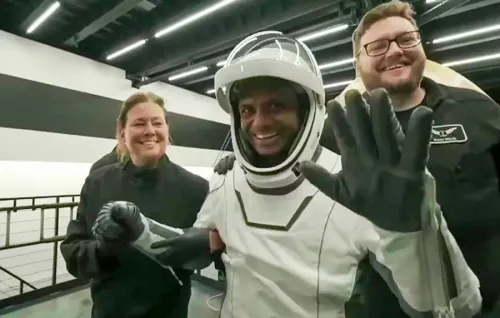
Group Captain Shubhanshu Shukla is one of India's astronaut candidates selected for the Gaganyaan human spaceflight programme, the country's flagship mission to place an Indian crew in low-Earth orbit using an indigenous launch vehicle. A test pilot by training, Shukla represents the IAF's deep integration with India's civilian space ambitions — a bridge between cockpit and cosmos that ISRO has deliberately built into Gaganyaan's crew architecture.
The Second Orbit chronicles Shukla's personal and professional journey — the discipline, the setbacks, and the singular focus it takes to go from a fighter aircraft to the threshold of space. Singh described it as capturing 'a remarkable journey of courage, determination and achievement.'
Gaganyaan's human face
Gaganyaan was approved by the Union Cabinet in 2018 as India's first indigenous crewed orbital flight demonstration. The programme has since grown into a symbol of national scientific ambition, with IAF test pilots undergoing astronaut training to serve as the mission's crew. Public outreach — books, lectures, media engagements — by programme participants is part of a deliberate effort to build domestic enthusiasm and inspire the pipeline of scientists, engineers, and pilots India will need for its deeper space ambitions.
Shukla's decision to document his journey in writing adds a rare first-person dimension to a programme that has largely been communicated in mission milestones and technical briefings. Singh noted that the story would 'inspire countless young minds to dream fearlessly, push boundaries and believe that no sky is beyond India's reach.'
A minister's message to India's youth
Singh's reception of the book is more than a ceremonial exchange — it signals the defence establishment's stake in celebrating Gaganyaan's human story at a moment when the programme's crewed flights are on the horizon. His closing thought was pointed: 'May his story inspire the next generation to aim high, believe in their potential and turn seemingly impossible dreams into reality.'
When a country's Defence Minister invokes the cosmos as proof of what India can reach, the audience isn't just the room — it's every student who ever wondered whether a dream that big was really meant for them.
Point of View
The BJP-led government reinforces its narrative of indigenous capability and scientific ambition as pillars of a resurgent India. The gesture also underlines the defence establishment's ownership of the space programme's prestige, a posture that has grown steadily since Gaganyaan's Cabinet approval in 2018. As crewed test flights draw closer, expect more such public-facing moments designed to convert technical milestones into cultural pride.
NationPress
12 Nov 2026
Frequently Asked Questions
Who is Group Captain Shubhanshu Shukla?
Group Captain Shubhanshu Shukla is an Indian Air Force test pilot selected as an astronaut-designate for India's Gaganyaan human spaceflight programme, which aims to place an Indian crew in low-Earth orbit using an indigenous launch vehicle.
What is the book 'The Second Orbit' about?
'The Second Orbit' is a book by Group Captain Shubhanshu Shukla that chronicles his personal and professional journey, capturing his path from IAF test pilot to astronaut candidate, described as a story of courage, determination, and achievement.
What is India's Gaganyaan programme?
Gaganyaan is India's first indigenous human spaceflight programme, approved by the Union Cabinet in 2018. It aims to demonstrate crewed orbital flight using an Indian launch vehicle, with IAF test pilots selected as the mission crew.
Why did Rajnath Singh receive Shubhanshu Shukla's book?
Group Captain Shukla personally presented Defence Minister Rajnath Singh with a copy of his book 'The Second Orbit' on November 12, 2026. Singh praised the book as an inspiration for India's youth to dream fearlessly and pursue ambitious goals.
When was the Gaganyaan programme approved?
India's Gaganyaan human spaceflight programme was approved by the Union Cabinet in 2018 to develop and demonstrate indigenous crewed orbital flight capability.