Rajnath Singh Addresses Raksha Sanskritik Sandhya at Eastern Air Command
Synopsis
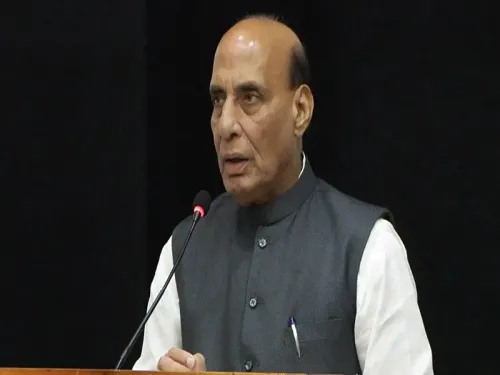
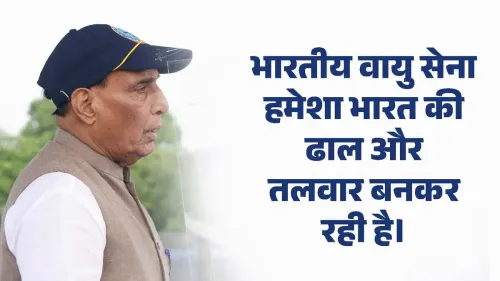
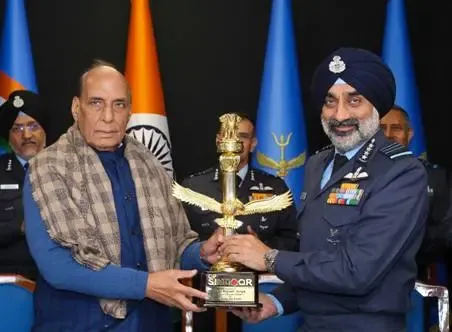
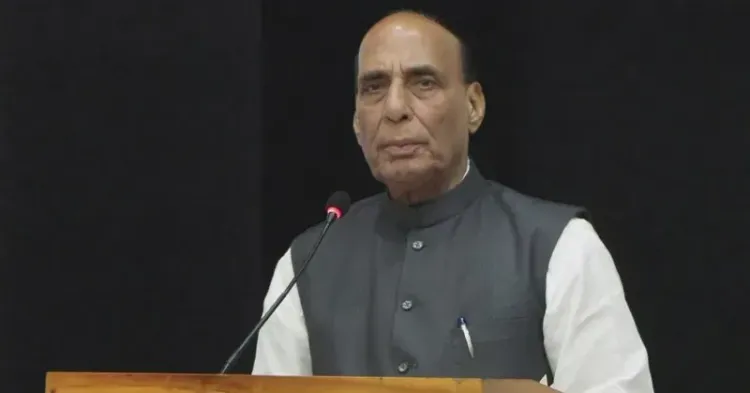
Union Defence Minister Rajnath Singh addressed the Raksha Sanskritik Sandhya, a cultural evening at Eastern Air Command in Shillong on 20 June 2026. The event highlights sustained high-level ministerial engagement with India's northeastern defence theatre and the Indian Air Force's civil-military outreach in a strategically sensitive region.
Key Takeaways
Rajnath Singh spoke at the Raksha Sanskritik Sandhya at Eastern Air Command headquarters in Shillong on 20 June 2026 .
The Eastern Air Command is one of five operational commands of the Indian Air Force , responsible for air operations across India's eastern sector.
Shillong, Meghalaya hosts the EAC headquarters and is strategically located near borders with Bangladesh, Myanmar, China , and Bhutan .
Cultural evenings under the Raksha umbrella are a long-standing tradition aimed at boosting morale among personnel in remote and frontier postings.
The visit reflects the government's sustained policy focus on the Northeast as a priority defence and strategic zone.
Rajnath Singh has held the Defence portfolio continuously since 2019 , making northeastern command engagement a consistent feature of his ministerial tenure.
Union Defence Minister Rajnath Singh spoke at the Raksha Sanskritik Sandhya, a cultural evening organised at the Eastern Air Command headquarters in Shillong, Meghalaya, on Saturday, 20 June 2026. The event brought together defence personnel and their families at one of the Indian Air Force's most strategically significant commands.
Context
The Eastern Air Command (EAC), headquartered in Shillong, is one of five operational commands of the Indian Air Force and is responsible for air operations across India's entire eastern sector. The command oversees a vast and demanding area of responsibility that includes the Northeast, a region characterised by complex terrain, variable weather, and proximity to international borders with Bangladesh, Myanmar, China, and Bhutan. Cultural programmes of this nature are a long-standing tradition within the armed forces, designed to sustain morale among personnel posted in remote and frontier postings.
The 'Raksha Sanskritik Sandhya' format — a cultural evening under the broader Raksha umbrella — aims to reinforce a sense of community among service members while also strengthening civil-military ties with local populations in the region. Meghalaya, as the host state, carries strategic significance that has only grown with expanded defence infrastructure and connectivity investments across the Northeast over the last decade.
Policy Backdrop
High-level ministerial visits to the Eastern Air Command reflect the Indian government's sustained focus on the northeastern theatre as a priority defence zone. The region's unique operational demands — from high-altitude deployments to rapid-response requirements along sensitive borders — have made it a consistent area of policy attention under successive governments. Rajnath Singh, who has held the Defence portfolio since 2019, has made engagement with forward-area commands a visible part of his ministerial approach.
Cultural outreach by the Defence Ministry at operational commands is part of a broader effort to integrate welfare, morale-building, and community engagement into the armed forces' institutional calendar. Such events also serve a softer strategic purpose: projecting a positive civil-military relationship in border states where community trust is operationally valuable.
Stakeholders and Impact
The primary beneficiaries of the Raksha Sanskritik Sandhya are Indian Air Force personnel and their families stationed at and around Shillong, many of whom serve away from their home states for extended periods. For the local Meghalaya community, a Defence Minister's presence at a public cultural event at the command headquarters signals continued federal engagement with the Northeast. Broader stakeholders include the defence establishment, which views such events as instruments of institutional cohesion, and the northeastern states, which benefit from the visibility and investment that high-level defence attention brings.
The event also underscores the Indian Air Force's role not merely as a fighting force but as an institution embedded in the social fabric of the regions where it operates — a dimension that carries particular weight in the Northeast, where civil-military relations have historically been complex.
What's Next
Observers will watch for any policy announcements or operational statements that Rajnath Singh may make in the course of his engagement with the Eastern Air Command, including possible visits to forward bases or meetings with senior Air Force leadership in the region. Continued ministerial attention to the northeastern theatre is expected, given ongoing infrastructure development and the strategic salience of India's eastern borders. Any follow-up visits to other northeastern formations or civil-military outreach programmes in the region will be closely tracked by defence analysts and local stakeholders alike.
Point of View
And visits to Eastern Air Command reinforce that narrative. For Rajnath Singh, who has cultivated a reputation for frontline engagement with the armed forces, this appearance at Shillong fits a pattern of using soft-power moments to consolidate civil-military goodwill in strategically sensitive border regions. The broader arc here is one of deliberate federal investment — symbolic and material — in a region that has historically felt peripheral to national policy.
NationPress
21 Jun 2026
Frequently Asked Questions
What is Raksha Sanskritik Sandhya?
Raksha Sanskritik Sandhya is a cultural evening programme organised under the Defence Ministry's outreach initiatives, typically held at military commands to boost morale among personnel and their families and to strengthen civil-military ties.
Where is Eastern Air Command located?
The Eastern Air Command of the Indian Air Force is headquartered in Shillong, the capital of Meghalaya, and is responsible for air operations across India's entire eastern sector.
Why did Rajnath Singh visit Eastern Air Command in Shillong?
Rajnath Singh attended the Raksha Sanskritik Sandhya cultural evening at Eastern Air Command on 20 June 2026, as part of the Defence Ministry's ongoing engagement with personnel and formations in India's northeastern theatre.
What is the strategic importance of Eastern Air Command?
Eastern Air Command oversees a vast area of responsibility covering India's Northeast, a region with complex terrain and international borders with Bangladesh, Myanmar, China, and Bhutan, making it one of the most strategically sensitive commands of the Indian Air Force.
How long has Rajnath Singh been Defence Minister?
Rajnath Singh has served as Union Minister of Defence since 2019. He previously served as Union Home Minister and as Chief Minister of Uttar Pradesh, and is a senior leader of the Bharatiya Janata Party.