Rajnath Singh chairs Defence Modernisation meet in Jaisalmer
Synopsis
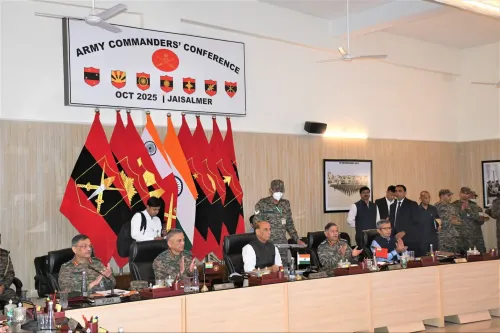
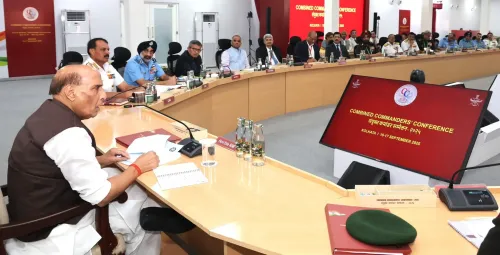
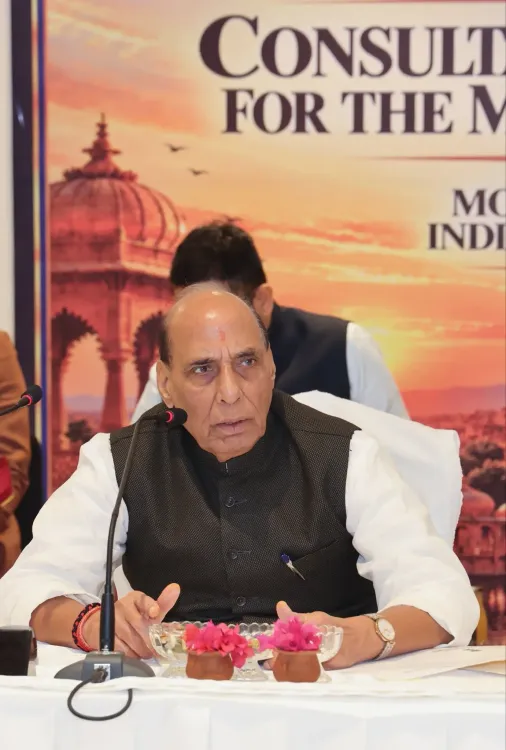
Union Defence Minister Rajnath Singh chaired the Ministry of Defence Consultative Committee meeting in Jaisalmer on November 3, 2026, deliberating on security challenges, warfare technology, and the Modi government's budgetary push to build a future-ready Indian military.
Key Takeaways
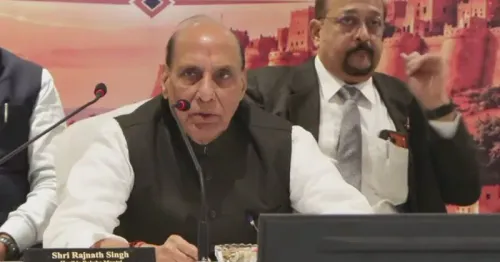
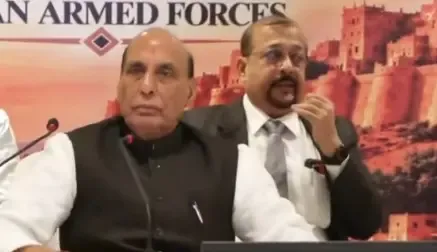
Union Defence Minister Rajnath Singh attended the Consultative Committee meeting of the Ministry of Defence in Jaisalmer, Rajasthan on November 3, 2026 .
Deliberations covered emerging security challenges, evolving warfare paradigms, and technological advancements required for a future-ready military.
Singh stressed that the Modi government has prioritised budgetary support and capital acquisition for defence modernisation. 'Effective utilisation and prioritisation of critical needs' of the armed services were highlighted as essential alongside adequate financial resources.
The meeting's agenda aligns with India's Atmanirbhar Bharat initiative, launched in 2020 , to reduce dependence on imported defence equipment.
Capital acquisition proposals and budget utilisation details are expected to crystallise in the upcoming Union Budget cycle.
From the desert city of Jaisalmer, Union Defence Minister Rajnath Singh on Tuesday, November 3 chaired a high-level Consultative Committee meeting of the Ministry of Defence focused squarely on one question: how does India build a military that is ready for tomorrow's wars — not yesterday's?
The meeting convened in Jaisalmer, Rajasthan — itself a city whose history is written in border warfare — and drew comprehensive deliberations on emerging security challenges, shifting warfare paradigms, technological advancements, and the imperative of fielding a 'future-ready, technologically empowered and operationally agile' military, as Singh described it.
Budgets, capital and the backbone of modernisation
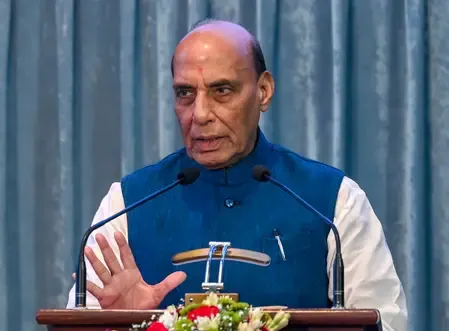
At the heart of the discussion was money — and how effectively it is being deployed. Singh underscored that the government under Prime Minister Narendra Modi has remained focused on budgetary support and capital acquisition to drive modernisation. 'Adequate financial resources, coupled with effective utilisation and prioritisation of critical needs of the Services, are essential to strengthening military capabilities,' he stated.
That framing matters. India's annual defence budget has seen steady capital-outlay growth since 2014, with a deliberate pivot away from revenue expenditure toward procurement and infrastructure. The emphasis on 'effective utilisation' signals an acknowledgement that allocation alone is not enough — spend quality counts as much as spend quantity.
Atmanirbhar Bharat and the indigenous push
The modernisation agenda does not exist in isolation. It runs parallel to the Atmanirbhar Bharat initiative, launched in 2020, which has pushed hard to reduce India's historic dependence on imported defence platforms. Indigenisation — from fighter jet components to advanced electronics — has become both a strategic and an economic goal, shrinking the vulnerability window that comes with foreign supply chains.
The Jaisalmer meeting's explicit focus on 'technological advancements' and 'warfare paradigms' points directly at domains that have redefined modern conflict: drone warfare, cyber capabilities, electronic warfare, and space-based assets. These are arenas where procurement cycles must accelerate dramatically to keep pace with adversaries.
What the next Budget cycle will reveal
The deliberations carry forward momentum toward the next Union Budget, where capital acquisition proposals and utilisation reports will spell out whether the strategic ambitions articulated in Jaisalmer translate into hard allocations. With border dynamics on both the northern and western fronts continuing to demand attention, the political will to fund modernisation will face its clearest test in the numbers.
India is not just buying weapons — it is attempting to rewire how its military thinks, acquires, and fights. Jaisalmer just made that argument out loud.
Point of View
Not left to bureaucratic inertia. By convening in a border-proximate city and invoking both budgetary discipline and technological transformation in the same breath, Singh is threading two often-competing priorities — fiscal prudence and capability ambition. The meeting also pre-positions the government ahead of a Budget cycle where defence capital outlay is likely to come under scrutiny. Longer term, the emphasis on 'warfare paradigms' suggests India is preparing its doctrinal and procurement vocabulary for next-generation conflict domains, from drones to cyber, rather than simply upgrading legacy platforms.
NationPress
3 Nov 2026
Frequently Asked Questions
What was the Consultative Committee meeting in Jaisalmer about?
The Consultative Committee of the Ministry of Defence met in Jaisalmer on November 3, 2026 to deliberate on the modernisation of Indian defence forces, covering security challenges, evolving warfare technology, and budgetary priorities for military capability-building.
What did Rajnath Singh say about the defence budget?
Rajnath Singh stated that the Modi government has been focused on budgetary support and capital acquisition for modernisation, adding that adequate financial resources combined with effective utilisation and prioritisation of critical service needs are essential to strengthening military capabilities.
What is the Atmanirbhar Bharat initiative in defence?
Launched in 2020, the Atmanirbhar Bharat initiative in defence aims to accelerate indigenous production of military equipment and reduce India's dependence on imported platforms, making the country more self-reliant in defence manufacturing.
Why was the defence meeting held in Jaisalmer?
Jaisalmer in Rajasthan, located near India's western border with Pakistan, is a strategically significant military base city and a symbolic choice for high-level defence deliberations focused on operational readiness and modernisation.
What is India's defence capital outlay trend?
India's defence budget has seen a steady increase in capital outlay since 2014, with a deliberate shift toward procurement, infrastructure, and technology acquisition over routine revenue expenditure, reflecting a long-term modernisation drive.