Rajnath Singh: Defence Budget 3x, Indigenous Output ₹1.80L Cr
Synopsis
Union Defence Minister Rajnath Singh has cited a near-tripling of India's defence budget over 12 years and indigenous production reaching ₹1.80 lakh crore as evidence that a strong economy and a secure nation are mutually reinforcing — and declared India always prepared to protect its sovereignty.
Key Takeaways
Union Defence Minister Rajnath Singh stated India's defence budget has grown approximately 3 times over the last 12 years .
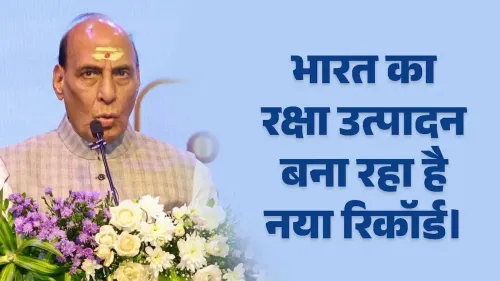
Indigenous defence production has reportedly reached ₹1.80 lakh crore , according to the minister's post.
Singh framed economic strength and defence preparedness as a 'self-reinforcing loop,' not competing priorities.
The claim builds on policy reforms dating to 2016 (revised Defence Procurement Procedure) and the Atmanirbhar Bharat Abhiyan of May 2020 , which introduced a negative import list for defence goods.
Singh reaffirmed India's commitment to peace while asserting readiness to defend its integrity, sovereignty, and citizens.
The next Union Budget defence allocation will be the key test of whether the stated production and spending trajectory is being sustained.
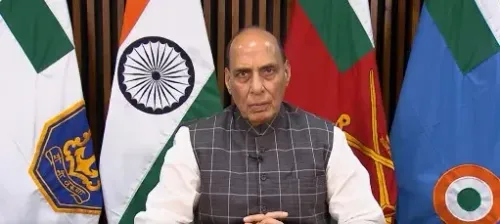
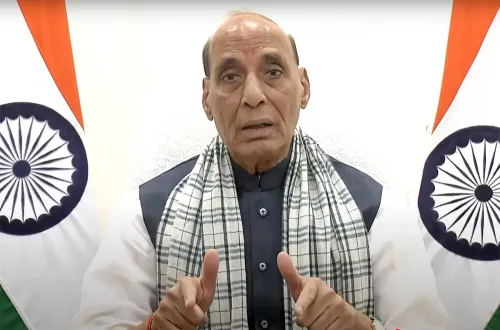
India's defence story, Union Defence Minister Rajnath Singh argued on Thursday, September 24, 2026, is not just a military one — it is an economic one. Posting on X, Singh cited a near-tripling of the defence budget over 12 years and indigenous defence production climbing to ₹1.80 lakh crore as twin proof that a strong economy and a secure nation reinforce each other.
In Hindi, the Defence Minister wrote: 'मजबूत अर्थव्यवस्था हमारी डिफेन्स प्रिपेयर्डनेस को शक्ति देती है और सुरक्षित राष्ट्र विकास को गति देता है' — 'A strong economy powers our defence preparedness, and a secure nation accelerates development.' The formulation is deliberate: Singh is making the case that the two are not competing priorities but a single, self-reinforcing loop.
From Import Dependence to ₹1.80 Lakh Crore in Domestic Output
The numbers Singh invokes sit atop a decade-long policy architecture. When the NDA government took office in 2014, one of its earliest defence reforms was the revision of the Defence Procurement Procedure in 2016, which explicitly gave priority to indigenous and 'Make in India' procurement over foreign sourcing. The goal was structural: reduce the import bill, build a domestic industrial base, and eventually become a net defence exporter.
That framework got sharper statutory muscle with the Atmanirbhar Bharat Abhiyan, announced in May 2020. The initiative introduced a negative import list — a rolling schedule of defence items that can no longer be procured from abroad — and set explicit domestic production targets. The ₹1.80 lakh crore figure Singh cites is the headline output number that the government claims the domestic defence manufacturing sector has now reached.
The Strategic Logic Behind the Numbers
Singh's closing line carries geopolitical weight: 'भारत शांति का पक्षधर है, लेकिन अपनी अखंडता, संप्रभुता और नागरिकों की रक्षा के लिए सदैव तैयार है' — 'India is a proponent of peace, but is always prepared to protect its integrity, sovereignty, and citizens.' That is a classical deterrence formulation — peace through strength — and it places the budget and production data in a direct strategic context.
The broader pattern since 2014 has been to present rising defence outlays not as a burden on the economy but as its dividend — arguing that a growing GDP creates the fiscal space for higher defence spending, which in turn underwrites the security environment that attracts investment and sustains growth. It is a compact that Singh has consistently championed as Defence Minister, and Thursday's post is its most concise articulation yet.
What the Next Budget Will Test
The real stress-test for these claims will come at the next Union Budget, where updated defence allocations and any revised production or export targets will either validate or complicate the trajectory Singh is projecting. Domestic manufacturers and the three armed services will be watching whether capital expenditure within the defence budget — the share that actually funds new procurement — continues to rise as a proportion, and whether export targets announced under Atmanirbhar Bharat are being met on schedule.
For now, Singh has drawn the frame clearly: India's defence readiness is funded by economic growth, and economic growth is made possible by defence readiness. Whether the numbers sustain that argument is a question the next set of official figures will have to answer.
Point of View
And security capacity creates growth — a virtuous cycle the party has been building its strategic-affairs narrative around since 2014. By anchoring the claim in a 12-year arc, Singh implicitly benchmarks the current government's entire tenure in office. The ₹1.80 lakh crore indigenous production figure, if it holds up to scrutiny, would represent a significant structural shift away from India's historically import-heavy defence posture. The closing deterrence language — peace-preferring but sovereignty-ready — is calibrated for multiple audiences: domestic voters, regional adversaries, and defence industry partners simultaneously.
NationPress
24 Sept 2026
Frequently Asked Questions
Has India's defence budget really tripled in 12 years?
Union Defence Minister Rajnath Singh has claimed the defence budget has grown approximately three times over the last 12 years. Annual allocations have shown consistent nominal increases since 2014, though independent verification of the exact tripling figure requires official budget data across the full period.
What is India's current indigenous defence production value?
Rajnath Singh stated that India's indigenous defence production has reached ₹1.80 lakh crore. This figure reflects output by domestic manufacturers supported by policies such as the Atmanirbhar Bharat Abhiyan and Make in India in defence.
What is the Atmanirbhar Bharat Abhiyan in defence?
Atmanirbhar Bharat Abhiyan, announced in May 2020, is a government initiative to make India self-reliant in defence manufacturing. It introduced a negative import list — items that can no longer be sourced from abroad — and set targets for domestic production and exports.
What did Rajnath Singh say about India's peace and security stance?
Singh stated that India is a proponent of peace but is always prepared to protect its integrity, sovereignty, and citizens. The statement reflects a classic deterrence posture — projecting willingness for peace while signalling military readiness.
When was the Defence Procurement Procedure revised to favour indigenous manufacturing?
The Defence Procurement Procedure was revised in 2016 to give explicit priority to indigenous procurement and Make in India in defence, forming a key pillar of the government's strategy to reduce import dependence.