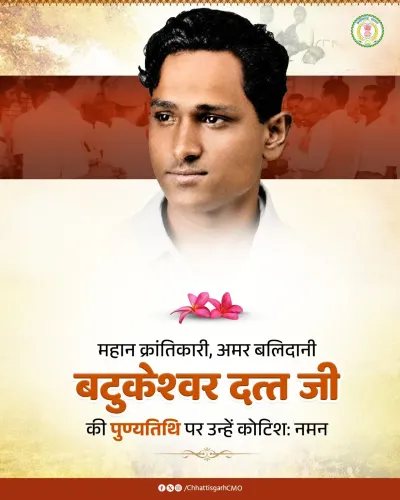
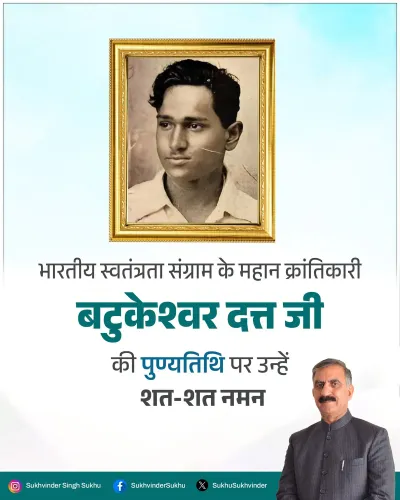
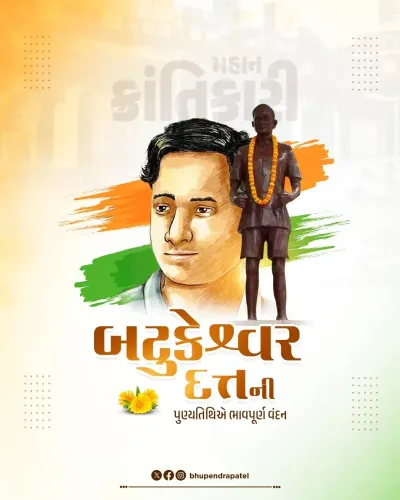
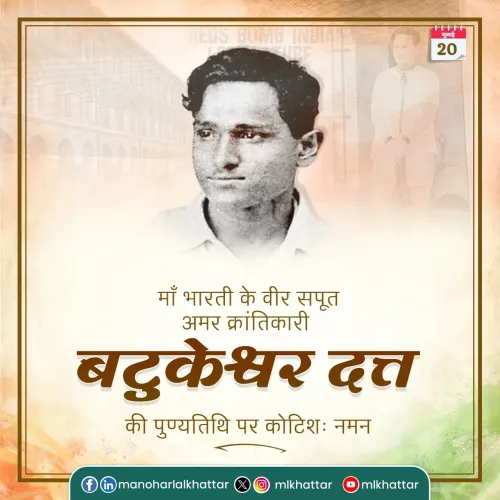
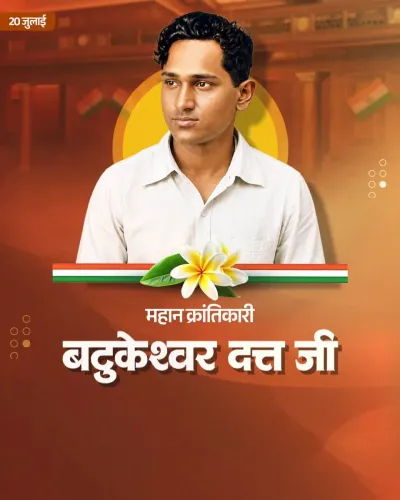
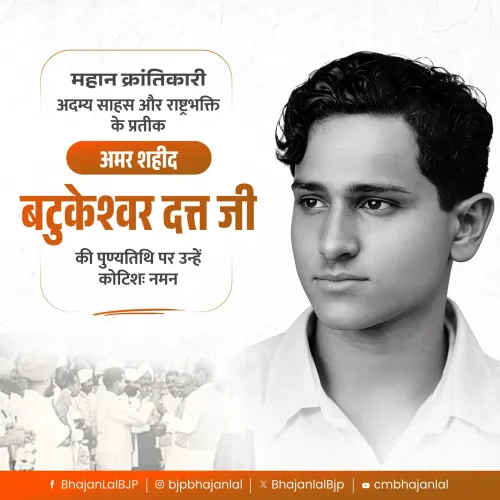
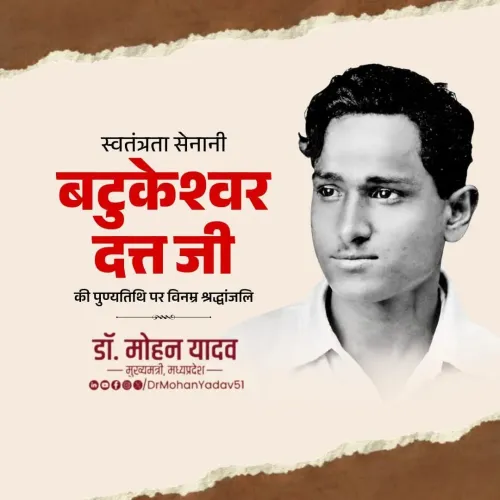
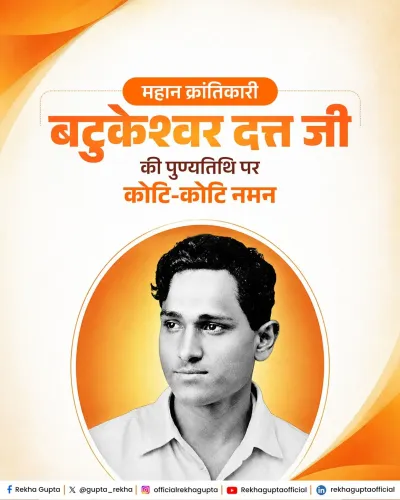
Rajnath Singh pays homage to revolutionary Batukeshwar Dutt
Synopsis
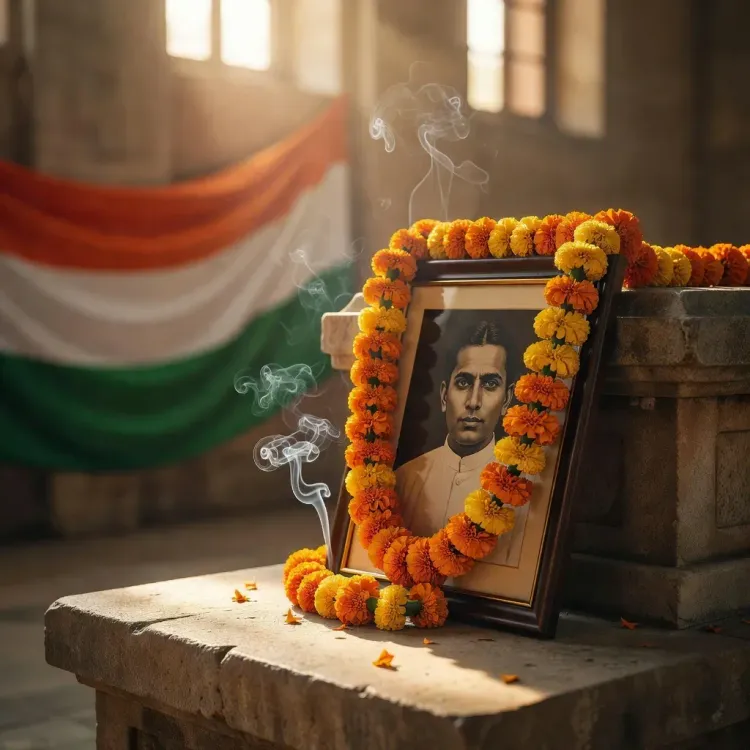
Union Defence Minister Rajnath Singh paid tribute to revolutionary Batukeshwar Dutt on his Punya Tithi on 20 July 2026, honouring the HSRA leader who threw bombs in the 1929 Central Legislative Assembly alongside Bhagat Singh to protest colonial legislation, and pledging to uphold his ideals of justice and national development.
Key Takeaways
Rajnath Singh paid homage to revolutionary Batukeshwar Dutt on his Punya Tithi on 20 July 2026 .
Batukeshwar Dutt and Bhagat Singh threw bombs in the Central Legislative Assembly on 8 April 1929 to protest the Public Safety Bill and Trade Disputes Bill .
Dutt was sentenced to life imprisonment and released in 1946 , spending years in the Andaman cellular jail .
Singh described Dutt as a 'devout nationalist and courageous personality' who fought injustice and colonial rule.
Official tributes to HSRA revolutionaries have been a consistent feature of BJP government communication since 2014 , clustering around the July–August Independence Day calendar.
The 1929 Assembly action's centenary in 2029 is expected to prompt larger commemorative programming from the Ministry of Culture .
Union Defence Minister Rajnath Singh on Monday, 20 July 2026, paid tribute to freedom fighter Batukeshwar Dutt on his Punya Tithi, honouring the revolutionary's resistance against British colonial rule and calling his ideals an enduring inspiration for the nation's development.
Context
Batukeshwar Dutt is remembered as one of the most courageous figures of India's armed independence movement. On 8 April 1929, he and fellow revolutionary Bhagat Singh threw smoke bombs in the Central Legislative Assembly in New Delhi — not to cause casualties, but to make a political statement against the repressive Public Safety Bill and the Trade Disputes Bill. The act was a deliberate, theatrical protest designed to 'make the deaf hear,' as the revolutionaries themselves declared.
Dutt was subsequently tried and sentenced to life imprisonment. He remained incarcerated until 1946, spending years in the Andaman cellular jail and other prisons. After independence, he lived a largely quiet life and passed away on 20 July 1965. His Punya Tithi — the death anniversary observed in the Hindu tradition — falls on this date each year.
Policy Backdrop
Singh's tribute is part of a sustained commemorative pattern that has become a fixture of ruling-party political communication since 2014. Union ministers and senior BJP leaders have consistently issued statements on the death anniversaries of Hindustan Socialist Republican Association (HSRA) revolutionaries — including Dutt, Bhagat Singh, Sukhdev Thapar, and Shivaram Rajguru — to foreground the armed strand of the independence struggle alongside the mainstream Gandhian narrative.
These observances cluster around the July–August calendar, building into the broader Independence Day programming in mid-August. The government's Ministry of Culture has in recent years commissioned events and exhibitions centred on pre-1947 revolutionary figures, reinforcing their place in official public memory.
Significance and Stakeholders
For citizens and youth in particular, official tributes to figures like Dutt serve as pedagogical moments — linking present-day governance to the ideals of anti-injustice struggle and national sovereignty. Singh's post explicitly draws that line, stating: 'Inspired by his ideals, we will keep working for the development and prosperity of this great nation.'
Dutt's legacy carries particular resonance in Punjab and Uttar Pradesh, states closely associated with the HSRA network. His story — of sacrifice, long imprisonment, and relative obscurity after independence — has also made him a symbol of unsung heroism, frequently cited in school curricula and cultural programmes.
What's Next
With Independence Day 2026 approaching on 15 August, tributes to HSRA revolutionaries are likely to intensify across official and party channels over the coming weeks. Observers will watch for any Ministry of Culture events or state-level programmes — particularly in Punjab and Uttar Pradesh — that mark the legacy of the 1929 Central Legislative Assembly action, as its centenary approaches in 2029. Singh's post signals that the ideological framing of revolutionary nationalism as a foundation for contemporary governance will remain a consistent thread in the BJP's public outreach.
Point of View
Part of a consistent BJP effort since 2014 to place armed revolutionary nationalism at the centre of India's independence memory alongside the Gandhian mainstream. By invoking Dutt's ideals as a mandate for 'development and prosperity,' the post performs a familiar rhetorical move — anchoring present-day governance in the moral authority of pre-1947 sacrifice. With Independence Day weeks away, such tributes also serve as audience-building moments, particularly among youth and voters in Punjab and Uttar Pradesh where HSRA figures carry deep cultural resonance. The approaching 2029 centenary of the Assembly bombing is likely to amplify this commemorative arc significantly.
NationPress
19 Oct 2026
Frequently Asked Questions
Who was Batukeshwar Dutt?
Batukeshwar Dutt was an Indian revolutionary and member of the Hindustan Socialist Republican Association (HSRA) who, alongside Bhagat Singh , threw smoke bombs in the Central Legislative Assembly on 8 April 1929 to protest colonial legislation. He was sentenced to life imprisonment and released in 1946 .
Why did Rajnath Singh pay tribute to Batukeshwar Dutt today?
Rajnath Singh paid tribute on 20 July 2026 , the Punya Tithi (death anniversary) of Batukeshwar Dutt , who passed away on 20 July 1965 . Such annual commemorations of HSRA revolutionaries are a consistent practice among senior BJP leaders.
What did Batukeshwar Dutt and Bhagat Singh do in 1929?
On 8 April 1929 , Batukeshwar Dutt and Bhagat Singh threw smoke bombs inside the Central Legislative Assembly in New Delhi to protest the repressive Public Safety Bill and Trade Disputes Bill . The act was designed as a political statement, not to cause casualties.
What is Punya Tithi?
Punya Tithi is a Hindu tradition marking the death anniversary of a revered individual. It is observed as a day of remembrance and homage, and is commonly referenced in official tributes to freedom fighters and national figures in India.
How does the BJP commemorate HSRA revolutionaries?
Since 2014 , senior BJP leaders and Union ministers have regularly issued statements on the death anniversaries of HSRA figures including Batukeshwar Dutt , Bhagat Singh , Sukhdev , and Rajguru , framing their legacy as foundational to the party's governance philosophy and national development agenda.