Rajnath Singh slams Congress over 'Regime Change' slogans
Synopsis
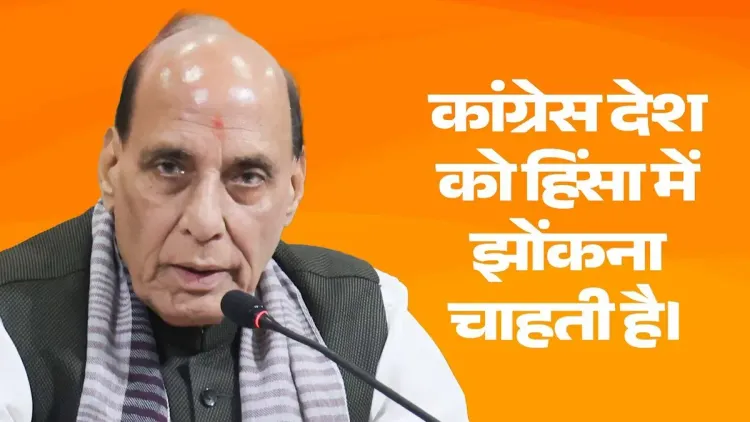
Union Defence Minister Rajnath Singh publicly rebuked Congress on October 16, 2026, calling 'Regime Change' slogans and street-based disorder antithetical to democracy and the national interest, insisting the path to power must run through electoral mandates.
Key Takeaways
Rajnath Singh posted on X on October 16, 2026 directly naming Congress in a rebuke over protest slogans and street agitation.
He called slogans like 'Regime Change' and 'Parliament is not the way — the street is' harmful to democracy.
Singh stated that promoting violence and anarchy under the banner of political opposition is 'against the national interest.' He insisted that the path to power runs through popular mandate (janmat) , not street disorder.
The statement reflects the BJP's sustained strategy of framing opposition agitation as extra-constitutional rather than legitimately democratic.
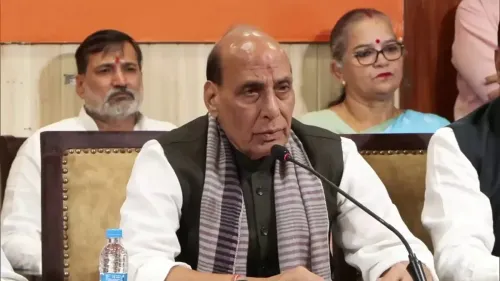
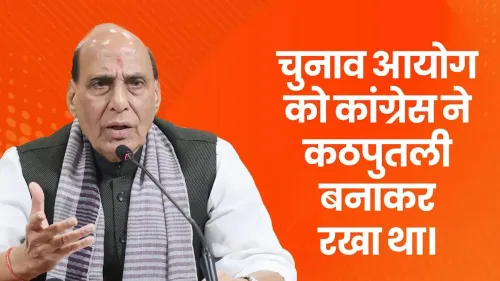
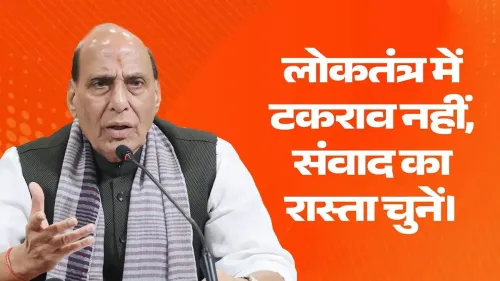
Democracy is not strengthened by slogans like 'Regime Change' and 'Sansad nahin, sadak se raasta niklega' — the path forward is not through parliament but through the streets. That was the charge Union Defence Minister Rajnath Singh levelled at the Indian National Congress on Friday, October 16, 2026, in a sharp post on X that drew a hard line between legitimate political opposition and what he called violence-driven anarchy.
The exact charge Singh has put on record
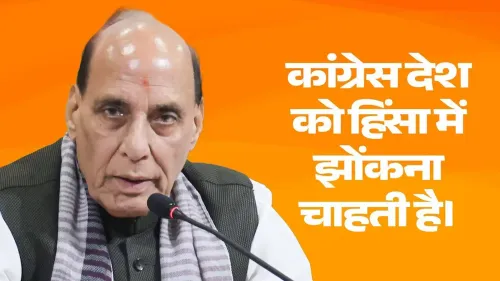
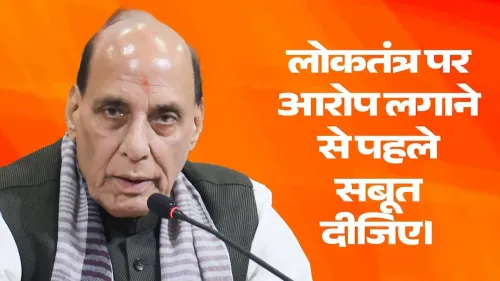
Singh's post, written in Hindi, is direct and unsparing. 'Slogans like 'Regime Change' and 'Parliament is not the way — the street is' do not strengthen democracy,' he wrote. 'Promoting violence and anarchy in the name of political opposition is against the national interest.'
The minister then addressed Congress by name: 'Congress must understand that the path to power runs through the will of the people — not by spreading disorder on the streets.' The use of the English phrase 'Regime Change' inside an otherwise Hindi post signals a deliberate rhetorical choice, underscoring that the BJP sees the framing as borrowed, foreign-flavoured agitation language rather than organic democratic protest.
BJP vs Congress: the recurring battle over street versus ballot
This is not a new front in Indian politics — it is a well-worn, high-stakes argument. The BJP has consistently positioned itself as the guardian of constitutional and electoral processes, framing any large-scale street agitation by the opposition as an attempt to bypass the mandate of the ballot box. Congress, for its part, has historically defended public protest as a fundamental democratic right, pointing to the freedom-movement heritage of mass mobilisation.
What makes ministerial interventions like this significant is their level: when India's Defence Minister — a figure who also served as Home Minister and Chief Minister of Uttar Pradesh — steps into the political arena with language this pointed, it signals that the ruling establishment views the current wave of opposition activity as crossing a threshold worth publicly contesting.
Why 'Regime Change' is the phrase that stings
The specific invocation of 'Regime Change' in Singh's post carries strategic weight. The term carries geopolitical overtones — associated globally with externally-engineered political transitions — and its deployment as a protest slogan, if accurate, gives the BJP a powerful framing tool: that certain opposition forces are not merely seeking electoral victory but systemic disruption. Singh's post stops short of making any foreign-conspiracy claim, but the subtext is unmistakable to any attentive political audience.
The broader pattern is clear: ahead of any electoral cycle or during periods of heightened agitation, the BJP uses ministerial platforms to set the terms of the democratic legitimacy debate — and Singh, with his towering institutional resume, is among the party's most credible voices for exactly that argument.
The message from New Delhi on October 16 is unambiguous — if Congress wants power, it should go earn it at the ballot box. The streets, Singh is saying, are not a shortcut to South Block.
Point of View
Institutionally credible leaders to occupy the moral high ground on democratic process whenever opposition agitation peaks. By naming Congress explicitly and invoking the loaded phrase 'Regime Change,' the post attempts to reframe a political confrontation as a constitutional one — shifting the debate from 'what are protesters angry about' to 'are these methods legitimate at all.' The timing and ministerial weight suggest the BJP sees the current opposition mobilisation as electorally threatening enough to counter at the cabinet level. For Congress, the challenge is responding without validating the framing that street protest equals anti-democratic disorder.
NationPress
16 Oct 2026
Frequently Asked Questions
What did Rajnath Singh say about Congress protests?
Rajnath Singh said slogans like 'Regime Change' and 'the path is through the streets, not parliament' do not strengthen democracy, and called on Congress to seek power through electoral mandates rather than street agitation.
What is the 'Regime Change' slogan Rajnath Singh mentioned?
Singh referenced an English-language slogan reportedly used in opposition protests; he argued its use signals an attempt to destabilise rather than democratically contest the government, and that such slogans are against the national interest.
Why is Rajnath Singh criticising Congress in October 2026?
Singh's post came amid what the BJP characterises as heightened and disruptive opposition agitation; as Defence Minister and a senior party figure, he used his platform to publicly challenge the legitimacy of those protest methods.
What is the BJP's position on opposition street protests?
The BJP has consistently argued that democratic mandates must be sought through elections, not street agitation, and ministerial statements like Singh's are part of a recurring effort to frame large-scale protests as extra-constitutional.
Has Rajnath Singh previously criticised opposition agitation tactics?
Yes. As a senior BJP leader and former Home Minister, Singh has on multiple occasions publicly defended constitutional processes and criticised what he describes as attempts by the opposition to bypass electoral verdicts through public disorder.