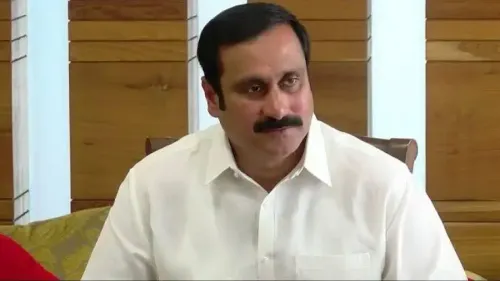
Why is Ramadoss Calling for the Regularisation of Contract Nurses in TN?

Synopsis
In a compelling appeal, PMK founder Dr. S. Ramadoss urged the Tamil Nadu government to regularise contract nurses and ensure they receive equal pay and benefits as their permanent counterparts. This call comes amidst ongoing protests and recent arrests of nurses, highlighting the urgent need for fair compensation in the healthcare sector.
Key Takeaways
Regularisation of contract nurses is a pressing issue in Tamil Nadu.
Current salaries for contract nurses are significantly lower than those of permanent staff.
Legal precedents exist supporting the regularisation demand.
Recent protests have resulted in arrests, raising concerns about democratic rights.
Timely resolution could strengthen public health services.
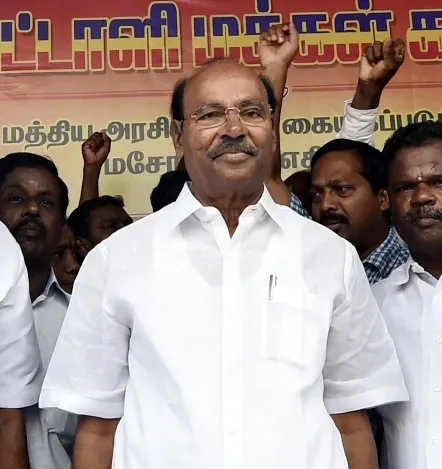
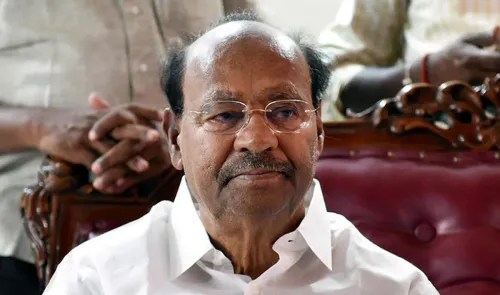
Chennai, Dec 21 (NationPress) PMK founder Dr S. Ramadoss has urged the Tamil Nadu government to swiftly regularise the employment of contract nurses in state-run hospitals and grant them full service benefits, including equal pay comparable to that of permanent staff.
In a strongly articulated statement, Ramadoss highlighted that the health department currently engages approximately 13,000 contract nurses alongside nearly 17,000 permanent nurses. Despite performing the same roles, contract nurses receive a mere Rs 18,000 monthly salary, which is significantly lower than their permanent counterparts.
Labeling this wage disparity as “unjust and unreasonable,” the PMK leader asserted that nurses, who hold essential responsibilities within public health systems, deserve equitable remuneration.
“True commitment and compassion can only flourish when salaries are fair. Paying considerably lower wages to nurses executing the same tasks represents a severe injustice,” he remarked.
Ramadoss noted that the call for regularisation is longstanding and has been supported by judicial entities previously. He referenced the 2015 cohort of nurses recruited via the Medical Services Recruitment Board, who sought service benefits through the Madras High Court. The court ruled favorably for the nurses, and subsequently, the Supreme Court dismissed the state government’s appeal, mandating compliance with the court's ruling.
In spite of these legal mandates, Ramadoss lamented that successive administrations have neglected to fully implement the directive, leaving countless nurses in a precarious position.
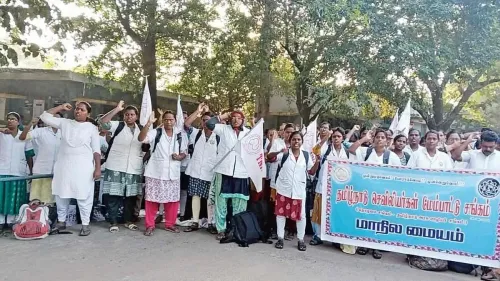
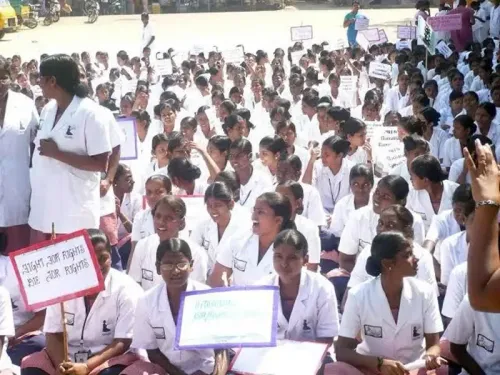
He emphasized that the ongoing agitation by contract nurses, which has persisted for nearly four months, is a direct consequence of this extended inaction.
Furthermore, Ramadoss condemned the recent detention of around 750 nurses who were engaged in a hunger strike in Chennai on December 18, advocating for the withdrawal of the state’s appeal and the enactment of regularisation.
Describing the arrests as “unwarranted and unacceptable,” he stated that democratically organized protests should not be suppressed with force.
He called on the Tamil Nadu government to engage in constructive dialogues with nurses’ representatives, honor the court’s decisions, and promptly issue orders to regularise contract roles.
Stressing that the state’s healthcare system relies heavily on the dedication of both permanent and contract nurses, Ramadoss maintained that addressing their demands expeditiously would not only bring about justice but also bolster public health services throughout Tamil Nadu.
Point of View
The call for regularisation of contract nurses by PMK's Dr. S. Ramadoss underscores a critical discussion on labor rights and healthcare equity. It's essential to ensure that all healthcare workers receive fair compensation for their vital roles, as this directly impacts the quality of healthcare services provided to the public.
NationPress
30 Sept 2026
Frequently Asked Questions
What are the demands of contract nurses?
Contract nurses are demanding regularisation of their positions and equal pay compared to permanent staff members.
How many nurses are currently working on a contract basis in Tamil Nadu?
Approximately 13,000 nurses are employed on a contract basis in Tamil Nadu.
What has been the government’s response to the demands?
The government has not fully implemented previous court rulings regarding the regularisation of contract nurses.
Why have contract nurses been protesting?
Contract nurses have been protesting to demand fair compensation and regularisation of their services for nearly four months.
What recent events have occurred regarding the protests?
Around 750 nurses were arrested during a hunger strike in Chennai while demanding the withdrawal of the government's appeal and the implementation of regularisation.