Rampurhat Municipality orders 2-day meat shop closure for Chhath Puja
Synopsis
A two-day meat shop closure order issued by the Rampurhat Municipality ahead of Chhath Puja has exposed a sharp fault line in West Bengal's festival politics — with traders counting losses, the Congress accusing the TMC chairman of pandering to the BJP, and the BJP itself declining ownership while deflecting critics to the courts.
Key Takeaways
Rampurhat Municipality in Birbhum district, West Bengal ordered three roadside meat shops closed on 15 and 16 November 2026 for Chhath Puja .
The notice, signed by Municipality Chairman Soumen Bhakat , also requires slaughtered animals to be covered with a red cloth on all other days.
Local traders flagged financial losses, saying Sunday is their highest-sales day and no such closure had been ordered in previous years.
Former Congress MLA Milton Rashid alleged the TMC chairman issued the order to curry favour with the BJP .
BJP spokesperson Debjit Sarkar deflected the controversy, saying critics were free to approach the courts.
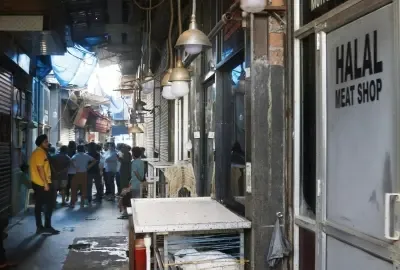
The Rampurhat Municipality in West Bengal's Birbhum district has ordered three roadside meat shops in the town's Court Lane area to remain shut on 15 and 16 November 2026 — a Sunday and Monday — for the duration of Chhath Puja. The directive, bearing the signature and official stamp of the municipality chairman, was issued on Friday, 14 November 2026, and has since triggered financial concerns among local traders and ignited a political dispute.
What the Notice Says
The notice, addressed to three meat shops positioned in a row along a public road, informed shopkeepers that their establishments must remain closed for both days of the festival. Beyond the two-day closure, the directive also instructed traders that on all other days, slaughtered animals — including goats and sheep — displayed for sale must be covered with a red cloth. The municipality cited the route's use by fasting Chhath Puja devotees as the basis for the order.
Rampurhat Municipality Chairman Soumen Bhakat defended the move, stating that the closure applies specifically to shops where animals are slaughtered and cut in open public view. “Meat is cut in the open at those shops. That is why they have been ordered to close for the two days of Chhath Puja. This decision has been taken to respect everyone’s sentiments,” Bhakat said.
Traders Flag Financial Losses
Local meat shop owners expressed concern over the economic impact, noting that Sunday is their highest-sales day of the week. “Sunday is a holiday, and our sales are much higher compared to other days. Keeping shops closed on Sunday will cause us losses,” one Rampurhat meat shopkeeper said.
A second trader pointed out that the shops also supply meat to a restaurant and have a regular Sunday clientele. “We also supply meat to a restaurant and have regular Sunday customers. Had they asked us to work with curtains drawn or shutters down, there would have been no loss. However, since the municipality and administration have issued the order, we have to obey,” the shopkeeper added. Notably, traders said Chhath Puja has been observed peacefully in the town for years without any such prior closure orders.
Political Controversy Erupts
The directive drew sharp criticism from the Indian National Congress (INC), which accused the civic body of pursuing divisive politics. Former Congress MLA Milton Rashid alleged that the All India Trinamool Congress (TMC) municipality chairman issued the order to court favour with the Bharatiya Janata Party (BJP).
“After the elections, most councillors are maintaining ties with the BJP to protect their positions. This is the first time the municipal chairman has issued such an order to get closer to the BJP government. People here celebrate every festival together; this is simply part of the politics of division,” Rashid alleged.
Responding to the opposition’s criticism, state BJP chief spokesperson Debjit Sarkar said, “If they think these are unimportant matters, they should go to court. The doors of the court are open to everyone.” The remark was widely read as the BJP declining to take ownership of the order while also declining to oppose it.
Broader Context
The episode reflects a recurring tension in West Bengal over the management of public spaces during religious festivals — a fault line that political parties have increasingly contested. This comes amid a broader national debate about the rights of traders, particularly those from minority communities, during majority-faith festivals. The Rampurhat incident is not isolated: several municipalities across India have faced similar controversies over meat-shop closures during Hindu festivals in recent years.
Whether the municipality will face a legal challenge remains to be seen; the closure window of 15–16 November 2026 is already underway.
Point of View
But it also obscures a simpler truth: the directive primarily hurts a handful of traders who have no political constituency strong enough to push back. The BJP's court-is-open retort is a classic non-answer that accepts the optics while avoiding the accountability. What is missing from every side of this debate is a principled framework for when municipal authorities may restrict legal commerce on religious grounds — a question India's towns keep deferring.
NationPress
14 Nov 2026
Frequently Asked Questions
Why did Rampurhat Municipality order meat shops to close during Chhath Puja?
The Rampurhat Municipality Chairman said the closure was ordered because the three shops slaughter and cut meat in open public view along a route regularly used by fasting Chhath Puja devotees. The directive, covering 15 and 16 November 2026, was framed as a measure to respect the sentiments of festival observers.
Which shops were affected by the Rampurhat meat shop closure order?
Three roadside meat shops located in a row along Court Lane in Rampurhat town, Birbhum district, were named in the notice. The order also requires that on non-closure days, slaughtered animals displayed for sale be covered with a red cloth.
What losses are traders facing due to the Chhath Puja closure?
Traders said Sunday is their highest-sales day of the week, and the two-day closure — falling on a Sunday and a Monday — would cause them significant financial losses. Some shops also supply meat to local restaurants and have regular Sunday customers.
What political controversy has the Rampurhat closure order triggered?
Former Congress MLA Milton Rashid alleged that the TMC-affiliated municipality chairman issued the order to gain favour with the BJP, calling it 'politics of division.' State BJP spokesperson Debjit Sarkar, meanwhile, deflected the criticism by saying opponents could challenge the order in court.
Has Rampurhat issued such a meat shop closure order before?
According to local traders, this is the first time such a closure order has been issued for Chhath Puja in Rampurhat. They noted that the festival has been observed peacefully in the town for years without any prior directive requiring shops to shut.