VHP Durga Puja meat ban guidelines spark political row in Bengal
Synopsis
The VHP's advisory asking Durga Puja organisers in West Bengal to keep non-vegetarian food away from pandals has exposed a fault line between cultural preservation and constitutional dietary rights — with even a supportive ally, JD(U), pointing out that the guidelines say nothing about the traditional animal sacrifices performed at the same festival.
Key Takeaways
The Vishwa Hindu Parishad (VHP) issued guidelines ahead of Durga Puja in West Bengal , urging organisers to ban non-vegetarian food sales and consumption near pandals.
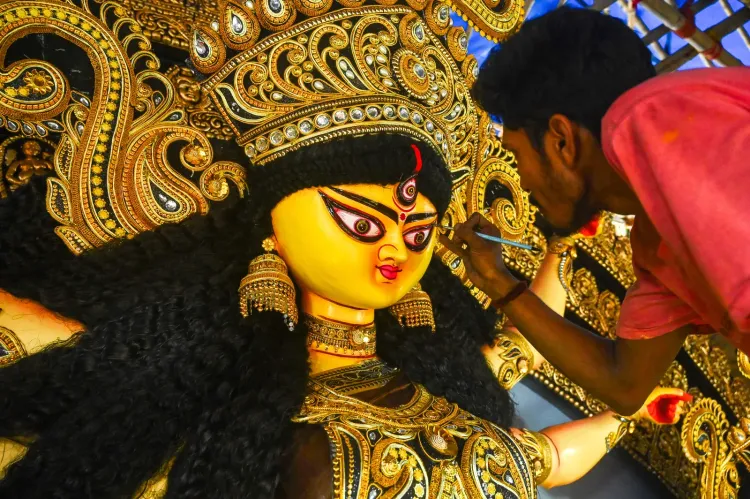
The VHP clarified it was not seeking a blanket ban but stressed that the goddess's idol must remain free from contact with non-vegetarian food.
JD(U) National General Secretary Shyam Rajak backed the intent but raised an unresolved contradiction: the guidelines do not address traditional animal sacrifices performed during the festival.
VHP's Indraprastha Province President Upasana Arora defended the guidelines as consistent with Indian cultural tradition.
Congress leader Udit Raj rejected the VHP's authority, calling dietary choice a constitutional right and describing the guidelines as illegitimate.
The controversy has broadened into a debate over religious organisations' role in regulating public celebrations and individual freedoms.
The Vishwa Hindu Parishad (VHP) has ignited a sharp political debate after issuing guidelines ahead of Durga Puja in West Bengal, calling on puja organisers to restrict the sale and consumption of non-vegetarian food in and around pandals. The directive, released on Friday, has drawn contrasting reactions from leaders of the Janata Dal (United), Congress, and other parties.
What the VHP Guidelines Say
The VHP urged Durga Puja organisers to return to what it described as traditional practices, specifically that non-vegetarian food should neither be sold nor consumed in the vicinity of puja pandals. Crucially, the organisation clarified it was not calling for a blanket ban, acknowledging that Durga Puja in Bengal has historically not been strictly vegetarian. Its stated concern was the sanctity of the goddess's idol — that it remain free from contact with non-vegetarian food.
JD(U) Backs the Spirit, Raises a Contradiction
Janata Dal (United) National General Secretary Shyam Rajak said stopping the sale of meat and fish during the festival was a positive step, but flagged an internal inconsistency in the VHP's position. 'It is a good thing that the sale of meat and fish is stopped during Durga Puja. However, one concern is that people perform animal sacrifices during Durga Puja, and animal sacrifice is also part of certain traditions and religious practices. When such sacrifices take place, what will happen to the meat? Will people be allowed to use it or not?' Rajak said. He urged the VHP to address this contradiction and suggested the organisation first appeal to religious communities to end the practice of animal sacrifice before regulating meat sales.
VHP Defends the Move as Cultural Preservation
Upasana Arora, President of the Vishwa Hindu Parishad's Indraprastha Province, speaking in Delhi, described the guidelines as consistent with long-standing practice. 'I see this in a very positive way because, ever since I can remember, from my childhood, I have seen that during Durga Puja, people generally stop consuming meat and alcohol in their homes. I do not even allow onions into my home during these days,' she said. Arora characterised such practices as part of Indian culture and argued the VHP had a responsibility to preserve and promote those values.
Congress Challenges VHP's Authority
Congress leader Udit Raj mounted a direct challenge to the VHP's standing to issue such directives. 'Who are they to prescribe what people should do? Are they elected representatives? They are goons and miscreants, and they create a wrong narrative. What someone eats and what someone gets to eat is a constitutional right. They have no right to issue any circular on this,' Raj said. His remarks reflect a broader opposition argument that the guidelines encroach on individual dietary freedoms protected under the Constitution.
Wider Debate on Religion, Dietary Rights, and Public Space
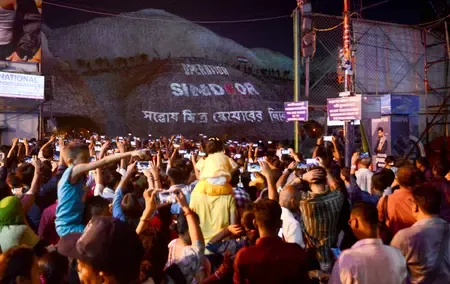
The controversy has opened a larger conversation about the role of religious organisations in regulating activities around public celebrations. Critics argue that such guidelines, even when framed as advisory, carry implicit social pressure that can amount to enforcement in practice. Supporters counter that preserving the sanctity of religious festivals is a legitimate cultural objective. This is not the first time dietary restrictions around Hindu festivals have become a flashpoint in West Bengal, where Durga Puja is both a deeply religious event and a major cultural and commercial occasion. The debate is likely to intensify as the festival season approaches.
Point of View
Making the distinction between 'guideline' and 'diktat' thinner than it appears on paper. More telling is the contradiction flagged even by the sympathetic JD(U) — the guidelines are silent on animal sacrifice, a practice far more directly tied to non-vegetarian food at the festival than street-food stalls. That silence suggests the guidelines are less about ritual purity and more about a broader assertion of authority over public religious space. In West Bengal, where Durga Puja is as much a civic institution as a religious one, that assertion is unlikely to go unchallenged.
NationPress
14 Oct 2026
Frequently Asked Questions
What are the VHP's Durga Puja guidelines for West Bengal?
The Vishwa Hindu Parishad issued guidelines ahead of Durga Puja asking puja organisers to ensure non-vegetarian food is neither sold nor consumed in and around puja pandals. The VHP clarified it was not calling for a blanket ban but said the sanctity of the goddess's idol must be maintained and it should not come into contact with non-vegetarian food.
Why has the JD(U) raised concerns despite supporting the VHP's guidelines?
JD(U) National General Secretary Shyam Rajak said stopping meat and fish sales was a positive step but pointed out that the guidelines do not address traditional animal sacrifices performed during Durga Puja. He asked the VHP to clarify whether meat from such sacrifices would be permitted and urged the organisation to first appeal for an end to animal sacrifice before regulating other meat sales.
What is the Congress's objection to the VHP guidelines?
Congress leader Udit Raj rejected the VHP's authority to issue such directives, arguing that dietary choice is a constitutional right and that the organisation holds no elected mandate. He described the guidelines as illegitimate and accused the VHP of creating a divisive narrative.
Has Durga Puja in West Bengal traditionally been a vegetarian festival?
No. The VHP itself acknowledged that Durga Puja in Bengal has historically not been strictly vegetarian. The organisation's stated concern is limited to maintaining the sanctity of the goddess's idol by keeping non-vegetarian food away from it, not imposing vegetarianism on the festival broadly.
Why does this controversy matter beyond West Bengal?
The debate touches on a wider national question about the authority of religious organisations to regulate activities in public spaces during festivals. Critics argue that even advisory guidelines can function as de facto enforcement through social pressure, raising concerns about dietary freedoms and the limits of cultural policing in a pluralistic democracy.