Akhilesh's Rampur jail visit is election optics, not loyalty: Maulana Razvi

Synopsis
Maulana Razvi's blunt claim — that Akhilesh Yadav is visiting jailed Azam Khan only because of political pressure, not principle — cuts to the heart of a fault line the SP has tried to paper over. With UP elections approaching and Muslim voters watching, the Rampur jail visit risks being read as exactly what Razvi says it is: a move that came 370 days too late.
Key Takeaways
Maulana Mufti Shahabuddin Razvi Barelvi alleged on 21 October that Akhilesh Yadav 's proposed Rampur visit is electoral posturing, not genuine support for Azam Khan .
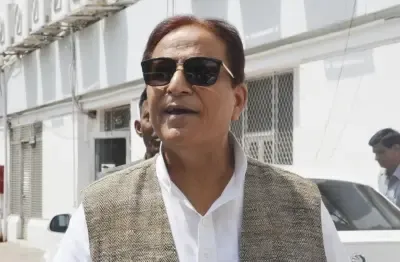
Azam Khan has been in Rampur jail for 370 days , with Razvi claiming the SP leadership was absent during Khan's most difficult period.
Razvi argued that Muslim voters in UP are making increasingly independent choices, pointing to declining Khan family electoral influence in Rampur.
Legal notices have reportedly been issued to Race Course Masjid and Dargah Shah Jilani Miyaan in New Delhi , directing vacation of premises within six days .
AIMIM chief Asaduddin Owaisi on Tuesday urged Minority Affairs Minister Kiren Rijiju to intervene on the Race Course Mosque notice.
Razvi cited RSS chief Mohan Bhagwat 's remarks against seeking temples beneath mosques, urging those words be honoured in practice.
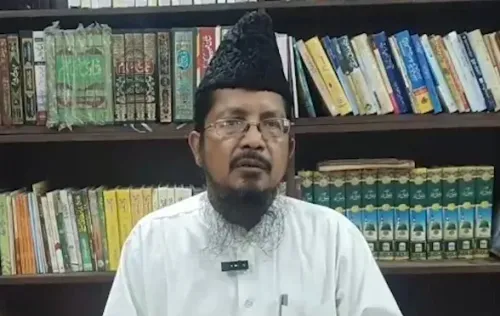
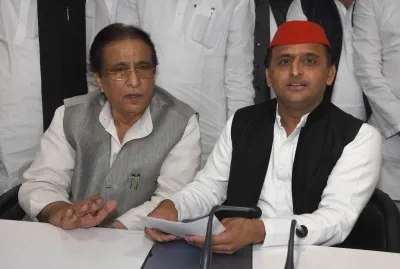
Maulana Mufti Shahabuddin Razvi Barelvi, National President of the All India Muslim Jamaat, on Wednesday, 21 October claimed that Samajwadi Party (SP) chief Akhilesh Yadav's proposed visit to Rampur to meet jailed senior party leader Azam Khan was driven purely by electoral calculations — not genuine solidarity. The remarks, made in Bareilly, add a sharp new dimension to the political discourse around Muslim support ahead of the Uttar Pradesh Assembly elections.
Razvi's Core Allegation
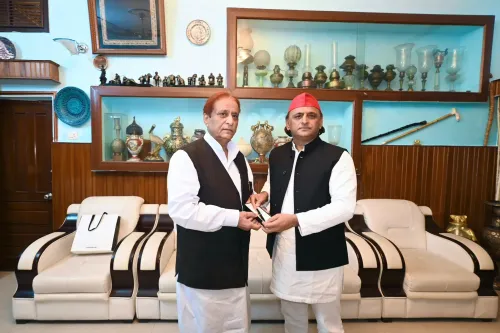
'Samajwadi Party chief Akhilesh Yadav is now going to Rampur, where he will meet Azam Khan, who has been in Rampur jail for 370 days. The reality is that Akhilesh Yadav is under pressure from me, and because of that pressure, he has been forced to visit Rampur,' Razvi said.
He alleged that Akhilesh had been conspicuously absent during Khan's most difficult period despite Khan's foundational contribution to building the Samajwadi Party. According to Razvi, the SP chief's belated outreach was aimed at rebuilding credibility among Muslim voters — but had come too late to be seen as anything other than election-season posturing.
What This Means for the SP's Muslim Support Base
Razvi argued that Muslim voters in Uttar Pradesh were increasingly making independent political decisions rather than following individual community leaders. He pointed to the electoral performance of Azam Khan's family and political associates in Rampur — citing defeats of candidates linked to Khan and victories of his political rivals — as evidence that the veteran leader's grip on the constituency had weakened.
'By meeting the veteran leader in jail, Akhilesh Yadav wants to reestablish the trust he lost from his Muslim supporters,' Razvi said. The comment reflects a broader anxiety within opposition circles about whether the traditional SP-Muslim alliance can be held together without a credible show of solidarity toward Khan.
Delhi Mosque Notices Draw Sharp Reaction
Razvi also raised alarm over legal notices reportedly served to two mosques and a dargah in New Delhi, including the Race Course Masjid — located near the Prime Minister's official residence — and Dargah Shah Jilani Miyaan in Chanakyapuri. The notices, according to reports, directed imams to vacate the premises within six days, citing claims of unauthorised occupation.
'Both the religious places have been sent a notice and have been asked to vacate the premises. This clearly means that bulldozer action will be taken on the mosques. All the mosques, dargah, graveyards are the Bulldozers' target,' he said.
Razvi noted that some of the structures were over 500 years old and argued that their historical and religious significance should shield them from demolition. He also invoked Rashtriya Swayamsevak Sangh (RSS) chief Mohan Bhagwat's public remarks against seeking temples beneath mosques, urging that such guidance be respected in practice. 'Sectarians are busy engaging in such activities despite Dr Mohan Bhagwat urging not to go and try finding temples beneath mosques,' he said, adding: 'India is incomplete without Muslims.'
Owaisi Joins the Chorus on Race Course Mosque
The issue of the Race Course Mosque had already drawn attention a day earlier, when All India Majlis-e-Ittehadul Muslimeen (AIMIM) President Asaduddin Owaisi on Tuesday urged Union Minority Affairs Minister Kiren Rijiju to intervene. According to reports, the mosque received a legal notice warning that unauthorised occupation or construction on the property 'could invite legal action.'
The convergence of statements from Razvi and Owaisi — two voices rarely aligned — signals that the mosque notices have galvanised a wide cross-section of Muslim community leaders.
The Broader Political Stakes
The Uttar Pradesh Assembly elections are widely regarded as a high-stakes test for both the SP and the BJP. For Akhilesh Yadav, Muslim voters remain a critical component of any winning coalition, making the optics of his relationship with Azam Khan — arguably the most prominent Muslim politician in the state — a matter of political arithmetic. Whether the Rampur visit translates into tangible electoral goodwill, or is dismissed as a last-minute gesture, may depend on how community leaders like Razvi frame it in the weeks ahead.
Point of View
And the Muslim electorate in UP noticed. The question heading into the assembly elections is not whether the visit happens, but whether it changes anything. The Race Course Mosque controversy adds a second pressure point: with demolition notices hitting structures near the Prime Minister's residence, community leaders are competing to be seen as the most credible defenders of Muslim interests — and the SP, caught between coalition calculus and community anger, has no easy answer to either challenge.
NationPress
21 Oct 2026
Frequently Asked Questions
Why is Akhilesh Yadav visiting Azam Khan in Rampur jail?
Samajwadi Party chief Akhilesh Yadav is reportedly planning to visit senior party leader Azam Khan, who has been in Rampur jail for 370 days. Critics, including Maulana Shahabuddin Razvi, allege the visit is driven by electoral pressure ahead of the Uttar Pradesh Assembly elections rather than genuine solidarity.
Who is Maulana Shahabuddin Razvi and why is he significant here?
Maulana Mufti Shahabuddin Razvi Barelvi is the National President of the All India Muslim Jamaat, a prominent Muslim religious body. His remarks carry political weight because he has publicly criticised the SP's handling of Azam Khan's case and claims his repeated public pressure pushed Akhilesh toward the Rampur visit.
What is the Race Course Mosque controversy in Delhi?
The Race Course Masjid in New Delhi, located near the Prime Minister's official residence, reportedly received a legal notice directing the imam to vacate the premises within six days over claims of unauthorised occupation. AIMIM chief Asaduddin Owaisi has urged Union Minority Affairs Minister Kiren Rijiju to intervene in the matter.
Has Azam Khan's political influence in Rampur declined?
According to Maulana Razvi, Azam Khan's hold over Rampur has weakened, citing the defeat of candidates linked to Khan's family and victories of his political opponents in recent elections. Razvi argued that Muslim voters in UP are increasingly making independent choices rather than following individual leaders.
What did RSS chief Mohan Bhagwat say about mosques?
RSS chief Mohan Bhagwat had publicly urged against seeking temples beneath mosques. Maulana Razvi invoked those remarks to argue that those targeting religious structures — including old mosques and dargahs — were acting against even the stated position of the Sangh's own leadership.