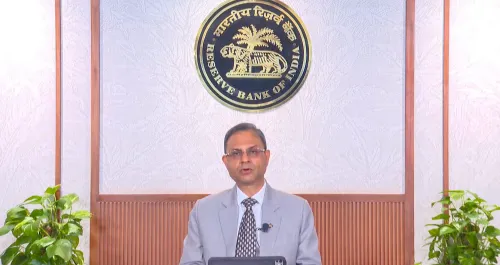
RBI Financial Stability Report 2025: Banks in strong position, says Governor Malhotra

Synopsis
India's banking system can withstand severe stress scenarios and still stay above regulatory capital thresholds — that is the headline finding of the RBI's latest Financial Stability Report. With NPAs low, profitability healthy, and NBFCs on firmer ground, the central bank is projecting confidence even as it flags supply chain risks, bond market fragilities, and elevated public debt as threats to watch.
Key Takeaways
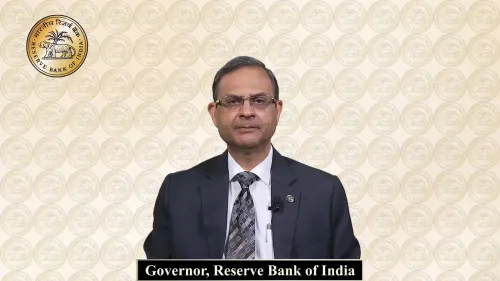
RBI Governor Sanjay Malhotra declared India's financial system a 'key source of strength' in the June 2025 Financial Stability Report .
Scheduled Commercial Banks (SCBs) are backed by strong capital and liquidity buffers, improved asset quality, and stable profitability.
Macro stress tests show banking system capital ratios will remain above regulatory thresholds even under adverse scenarios.
NBFCs remain sound with strong capitalisation, healthy profitability, and improving asset quality.
Key risks flagged: supply chain uncertainty, elevated public debt, bond market fragilities, and stretched asset valuations.
The RBI committed to further strengthening financial guardrails against evolving external and domestic risks.
Reserve Bank of India (RBI) Governor Sanjay Malhotra on Tuesday, 30 June said India's financial system continues to serve as a pillar of strength for the real economy, with banks and non-banking financial companies (NBFCs) remaining sound on the back of robust capital buffers, healthy profitability, low non-performing assets (NPAs), and strong credit growth.
What the Financial Stability Report Found
In his foreword to the RBI Financial Stability Report (FSR), Malhotra said: 'The Indian economy and the financial system have demonstrated remarkable resilience despite facing external shocks of significant magnitude. Strong growth, low inflation, healthy balance sheets of financial and nonfinancial firms, and ample buffers have helped preserve macro-financial stability.'
The report notes that India's sound macroeconomic fundamentals place it in a stronger position than many of its global peers, offering greater resilience to external shocks compared with past crisis episodes. The balance of risks has also turned favourable, supported by an interim peace deal and recent policy measures by the government and the RBI aimed at strengthening capital inflows.
Banking Sector: Safe, Sound, and Stress-Tested
Scheduled Commercial Banks (SCBs) remain safe and sound, underpinned by strong capital and liquidity buffers, continued improvement in asset quality, and stable profitability, according to the report. Macro stress tests indicate the banking system is well-positioned to absorb potential shocks, with aggregate capital ratios projected to remain comfortably above regulatory thresholds even under hypothetical adverse scenarios.
NBFCs, too, remain financially sound, supported by strong capitalisation, healthy profitability, and improving asset quality. The insurance sector continues to display balance sheet resilience, with the solvency ratio of life insurers remaining above the minimum regulatory threshold.
Risks on the Radar
Despite the broadly positive assessment, the FSR flags several vulnerabilities. Persistent supply chain uncertainties could tighten financial conditions and revive inflationary pressures. Elevated public debt, bond market fragilities, stretched asset valuations, and leveraged non-bank financial intermediaries (NBFIs) remain key risks that could amplify future shocks.
Malhotra acknowledged these concerns directly: 'Nevertheless, we remain alert to evolving external and domestic risks and are committed to further strengthening the guardrails that protect our economy and financial system from potential shocks.'
What This Means for India's Growth Outlook
The FSR's broadly optimistic read comes at a time when global financial conditions remain volatile. India's ability to maintain macro-financial stability — even as external headwinds persist — strengthens the case for sustained domestic investment and credit expansion. Notably, this is the first FSR under Governor Malhotra's tenure to explicitly reference geopolitical risk mitigation through an 'interim peace deal' as a stabilising factor.
With the RBI maintaining its commitment to financial system guardrails, the central bank's next policy moves will be closely watched for signals on liquidity management and capital flow strategy.
Point of View
But the fine print deserves attention. Stretched asset valuations and leveraged NBFIs are not new warnings — they have appeared in successive reports without triggering decisive macro-prudential action. The reference to an 'interim peace deal' as a stabilising factor is notable: it signals that geopolitical risk has now been formally internalised into RBI's financial stability calculus, a shift from earlier reports. The real test of this rosy balance-sheet picture will come when global liquidity tightens — and whether India's buffers are as deep in practice as they appear on paper.
NationPress
29 Sept 2026
Frequently Asked Questions
What is the RBI Financial Stability Report?
The RBI Financial Stability Report (FSR) is a bi-annual publication by the Reserve Bank of India that assesses the health of the country's financial system, including banks, NBFCs, and insurance companies. The June 2025 edition, fronted by Governor Sanjay Malhotra, found the system resilient and well-capitalised.
What did RBI Governor Sanjay Malhotra say about India's banks?
Governor Malhotra said India's financial system has demonstrated 'remarkable resilience' despite significant external shocks, with strong growth, low inflation, and healthy balance sheets preserving macro-financial stability. He also flagged ongoing vigilance against external and domestic risks.
Are Indian banks safe under stress scenarios?
Yes, according to the FSR's macro stress tests. Aggregate capital ratios of Scheduled Commercial Banks are projected to remain comfortably above regulatory thresholds even under hypothetical adverse scenarios, indicating the system can absorb potential shocks.
What risks did the RBI flag in the Financial Stability Report?
The RBI flagged supply chain uncertainties that could tighten financial conditions and revive inflation, along with elevated public debt, bond market fragilities, stretched asset valuations, and leveraged non-bank financial intermediaries as key vulnerabilities.
How are NBFCs performing according to the FSR?
Non-banking financial companies (NBFCs) remain financially sound, supported by strong capitalisation, healthy profitability, and improving asset quality, according to the June 2025 Financial Stability Report.