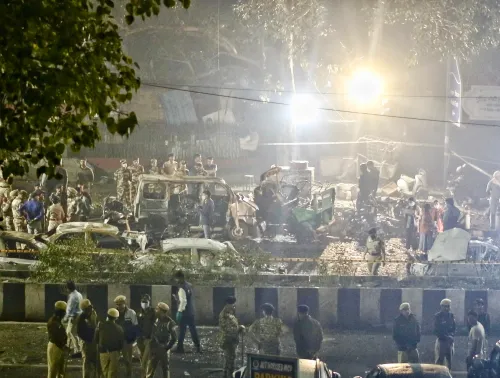
Red Fort blast probe reveals blueprint to spread terror modules across India
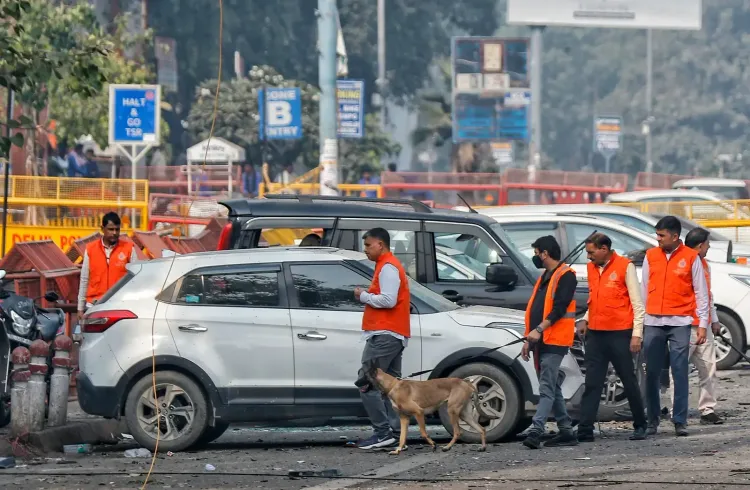
Synopsis
The Red Fort car blast probe has done more than crack one case — it has exposed a replicable template. The Faridabad 'Doctor's module' allegedly plotted to overthrow the Union government and impose Sharia law, and investigators now warn that Islamic State and Al-Qaeda are actively seeding identical, decentralised, self-funded cells across India's states, each designed to evade detection by operating like a lone actor.
Key Takeaways
The Red Fort car blast probe has revealed a blueprint for establishing independent terror modules across India , according to officials.
The Faridabad module (also called the 'Doctor's module') allegedly procured thousands of kilograms of ammonium nitrate without detection.
Recovered literature indicates the module's agenda included overthrowing the Union government and imposing Sharia law in India.
Officials warn that Islamic State and Al-Qaeda are actively inspiring similar self-sustaining, operationally independent cells in different states.
Such modules are largely self-funded , leaving minimal financial trails and making detection significantly harder for security agencies.
An Intelligence Bureau official cautioned that simultaneous activation of multiple such modules would pose an 'immense challenge' to India's security architecture.
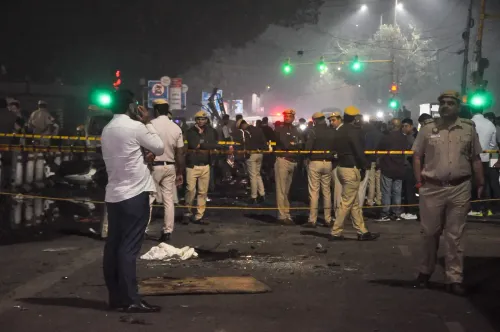
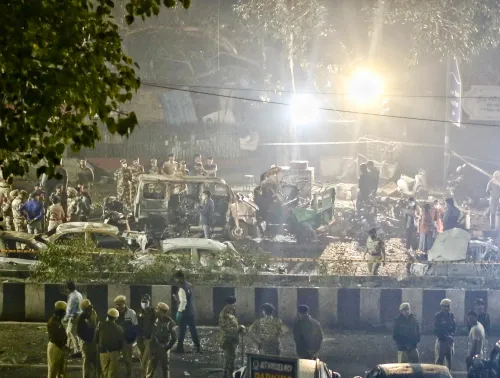
The investigation into last year's Red Fort car blast in New Delhi has unearthed a chilling blueprint: a systematic plan to establish independent, self-sustaining terror modules across India, according to officials familiar with the probe. The case has exposed not just the mechanics of a single attack, but what investigators describe as an overarching agenda to destabilise the country through decentralised, Faridabad-style cells.
Inside the Faridabad Module
Investigators say they were struck by the meticulous planning behind the attack and the precision with which members of the Faridabad module — also referred to as the 'Doctor's module' — executed their assigned roles. The group reportedly managed to procure thousands of kilograms of ammonium nitrate without attracting the attention of security agencies.
Despite the elaborate groundwork, the blast was triggered prematurely, and the attack fell short of its intended scale. Literature and planning documents recovered from the module, according to officials, pointed to an agenda that went far beyond a single act of violence.
The Larger Agenda: Overthrowing the Government
'The module was not merely planning a major attack aimed at causing mass casualties. It had a much larger agenda, which was to overthrow the government in New Delhi,' an official said, citing the recovered material. Officials say the module's members had allegedly planned to impose Sharia law in India, with the overthrow of the Union government as a stated objective.
A second official described the mindset of the doctors within the module as 'dangerous,' adding that the greater threat lies in replication. 'The bigger danger is that many more within the country may try and replicate what this module did or may be in the process of doing so,' the official warned.
The Chain-Effect Threat
Officials have flagged that radicalisation modules of this nature tend to create a chain effect. Outfits such as the Islamic State and Al-Qaeda are reportedly aware that toppling a government cannot be achieved by a single cell, and their strategy is to inspire scores of independent modules operating in parallel across the country.
Crucially, these cells are designed to function without operational links to one another, making it significantly harder for investigators to establish connections or trace wider networks. An Intelligence Bureau official explained that the Faridabad module operated in seclusion, planned a series of deadly attacks across North India, and intended to combine physical violence with propaganda to pressure the government into capitulating.
Self-Funded, Self-Sufficient Cells
In many respects, officials say, such modules resemble lone actors. Members operate without direct contact with other groups, independently acquire the skills needed to manufacture explosives, and self-fund their activities — leaving investigators with little or no financial trail to follow. This structure, reportedly inspired by the Islamic State and Al-Qaeda, is specifically designed to complicate detection and investigation.
Notably, with their conventional ground operations increasingly curtailed, both the Islamic State and Al-Qaeda have shifted focus toward region-specific radicalisation, reportedly aiming to seed Faridabad-style modules in different states across the country.
What Security Agencies Are Watching
Officials warn that the simultaneous activation of multiple such modules — each covering different geographies and conducting attacks independently — would pose an immense strain on India's security architecture. The Red Fort probe has effectively handed investigators a manual for how such decentralised networks are constructed, funded, and operated. How security agencies respond to that intelligence will shape the country's counter-terror posture in the months ahead.
Point of View
Imposition of Sharia law — read as maximalist fantasy, but investigators are right to treat the structural model as the more urgent lesson. A cell that is self-funded, operationally isolated, and inspired rather than directed by a parent outfit is precisely the architecture that conventional counter-terror tools struggle to disrupt. The real concern is not the prematurely detonated Red Fort blast, but the possibility that dozens of near-identical cells are now in various stages of formation, each flying under the radar for the same reasons this one nearly did. India's intelligence agencies will need to shift focus from network tracing — which presupposes connectivity — to pattern-of-life detection, a significantly more demanding task.
NationPress
11 Nov 2026
Frequently Asked Questions
What is the Faridabad module linked to the Red Fort car blast?
The Faridabad module, also known as the 'Doctor's module', is a terror cell investigated in connection with last year's Red Fort car blast in New Delhi. According to officials, its members allegedly procured thousands of kilograms of ammonium nitrate, planned a series of attacks across North India, and harboured goals of overthrowing the Union government.
What was the larger agenda of the Faridabad module beyond the Red Fort attack?
Officials say recovered literature from the module pointed to an agenda of overthrowing the government in New Delhi and imposing Sharia law in India. The module was described as planning not just mass-casualty attacks, but a broader campaign combining violence with propaganda to pressure the government into stepping down.
How are Islamic State and Al-Qaeda linked to such modules in India?
According to officials, the Islamic State and Al-Qaeda inspire the creation of Faridabad-style modules across India without maintaining direct operational contact with them. These groups are said to pursue a strategy of seeding multiple independent cells, knowing that toppling a government requires simultaneous action across a wide geography.
Why are these terror modules difficult to detect and investigate?
These modules are designed to operate in isolation from one another, with no operational links between cells. They are largely self-funded, leaving minimal financial trails, and members independently acquire skills to manufacture explosives, making them resemble lone actors and complicating conventional network-tracing by security agencies.
What threat do officials say multiple simultaneous modules could pose?
An Intelligence Bureau official warned that if multiple such modules were activated simultaneously across different states, they would collectively cover a vast geography while posing an immense challenge to India's security agencies. The combined effect of physical attacks and propaganda is described as capable of severely straining the country's security mechanism.