Red Fort blast one year on: How it reshaped India's counter-terror doctrine
Synopsis
A year after a premature VBIED detonation near the Red Fort killed nine people, India's security establishment has undergone its most sweeping counter-terror restructuring in years. The Faridabad doctors' module that nearly executed a 6 December mass-casualty attack has become a case study that directly birthed the PRAHAAR doctrine — and triggered simultaneous crackdowns on JeM cells, the ISI-linked Shahzad Bhatti network, Khalistan operatives, and Bangladesh-based outfits.
Key Takeaways
The Red Fort blast on 10 November 2025 killed at least nine people ; driver Dr Umar Nabi detonated the vehicle prematurely after agencies traced 2,900 kg of ammonium nitrate linked to the cell.
The module comprised doctors based at Al-Falah University, Faridabad , inspired by Al Qaeda and Jaish-e-Mohammed ; the original target was a mass-casualty VBIED attack on 6 December 2025 .
The entire module was dismantled within 24 hours through coordinated multi-agency operations, following a trail from Srinagar to Faridabad .
India's PRAHAAR: National Counter Terrorism Policy and Strategy was enacted on 23 February 2026 , adopting a zero-tolerance, multi-domain approach to terror.
The Shahzad Bhatti network , which allegedly recruited youth as ISI informants via social media, was dismantled under the PRAHAAR framework.
Diplomatic efforts yielded the extradition of 73 high-profile fugitives from abroad over the past year.
The Red Fort blast of 10 November 2025 has emerged as a defining inflection point in India's counter-terrorism strategy, laying bare the sophisticated evolution of domestic terror networks and triggering a sweeping, multi-agency security overhaul that extended well beyond the immediate criminal investigation. One year on, officials say the incident continues to shape how the country identifies, monitors, and dismantles terror cells.
How the blast unfolded
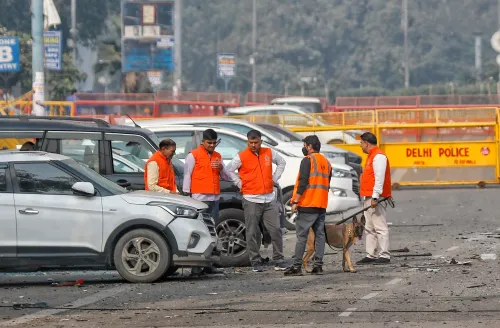
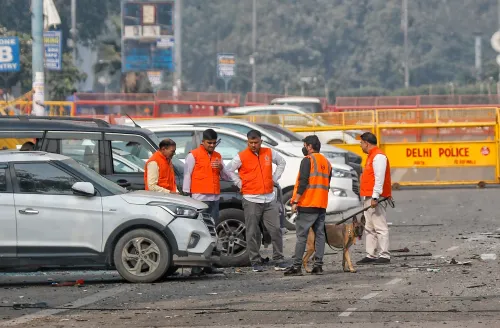
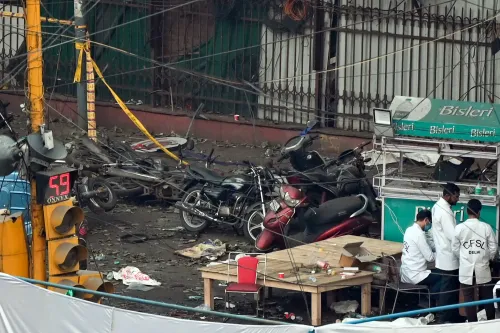
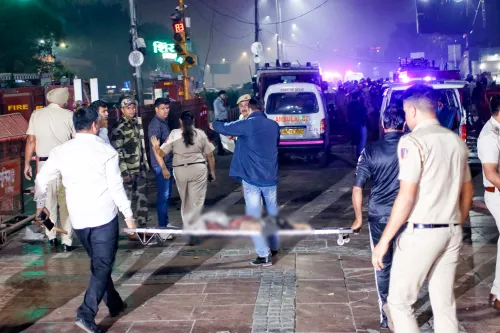
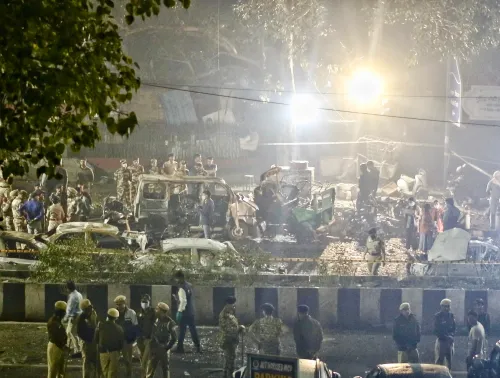
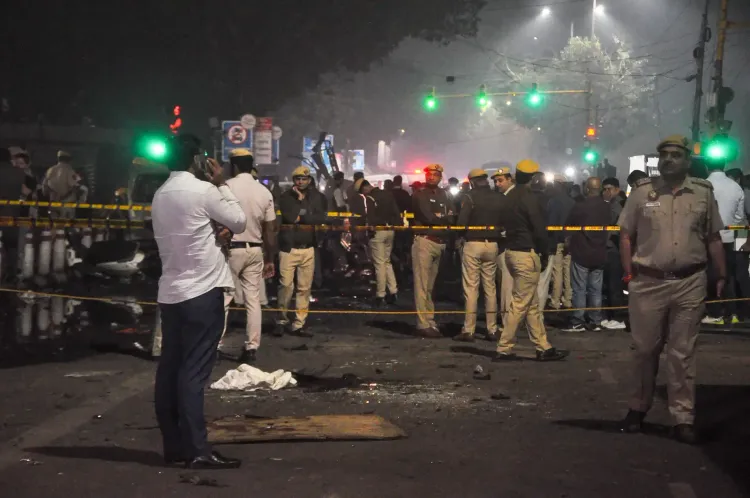
On 10 November 2025, an explosive-laden vehicle detonated in New Delhi, killing at least nine people and destroying several vehicles. According to investigators, the driver, Dr Umar Nabi, panicked after agencies successfully traced large quantities of ammonium nitrate linked to the module, and triggered the explosion prematurely. His original plan, officials say, was to execute a large-scale Vehicle-Borne Improvised Explosive Device (VBIED) strike timed to coincide with the anniversary of the Babri Masjid demolition on 6 December 2025.
What made the case particularly alarming was the composition of the cell. The module comprised practising doctors, whose professional credentials helped them source ammonium nitrate, sulphur, and potassium nitrate — ultimately, police seized 2,900 kg of ammonium nitrate — without arousing early suspicion. According to officials, the cell drew ideological inspiration from Al Qaeda and Jaish-e-Mohammed (JeM), and was classified as a homegrown network.
Trail from Srinagar to Faridabad
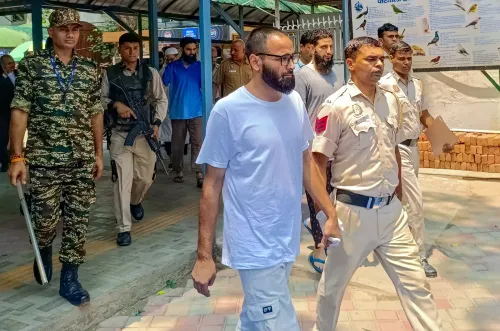
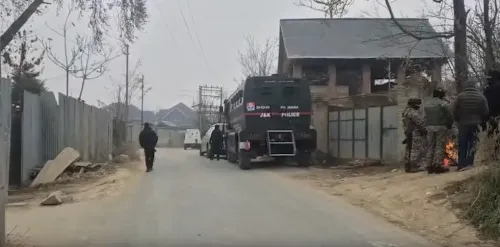
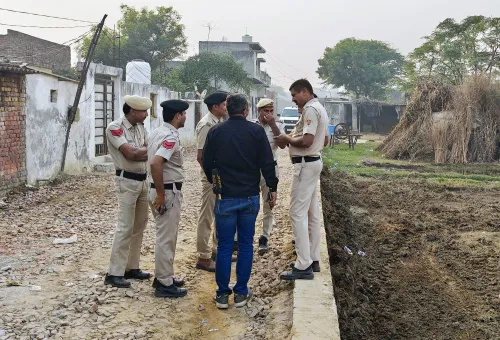
The investigation began when posters sympathetic to Jaish-e-Mohammed surfaced in Srinagar, Jammu and Kashmir. The Jammu and Kashmir Police treated the development with urgency, forming dedicated teams that led to the arrest of three locals — Arif Nisar Dar, Yasir-ul-Ashraf, and Maqsood Ahmad Dar. Their questioning pointed to Maulvi Irfan Ahmad, a former paramedic-turned-Imam from Shopian, accused of supplying the posters and radicalising the doctors who formed the Faridabad module.
Ahmad's interrogation led investigators to Dr Muzzamil Ahmad Ganaie of Pulwama and Dr Shaheen Sayeed of Lucknow. According to the investigation, Dr Nabi — described by officials as the most radicalised member of the group — built a network spanning Jammu and Kashmir, Uttar Pradesh, and Haryana, and was plotting a series of VBIED attacks across multiple Indian cities. His reported radicalisation is said to have begun during a 2021 visit to Türkiye alongside Dr Ganaie, after which both began accumulating bomb-making materials while teaching at Al-Falah University in Faridabad.
The entire module, officials note, crumbled within 24 hours of the blast, the result of seamless coordination across multiple agencies. An Intelligence Bureau official described the Faridabad case as a 'case study' that underscored the need to monitor multiple domains simultaneously.
PRAHAAR doctrine: India's counter-terror policy shift
The Red Fort blast directly accelerated a formal policy overhaul. On 23 February 2026, the government brought into effect the PRAHAAR: National Counter Terrorism Policy and Strategy. The doctrine adopts a zero-tolerance stance and addresses existing modules, their operations, radicalisation pipelines, recruitment mechanics, funding channels, and foreign involvement. Officials describe it as a framework designed to cover every dimension of the terror ecosystem rather than respond to individual incidents.
PRAHAAR also enabled action against the Shahzad Bhatti network, which had reportedly recruited scores of young people through social media with promises of money and a lavish lifestyle. These recruits were allegedly tasked with planting CCTV cameras at sensitive and crowded locations to relay live feeds to Pakistan's Inter-Services Intelligence (ISI), as well as carrying out targeted killings, low-intensity blasts, and trafficking of drugs and counterfeit currency.
Wider operations and diplomatic push
Investigators did not limit themselves to the Faridabad cell. Operations were extended to Jaish-e-Mohammed-inspired modules in multiple states, groups operating from Bangladesh posing a threat to security in Northeast India and West Bengal, and elements of the Khalistan network. Multiple operatives from these outfits were brought to justice following targeted operations.
On the diplomatic front, the Narendra Modi government stepped up international efforts against terrorism and narcotics, resulting in the extradition of 73 high-profile fugitives from abroad over the past year. Officials frame this as evidence that India's counter-terror approach now combines internal enforcement with sustained external pressure.
Threat landscape and what comes next
Officials say the residual threat landscape remains complex. Active concerns include Hizbul Mujahideen, Jaish-e-Mohammed, and Lashkar-e-Taiba — all Pakistan-based — alongside homegrown radicalisation networks, Bangladesh-based outfits, Khalistan-linked operatives, and social-media-driven 'influencer modules' that groom recruits remotely. An official noted that terror groups are 'rewriting their strategies with the help of free-flowing technology,' making the PRAHAAR doctrine's adaptable, multi-domain approach central to India's preparedness. The anniversary of the blast finds the security establishment with a significantly upgraded playbook — the question now is whether it can stay ahead of the next iteration of the threat.
Point of View
But by whether its early-warning mechanisms — particularly around radicalisation and illicit procurement — can intercept the next cell before detonation rather than after. The Türkiye-to-Faridabad pipeline that allegedly radicalised Dr Nabi and Dr Ganaie also signals that India's counter-terror perimeter must extend to foreign travel and diaspora networks, areas where intelligence coverage remains uneven.
NationPress
10 Nov 2026
Frequently Asked Questions
What happened in the Red Fort blast of November 2025?
On 10 November 2025, an explosive-laden vehicle detonated near the Red Fort in New Delhi, killing at least nine people. The driver, Dr Umar Nabi, reportedly triggered the blast prematurely after agencies traced large quantities of ammonium nitrate to the module he belonged to.
Who were the members of the Faridabad terror module?
The module comprised doctors, including Dr Umar Nabi and Dr Muzzamil Ahmad Ganaie — both linked to Al-Falah University in Faridabad — and Dr Shaheen Sayeed of Lucknow. They were allegedly radicalised by Maulvi Irfan Ahmad, a former paramedic-turned-Imam from Shopian, Jammu and Kashmir.
What is the PRAHAAR counter-terrorism doctrine?
PRAHAAR: National Counter Terrorism Policy and Strategy came into effect on 23 February 2026. It is a zero-tolerance counter-terror framework that addresses existing modules, radicalisation, recruitment, funding, and foreign involvement, aiming to cover every dimension of the terror ecosystem rather than reacting to individual incidents.
What is the Shahzad Bhatti network?
The Shahzad Bhatti network allegedly recruited youth through social media, initially offering small sums of money and later promising a lavish lifestyle. Recruits were reportedly tasked with installing CCTV cameras at sensitive locations to provide live feeds to Pakistan's ISI, and also with targeted killings, low-intensity blasts, and drug and counterfeit currency trafficking.
How has India expanded its counter-terror efforts beyond domestic investigations?
The Modi government stepped up diplomatic efforts on terrorism and narcotics, securing the extradition of 73 high-profile fugitives from abroad over the past year. Operations also targeted JeM-inspired modules, Khalistan-linked operatives, and Bangladesh-based outfits threatening security in Northeast India and West Bengal.