Nepal floods: EAM Jaishankar receives 21 Tamil Nadu pilgrims rescued from Bhote Koshi
Synopsis
Twenty-one Tamil Nadu pilgrims stranded by Nepal’s deadliest flash floods in years were personally received by External Affairs Minister Jaishankar at Delhi airport on Friday — a visible signal of New Delhi’s diplomatic engagement as nearly 550 people are confirmed dead and 977 remain out of contact in the Bhote Koshi catastrophe.
Key Takeaways
Jaishankar received 21 Tamil Nadu pilgrims at New Delhi airport on 28 August after they were rescued from Nepal floods.
The pilgrims were part of groups travelling for the Kailash Mansarovar Yatra via various travel agents.
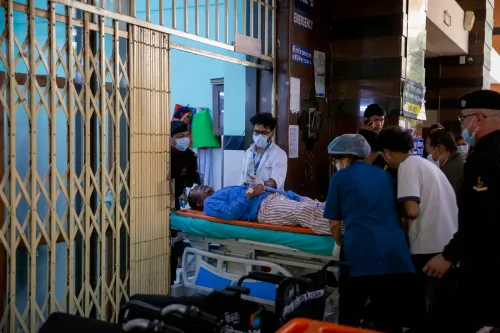
Flash floods on Nepal’s Bhote Koshi River , reportedly triggered by an avalanche on a transboundary river between Nepal and China, have killed nearly 550 people ; 977 remain out of contact.
India has deployed Bailey bridges and set up a 24-hour MEA control room in New Delhi to coordinate relief and track Indian nationals.
Foreign Secretary Vikram Misri and MEA spokesperson Randhir Jaiswal attended a high-level relief coordination meeting chaired by Jaishankar on Friday.
Indian embassies in Kathmandu and Beijing are actively monitoring the status of remaining Indian nationals in the affected region.
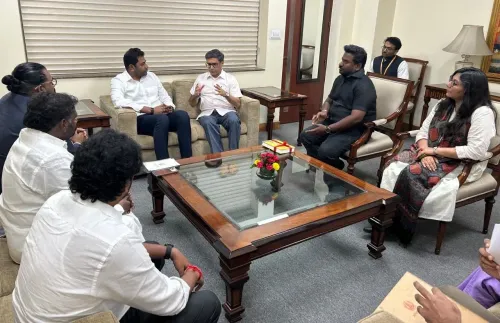
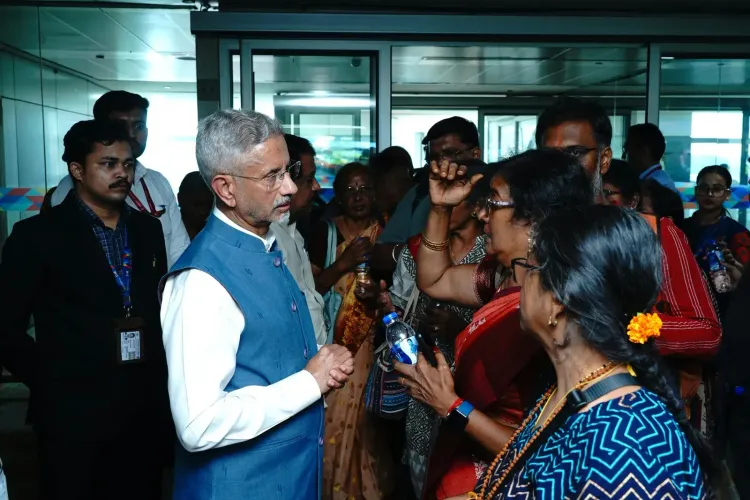
External Affairs Minister S. Jaishankar on Friday, 28 August personally received 21 pilgrims from Tamil Nadu at Indira Gandhi International Airport, New Delhi, after they were rescued from catastrophic flash floods that struck Nepal's Bhote Koshi River on Wednesday. The group had flown in from Kathmandu and was part of a larger contingent of Indian nationals who had travelled to Nepal for the Kailash Mansarovar Yatra through various travel agents.
Jaishankar's Statement and Acknowledgement
“I welcomed a group comprising 21 tourists from Tamil Nadu who were rescued from the floods that occurred in Nepal. I was deeply moved upon hearing their experiences firsthand,” Jaishankar said in a post on X. He expressed gratitude to the Nepali Army and the Government of Nepal for conducting the rescue operation, and commended the Indian Embassy in Nepal for coordinating the pilgrims’ return to India.
India’s Relief and Rescue Coordination
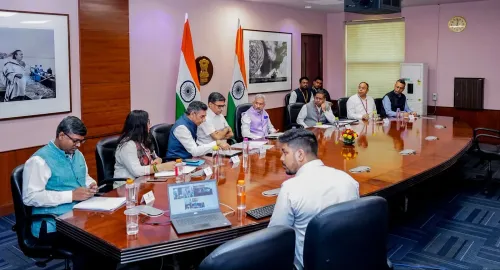
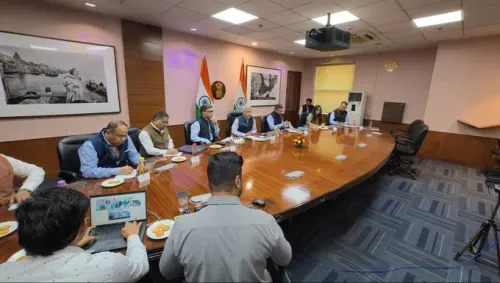
Earlier on Friday, Jaishankar chaired a meeting with officials of the Ministry of External Affairs (MEA) and Indian embassies in Kathmandu and Beijing to review ongoing relief and rescue efforts. Foreign Secretary Vikram Misri, MEA spokesperson Randhir Jaiswal, and senior divisional officials were present at the meeting.
Following the meeting, Jaishankar posted on X: “Discussed the relief and rescue efforts underway in Nepal today. Our Embassies in Kathmandu and Beijing provided an updated picture in respect of the status and well-being of Indian nationals. The concerned MEA Divisions apprised us of the further relief supplies to be sent to Nepal. We give highest priority to this issue.”
India has also mobilised Bailey bridges to support rescue and relief operations in flood-hit areas. The MEA has set up a 24-hour control room in New Delhi and is in active contact with state governments whose residents had undertaken the Kailash Mansarovar Yatra.
Scale of the Disaster
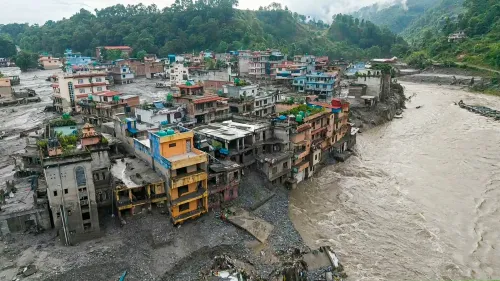
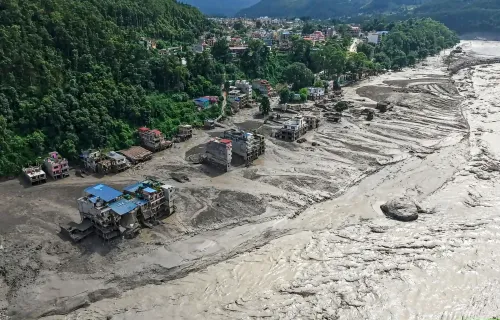
The flash floods, triggered reportedly by an avalanche on a transboundary river between Nepal and China upstream of the Bhote Koshi River, have been catastrophic in scale. Nearly 550 people have died, while 977 remain out of contact, according to available figures. The floods have swept away human settlements, roads, hydropower projects, and transmission infrastructure along the riverbanks downstream.
Notably, the Bhote Koshi corridor is a critical route for Indian pilgrims undertaking the Kailash Mansarovar Yatra, making the disaster particularly acute for Indian nationals in the region. This is among the deadliest flood events Nepal has recorded in recent years.
What Comes Next
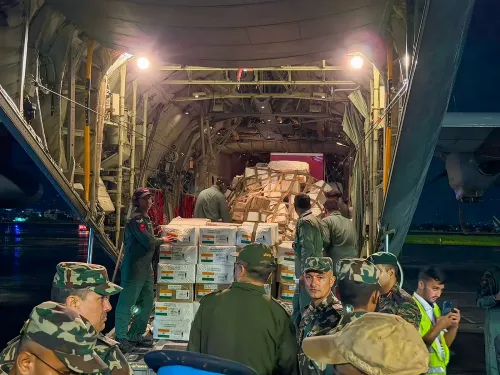
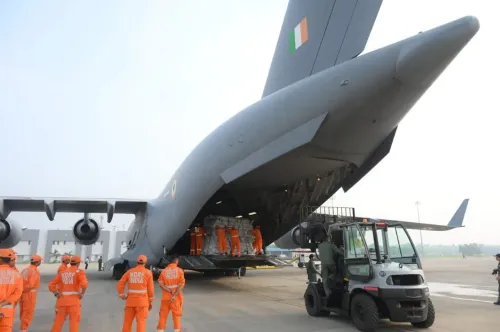
India is continuing to send relief supplies to Nepal, with MEA divisions coordinating further assistance. The Indian Embassy in Kathmandu and the mission in Beijing remain on high alert to track the status of remaining Indian nationals. The MEA control room is operational round the clock as the search for the 977 still out of contact continues.
Point of View
Not a routine bilateral matter. The Bhote Koshi corridor’s importance to the Kailash Mansarovar Yatra means India’s exposure is not just humanitarian but politically sensitive, with pilgrims from multiple states still unaccounted for. The deployment of Bailey bridges and the activation of embassies in both Kathmandu and Beijing underscores that the transboundary origin of the floods complicates the relief calculus. How quickly India can account for all its nationals — and whether the 977 still out of contact include more Indians — will define the next phase of this response.
NationPress
28 Aug 2026
Frequently Asked Questions
Who were the 21 pilgrims received by EAM Jaishankar at Delhi airport?
They were 21 tourists from Tamil Nadu who had travelled to Nepal for the Kailash Mansarovar Yatra through various travel agents. They were rescued from the flash floods that struck Nepal’s Bhote Koshi River on Wednesday and flown back to India via Kathmandu.
What caused the Nepal floods that stranded Indian pilgrims?
The floods were reportedly triggered by an avalanche on a transboundary river between Nepal and China, upstream of the Bhote Koshi River. The resulting flash floods swept away settlements, roads, hydropower projects, and transmission infrastructure downstream.
How many people have died or gone missing in the Nepal floods?
Nearly 550 people have died in the floods, while 977 remain out of contact, according to available figures as of 28 August.
What relief measures has India put in place for the Nepal floods?
India has mobilised Bailey bridges for rescue operations, set up a 24-hour control room at the Ministry of External Affairs in New Delhi, and is coordinating further relief supplies to Nepal. Indian embassies in Kathmandu and Beijing are in active contact with state governments whose residents were on the Kailash Mansarovar Yatra.
Why are Indian embassies in both Kathmandu and Beijing involved?
The floods were reportedly triggered by an avalanche on a transboundary river between Nepal and China, making the disaster a cross-border issue. The Indian Embassy in Beijing is involved to help track any Indian nationals who may have been in the China-side corridor of the Kailash Mansarovar Yatra route.