Rajasthan CM Bhajan Lal Sharma urges retired SC/ST officials to mentor youth
Synopsis
Rajasthan CM Bhajan Lal Sharma’s message to retired SC/ST bureaucrats was pointed: public service doesn’t end with a pension letter. Backed by figures — 4.25 lakh scholarship recipients, ₹887 crore in loans, 12,000 MW of new power capacity — the dialogue signals an attempt to convert experienced former officers into active instruments of welfare delivery at the grassroots.
Key Takeaways
Rajasthan CM Bhajan Lal Sharma addressed retired SC and ST officials in Jaipur on 11 August , urging them to continue social mentorship post-retirement.
Nearly 4.25 lakh students have benefited under the SC Post-Matric Scholarship Scheme and 4.30 lakh under the ST Post-Matric Scholarship Scheme .
Loans worth ₹887 crore disbursed under the B.R.
Ambedkar Rajasthan Dalit, Adivasi Udyam Protsahan Yojana .
Monthly mess allowance for hostel students raised from ₹2,500 to ₹3,250 ; sports academy allowance raised from ₹2,600 to ₹4,000 .
Rajasthan has achieved 12,000 MW power generation capacity in the past two and a half years , according to Sharma.
250 new Maa-Baadi Centres ordered; honorarium for existing centre personnel raised by 10% annually for two years.
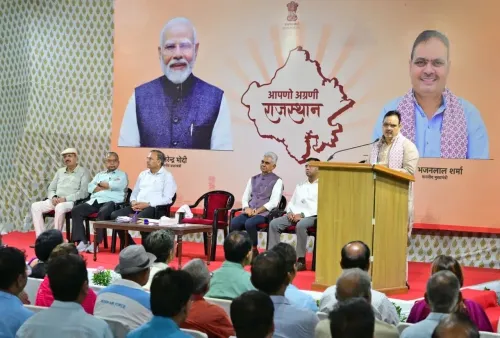
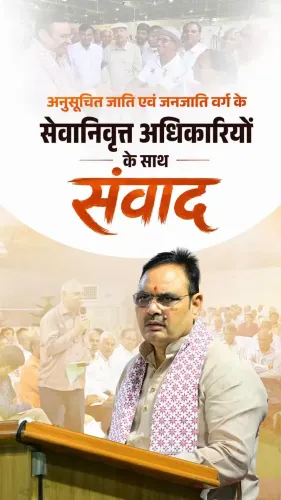
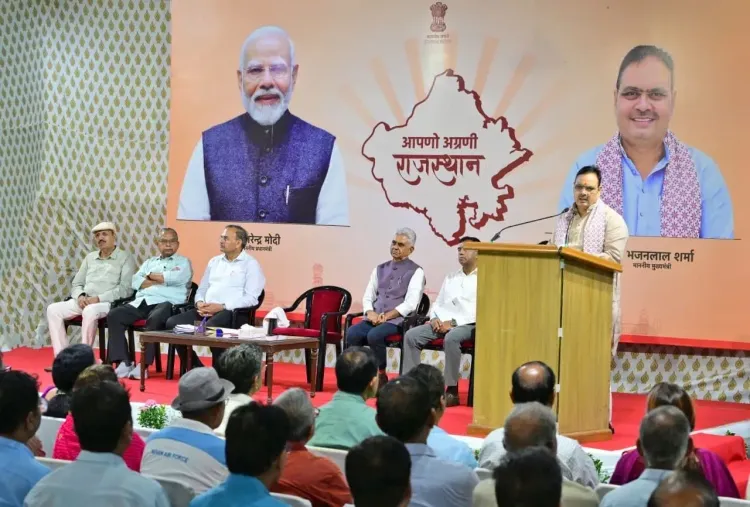
Rajasthan Chief Minister Bhajan Lal Sharma on Tuesday, 11 August called on retired officials from Scheduled Caste (SC) and Scheduled Tribe (ST) communities to remain active in their social responsibilities, saying that while government service ends at retirement, the duty to society does not. Addressing a structured dialogue with former bureaucrats in Jaipur, Sharma described sustained government-society engagement as a cornerstone of effective governance and equitable policy delivery.
Key Remarks by the Chief Minister
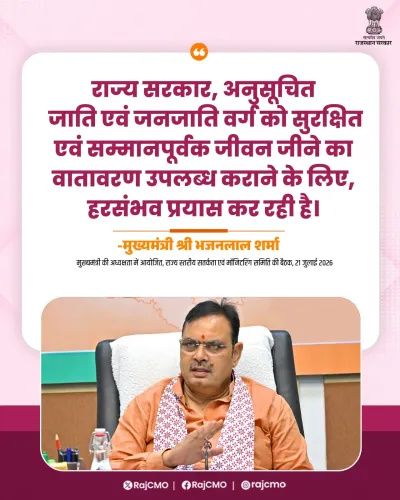
Sharma stated that social justice is “the soul of the state government’s policies” and the essence of its welfare agenda. He invoked the principle of Sabka Saath, Sabka Vikas, asserting that this approach has driven “unprecedented upliftment” of marginalised communities across Rajasthan.
“Officials may retire from government service, but they never retire from their social responsibilities,” Sharma said, urging former officers to deploy their administrative experience, institutional knowledge, and ground-level understanding to guide younger generations.
Welfare Scheme Milestones Cited
The Chief Minister outlined several welfare measures directed at SC and ST communities. Nearly 4.25 lakh students have benefited under the Scheduled Caste Post-Matric Scholarship Scheme, and 4.30 lakh students under the Scheduled Tribe Post-Matric Scholarship Scheme. Loans worth ₹887 crore have been disbursed under the B.R. Ambedkar Rajasthan Dalit, Adivasi Udyam Protsahan Yojana.
In Baran district, 14,636 eligible families have been supported in owning homes under the PM-JANMAN initiative. The monthly mess allowance for hostel and residential school students has been raised from ₹2,500 to ₹3,250, while the allowance for students in sports academies has been increased from ₹2,600 to ₹4,000 per month. The honorarium for personnel at Maa-Baadi Centres has been raised by 10 per cent annually for two consecutive years, and orders have been issued to open 250 new Maa-Baadi Centres.
Infrastructure and Development Initiatives
Sharma said the state government is developing a roadmap anchored in local needs, with priority investment in water, electricity, roads, and healthcare. He cited the Ram Jal Setu Link Project and the Yamuna Water Agreement as evidence of the political will of Rajasthan’s “Double-Engine” government. The state has reportedly achieved a power generation capacity of 12,000 MW in the past two and a half years, according to Sharma.
Schemes such as One District, One Product and Panch Gaurav are being used to promote local products and create employment for youth. The government is also pursuing the vision of Sahkar Se Samriddhi (prosperity through cooperation), with expanded storage and processing facilities at the local level aimed at increasing farmers’ incomes.
What Retired Officials Said
Former bureaucrats at the interaction — including Lalit K. Panwar, J.P. Chandelia, Ravi Prakash Meherda, Om Prakash Bairwa, and Anil Gothwal — expressed appreciation for improved implementation of social security schemes, including enhanced scholarships, free coaching programmes, and skill-development initiatives. They also acknowledged the government’s handling of atrocity cases involving SC and ST community members.
Participants from the IAS, IPS, IRS, and other administrative services underscored that retired officers remain an important source of societal inspiration and that their experience can help translate the vision of a developed Rajasthan into reality.
Ambedkar-Centred Governance Framework
Sharma reiterated that the state government’s welfare agenda is guided by the ideals of Babasaheb B.R. Ambedkar. Under the Baba Saheb Ambedkar Adarsh Gram Vikas Yojana, infrastructure development — covering roads, drinking water, and waste management — is being undertaken in villages with populations exceeding 10,000. The Ambedkar Teerth Sthal Yatra Yojana is also facilitating visits to sites associated with Ambedkar’s legacy.
As the Rajasthan government deepens its engagement with retired officials, the dialogue model signals an intent to bridge the gap between policy design and grassroots delivery — a challenge that will test the administration’s follow-through in the months ahead.
Point of View
While co-opting a credible constituency to validate welfare delivery claims. The numbers cited are substantial, but the gap between disbursement figures and on-ground impact in Rajasthan’s tribal belts has historically been wide. Whether retired officers are genuinely empowered as accountability partners or deployed as symbolic endorsers will determine whether this model has structural value or is largely ceremonial.
NationPress
12 Aug 2026
Frequently Asked Questions
What did Rajasthan CM Bhajan Lal Sharma say at the retired officials’ dialogue?
Chief Minister Bhajan Lal Sharma urged retired SC and ST officials to continue mentoring youth and contributing to welfare delivery after retirement, stating that social responsibilities do not end with government service. He also outlined key welfare milestones including scholarship coverage for over 8.5 lakh students and ₹887 crore in entrepreneurship loans.
How many students have benefited from Rajasthan’s SC/ST scholarship schemes?
Nearly 4.25 lakh students have benefited under the Scheduled Caste Post-Matric Scholarship Scheme, and 4.30 lakh students under the Scheduled Tribe Post-Matric Scholarship Scheme, according to figures cited by CM Sharma at the dialogue.
What is the B.R. Ambedkar Rajasthan Dalit, Adivasi Udyam Protsahan Yojana?
It is an entrepreneurship promotion scheme for Dalit and Adivasi communities in Rajasthan under which loans amounting to ₹887 crore have been disbursed, as stated by CM Bhajan Lal Sharma. The scheme is part of the state’s broader Ambedkar-guided welfare framework.
What infrastructure initiatives did CM Sharma highlight for SC/ST communities?
Sharma highlighted the Baba Saheb Ambedkar Adarsh Gram Vikas Yojana, which funds roads, drinking water, and waste management in villages with populations above 10,000. He also cited the Ram Jal Setu Link Project, the Yamuna Water Agreement, and 12,000 MW of new power generation capacity added in two and a half years.
Who attended the retired officials’ dialogue in Jaipur?
Former officers from the IAS, IPS, IRS, and other administrative services attended, including Lalit K. Panwar, J.P. Chandelia, Ravi Prakash Meherda, Om Prakash Bairwa, and Anil Gothwal. The interaction focused on welfare scheme implementation, social justice, and leveraging retired officers’ experience for Rajasthan’s development.