How is Indian Railways Driving Infrastructure Growth in Eastern and Northeastern India Under PM Modi's Leadership?

Synopsis
Discover how Indian Railways, under PM Modi's visionary leadership, is transforming Eastern and Northeastern India through innovative infrastructure initiatives. The Amrit Bharat Station Scheme is redefining connectivity and economic growth, making rail travel safer and more accessible for millions.
Key Takeaways
The Amrit Bharat Station Scheme is a transformative initiative reshaping railway infrastructure across India.
Over 1,300 stations are scheduled for redevelopment, focusing on modern amenities and accessibility.
West Bengal is a key region with an investment of Rs 3,600 crore for 101 stations.
Passenger experience is enhanced with features like lifts, escalators, and Wi-Fi connectivity.
The scheme promotes balanced regional development and economic growth.
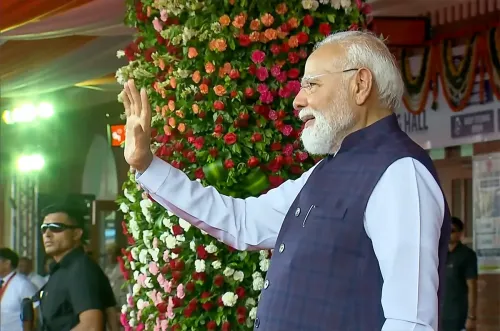
Guwahati, Jan 15 (NationPress) Under the dynamic leadership of Prime Minister Narendra Modi, Indian Railways has become a pivotal force in driving infrastructure-led growth across Eastern and Northeastern India, greatly enhancing connectivity and fostering economic development, as stated by officials on Thursday.
The Chief Public Relations Officer of Northeast Frontier Railway (NFR), Kapinjal Kishore Sharma, revealed that the railway landscape in West Bengal has witnessed a significant and tangible evolution over the past decade.
Previously hindered by geographical constraints, outdated infrastructure, and uneven access, these regions are now experiencing a historic transition towards integrated and advanced Railway systems.
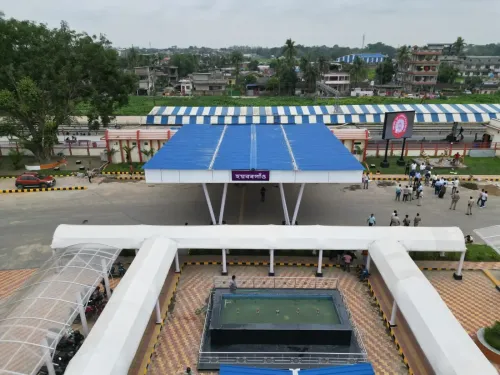
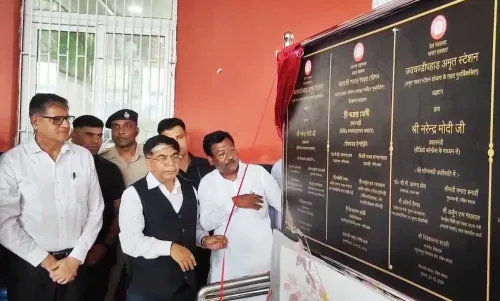
At the core of this transformation lies the Amrit Bharat Station Scheme, recognized as the world’s largest railway station redevelopment initiative, heralding a new era in public infrastructure. According to the official, this scheme transcends mere station modernisation; it represents a visionary rethinking of how railway infrastructure supports the nation.
With over 1,300 stations earmarked for redevelopment nationwide, this initiative exemplifies a leadership philosophy that prioritizes results over intentions and infrastructure over stagnation, he noted.
These redevelopments extend beyond superficial updates by incorporating modern passenger facilities, Divyangjan-friendly amenities, improved circulation, contemporary waiting areas, digital information systems, and architecture inspired by local heritage, thereby transforming stations into modern, accessible, and regionally rooted gateways of growth.
Envisioned as a comprehensive, future-ready initiative, the Amrit Bharat Station Scheme embodies a people-centric vision of infrastructure.
The CPRO emphasized that by turning stations into vibrant public spaces and economic catalysts, the scheme invigorates regional commerce and enhances the overall passenger experience.
West Bengal is quickly becoming a benchmark for passenger-centric rail modernization. Notable improvements in safety, accessibility, and mobility are revolutionizing the rail travel experience across the state.
Under the Amrit Bharat Station Scheme, West Bengal is set to feature 101 Amrit Bharat stations with an investment of approximately Rs 3,600 crore.
Covering metropolitan hubs, border towns, and pilgrimage sites, these upgrades promote balanced and inclusive regional development. Key stations like Howrah, Sealdah, New Jalpaiguri, Kharagpur, Asansol, Bandel, Malda Town, Siliguri, Alipurduar, Shalimar, and Santragachi are being modernized under a unified vision.
New Jalpaiguri, with a sanctioned investment of around Rs 335 crore, is being reimagined as a modern gateway to the Northeast with new terminals, an air concourse, and enhanced passenger facilities.
Santragachi, with an investment of approximately Rs 380 crore, is evolving into a significant multi-modal hub designed to alleviate pressure on the Howrah-Kolkata corridor. Asansol and Shalimar are also undergoing extensive upgrades to enhance long-distance connectivity and stimulate regional economic growth.
Passenger amenities have significantly expanded, with the installation of 250 lifts, the commissioning of over 400 escalators, and Wi-Fi connectivity now available at 510 stations, highlighting a strong focus on accessibility and operational efficiency.
The Northeast Frontier Railway (NFR), based in Maligaon, operates throughout the Northeastern states, including seven districts of West Bengal and five districts of north Bihar.
Point of View
It is imperative to recognize the transformative impact of the Amrit Bharat Station Scheme under PM Modi's leadership. This initiative not only signifies a commitment to modern infrastructure but also highlights the government's focus on inclusive growth across regions. The changes in the railway network reflect a broader strategy to enhance connectivity and economic opportunities for all citizens.
NationPress
27 Oct 2026
Frequently Asked Questions
What is the Amrit Bharat Station Scheme?
The Amrit Bharat Station Scheme is the world's largest railway station redevelopment program aimed at modernizing over 1,300 stations across India, improving passenger amenities and infrastructure.
How much is being invested in the Amrit Bharat stations in West Bengal?
Approximately Rs 3,600 crore is being invested for the redevelopment of 101 Amrit Bharat stations in West Bengal.
What are the key features of the station upgrades?
The upgrades include modern passenger facilities, Divyangjan-friendly amenities, improved circulation, digital information systems, and architecture that reflects local heritage.
Why is the Amrit Bharat Station Scheme important?
This scheme is crucial for enhancing connectivity, stimulating regional commerce, and ensuring a people-centric approach to infrastructure development.
Which regions are primarily benefiting from this initiative?
Eastern and Northeastern India are the primary beneficiaries of the Amrit Bharat Station Scheme, significantly improving their railway infrastructure.