Revanth Reddy Reviews Revenue Mobilisation, Orders Chasing Cells
Synopsis
Telangana CM Revanth Reddy on 1 July 2026 chaired a high-level revenue review, directing HMDA, TGIIC, Excise, Commercial Taxes and Mining departments to eliminate leakages, form chasing cells for continuous follow-up, and treat land acquisition as the top priority.
Key Takeaways
Revanth Reddy chaired a revenue mobilisation review with senior officials on 1 July 2026 .
Departments covered include HMDA, TGIIC, Commercial Taxes, Excise , and Mining .
Officials were directed to form 'chasing cells' for continuous follow-up on revenue targets.
Land acquisition was declared the top priority to unblock stalled infrastructure projects.
The CM warned that negligence in revenue enhancement and funds mobilisation will not be tolerated.
Government committed to extending all necessary support to departments to achieve their targets.
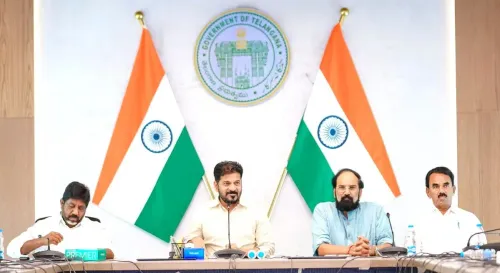
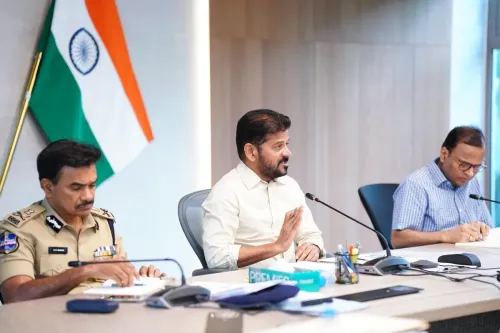
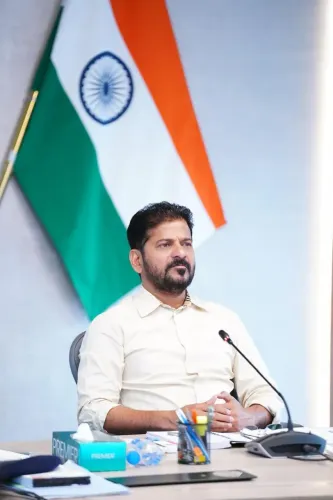
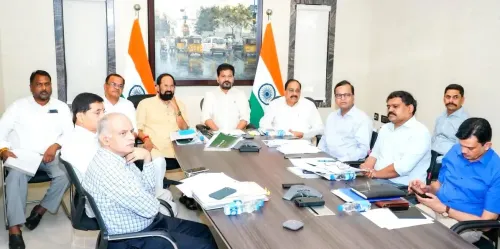
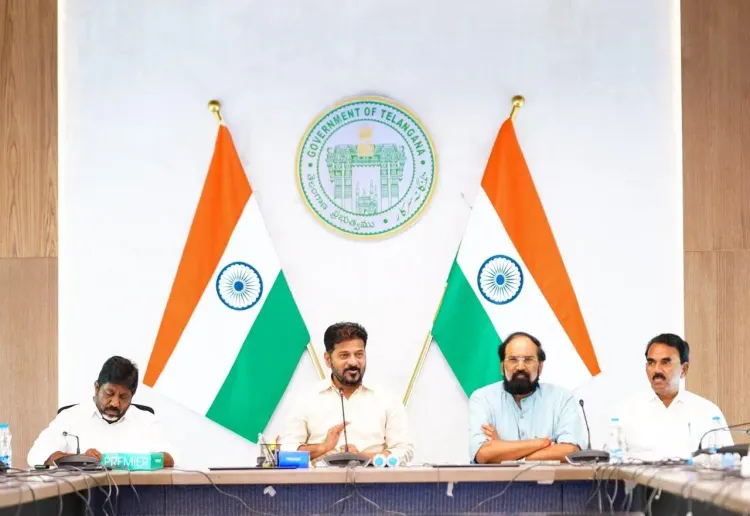
Telangana Chief Minister A. Revanth Reddy on Wednesday, 1 July 2026, chaired a high-level review meeting with senior officials to assess revenue mobilisation across key state departments, directing them to plug leakages and set up dedicated 'chasing cells' for continuous follow-up.
Context
Posting on X in Telugu, CM Revanth Reddy stated he had conducted a review on revenue mobilisation (ఆదాయ సమీకరణపై సమీక్ష) with senior officers. He named HMDA (Hyderabad Metropolitan Development Authority), TGIIC (Telangana Industrial Infrastructure Corporation), Commercial Taxes, Excise, and Mining among the departments covered, instructing each to ensure there are 'no leakages.' He made clear that 'negligence in revenue enhancement and funds mobilisation will not be tolerated.'
The Chief Minister also directed departments to constitute 'chasing cells' — dedicated internal units to continuously track revenue targets and follow up on pending collections. He further instructed each department to improve its own operational capacity (సామర్ధ్యాన్ని మరింత మెరుగుపరుచుకోవాలి).
Policy Backdrop
Since the Congress government assumed office in December 2023, Telangana has undertaken a series of top-level reviews of revenue-earning departments with a focus on plugging collection gaps and improving enforcement. The state's own-source revenue depends heavily on departments such as Excise, Commercial Taxes, Mining royalties, and urban development bodies like HMDA and TGIIC.
This drive mirrors a broader pattern across Indian states that are balancing rising welfare expenditure with the need for fiscal discipline by tightening inter-departmental coordination and enforcement. CM Revanth Reddy also underscored that land acquisition is the 'first priority' (భూసేకరణను మొదటి ప్రాధాన్యతగా), signalling urgency around unlocking stalled infrastructure projects that require clear land titles.
Stakeholders and Impact
The directive affects multiple revenue-generating arms of the Telangana government. HMDA manages urban planning and land-related revenues in the capital region, while TGIIC handles industrial land development. The Excise Department is a major contributor to own-source revenue through liquor licensing, and the Mining Department collects royalties on mineral extraction leases.
Landowners and developers operating within HMDA's jurisdiction, as well as industries interfacing with TGIIC, will be directly affected by tighter compliance and faster land acquisition processes. The Chief Minister assured that the government is 'ready to extend all necessary support' to departments to meet their targets.
What's Next
The formation and functioning of the 'chasing cells' across departments will be a key indicator of whether this review translates into measurable revenue gains. Progress is likely to be tracked ahead of Telangana's next state budget cycle, where own-source revenue performance will be closely scrutinised.
Any legislative or procedural changes to land acquisition norms could also emerge from the assembly in the coming months, as the government moves to fast-track infrastructure projects that have been held up by land-related bottlenecks.
Point of View
Suggesting the government sees stalled projects as both a revenue and a governance liability. Taken together, the moves reflect a Congress-led administration under pressure to demonstrate fiscal discipline while sustaining its welfare commitments ahead of the next budget cycle.
NationPress
1 Jul 2026
Frequently Asked Questions
Why did CM Revanth Reddy hold a revenue review meeting in July 2026?
CM Revanth Reddy held the review to assess revenue mobilisation across key departments including HMDA, TGIIC, Excise, Commercial Taxes, and Mining, with the aim of plugging leakages and improving collection efficiency.
What is a 'chasing cell' in Telangana government departments?
A chasing cell is a dedicated internal unit within a government department tasked with continuously tracking revenue targets and following up on pending collections to ensure no revenue slips through.
Which departments were covered in Telangana's revenue review?
The review covered HMDA (Hyderabad Metropolitan Development Authority), TGIIC (Telangana Industrial Infrastructure Corporation), Commercial Taxes, Excise, and Mining departments, along with other related departments.
Why is land acquisition a priority for the Telangana government?
CM Revanth Reddy identified land acquisition as the top priority because unresolved land titles are blocking infrastructure projects; faster acquisition is expected to unlock both development and associated revenue streams.
What happens if Telangana departments show negligence in revenue collection?
CM Revanth Reddy explicitly stated that negligence in revenue enhancement and funds mobilisation will not be tolerated, indicating accountability measures are in place for underperforming departments.