CM Yogi Raises Shiksha Mitra Honorarium to ₹18,000
Synopsis
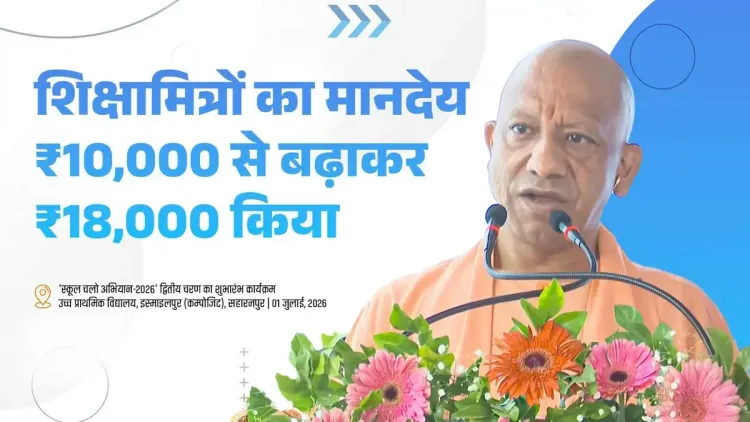
The Uttar Pradesh government has hiked the monthly honorarium of Shiksha Mitras — contractual para-teachers in government primary schools — from ₹10,000 to ₹18,000, an 80% increase announced by Chief Minister Yogi Adityanath's office on 1 July 2026.
Key Takeaways
The Uttar Pradesh government has raised the Shiksha Mitra monthly honorarium from ₹10,000 to ₹18,000 , effective as announced on 1 July 2026 .
The hike represents an 80 per cent increase in monthly pay for this cadre of contractual para-teachers.
The announcement was made by the Chief Minister's Office of Uttar Pradesh and attributed to CM Yogi Adityanath .
The Shiksha Mitra scheme was introduced around 2000 to address teacher shortages in UP's government primary schools.
District-level rollout, disbursement timelines, and any arrears orders are yet to be detailed in formal government notifications.
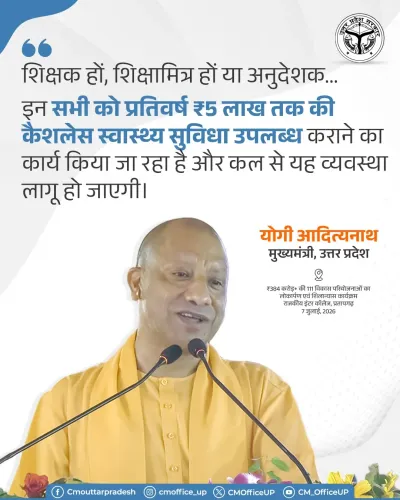
The Chief Minister's Office of Uttar Pradesh announced on Wednesday, 1 July 2026 that the state government has raised the monthly honorarium of Shiksha Mitras — contractual para-teachers in government primary schools — from ₹10,000 to ₹18,000, attributing the decision to Chief Minister Yogi Adityanath.
The official post stated: 'प्रदेश सरकार ने शिक्षामित्रों का मानदेय ₹10,000 से बढ़ाकर ₹18,000 कर दिया है।' ['The state government has increased the honorarium of Shiksha Mitras from ₹10,000 to ₹18,000.'] The increase represents an 80 per cent hike in monthly pay for this cadre.
Context
The Shiksha Mitra scheme was introduced in Uttar Pradesh around the year 2000 to address acute staffing shortages in government primary schools, particularly in rural areas. These contractual assistant teachers were appointed as a bridge measure to improve pupil-teacher ratios across the state's vast school network.
Uttar Pradesh is India's most populous state, and its primary education system depends heavily on both regular and contractual teaching staff to serve millions of students, especially in underserved districts.
Policy Backdrop
The state has periodically revised honorariums for Shiksha Mitras as part of broader efforts to stabilise the para-teacher cadre. Such revisions have historically been linked to centrally sponsored frameworks, including Samagra Shiksha, which targets improved learning outcomes and equitable access to schooling.
Chief Minister Yogi Adityanath, who has led the state since 2017, has overseen multiple rounds of revisions to teacher-related honorariums and recruitment drives during his tenure. The latest hike continues that pattern of incremental improvements to contractual teacher compensation.
Stakeholders and Impact
The revision directly benefits Shiksha Mitras employed across Uttar Pradesh's government primary schools. For many of these para-teachers, the monthly honorarium is their primary income, and an increase of ₹8,000 per month is a material improvement in financial security.
Primary school students and their families are indirect beneficiaries: higher pay is broadly expected to improve attendance and retention among contractual teachers, contributing to more consistent classroom instruction in rural and semi-urban schools.
What's Next
Attention will now turn to district-level implementation of the revised rates, including any formal government orders specifying the effective date, disbursement timelines, and whether arrears will be paid. The question of future regularisation of Shiksha Mitras into the permanent teacher cadre remains a longer-term policy issue that this honorarium revision does not directly address.
If implemented swiftly and uniformly, the hike could ease long-standing grievances within the Shiksha Mitra community and signal the state government's intent to prioritise primary education staffing ahead of upcoming policy cycles under national education frameworks.
Point of View
Which carries heavier long-term fiscal and legal obligations. Whether this announcement is accompanied by formal orders on arrears and timelines will determine how it is received on the ground.
NationPress
30 Sept 2026
Frequently Asked Questions
What is the new honorarium for Shiksha Mitras in Uttar Pradesh?
The Uttar Pradesh government has raised the monthly honorarium for Shiksha Mitras to ₹18,000 , up from the previous ₹10,000 , as announced on 1 July 2026.
Who are Shiksha Mitras?
Shiksha Mitras are contractual para-teachers appointed in Uttar Pradesh's government primary schools under a scheme introduced around 2000 to address teacher shortages, particularly in rural areas.
By how much has the Shiksha Mitra salary been increased?
The honorarium has been increased by ₹8,000 per month , representing an 80 per cent hike over the previous rate of ₹10,000.
Did CM Yogi Adityanath announce the Shiksha Mitra pay hike?
Yes, the announcement was made by the Chief Minister's Office of Uttar Pradesh and directly attributed to Chief Minister Yogi Adityanath on 1 July 2026.
Will Shiksha Mitras be regularised as permanent teachers after this hike?
The current announcement covers only the honorarium revision. The question of regularisation into the permanent teacher cadre is a separate, longer-term policy matter that this hike does not directly address.