Revanth Reddy meets Railway Minister on Hyderabad Metro Phase 2
Synopsis
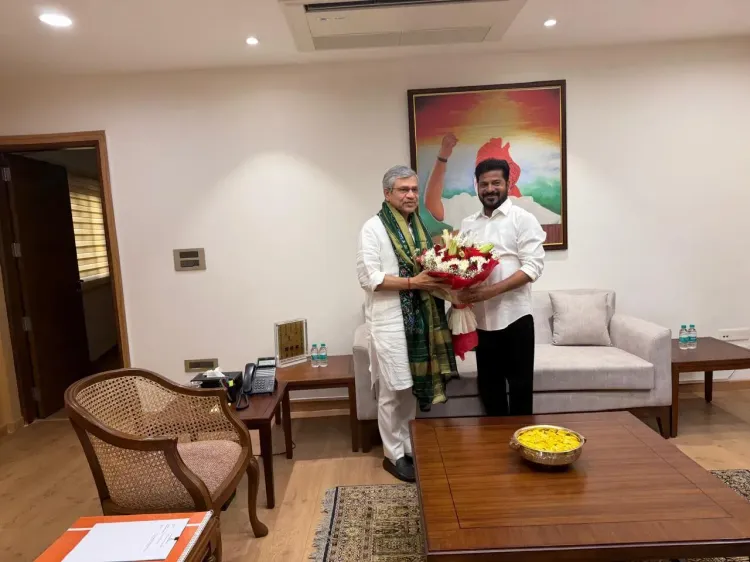
Telangana Chief Minister A. Revanth Reddy held talks in New Delhi with Union Railway Minister Ashwini Vaishnaw and Union Minister G. Kishan Reddy on 23 June 2026, focusing on construction, state-level actions, and fund mobilisation for Hyderabad Metro Rail Phase 2.
Key Takeaways
Revanth Reddy met Union Railway Minister Ashwini Vaishnaw and Union Minister G.
Kishan Reddy in New Delhi on 23 June 2026 .
Discussions covered construction plans, state government actions, and fund mobilisation for Hyderabad Metro Rail Phase 2 .
Hyderabad Metro Phase 1 was sanctioned in 2008 and commissioned between 2017 and 2020 as a public-private partnership.
Telangana submitted detailed project reports for Phase 2 to the central government in 2022-23 .
Next steps are expected to include revised DPR submissions and potential inclusion in the Union Budget or CCEA agenda for funding sanction.
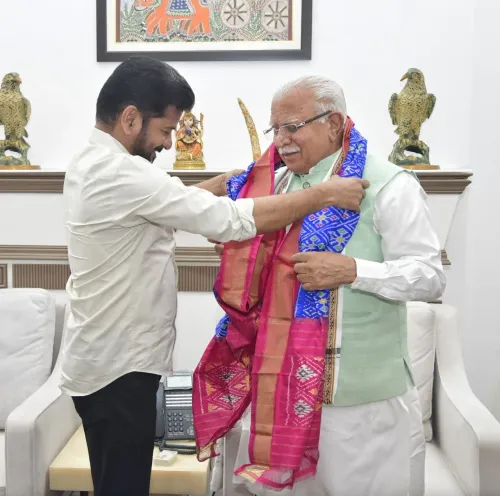
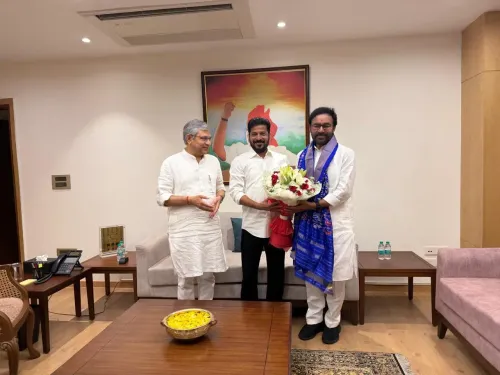
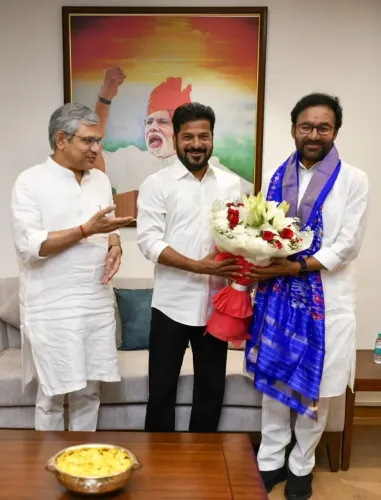
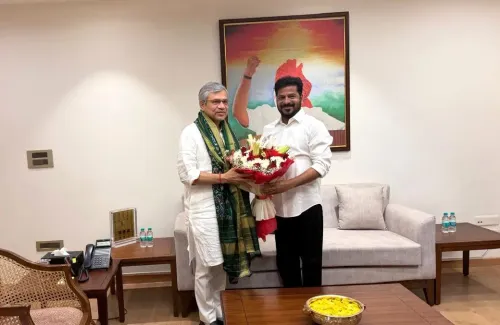
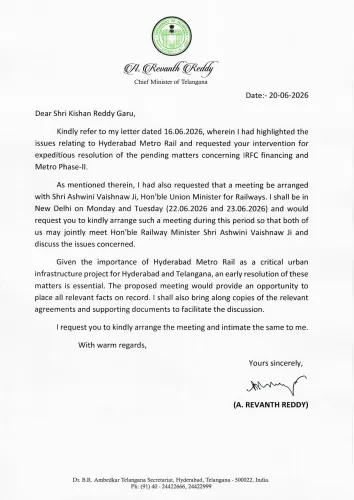
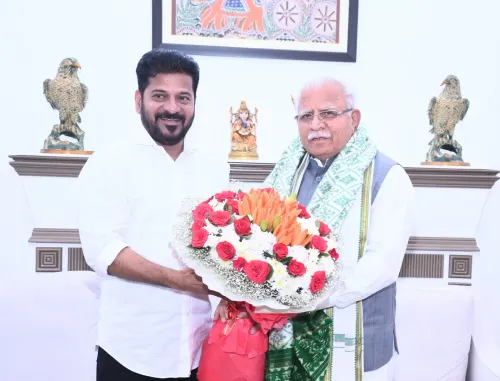
Telangana Chief Minister A. Revanth Reddy met Union Railway Minister Ashwini Vaishnaw and Union Minister G. Kishan Reddy in New Delhi on Monday, 23 June 2026, to advance the case for Hyderabad Metro Rail Phase 2. The discussions centred on construction progress, steps taken by the state government, and the mobilisation of funds for the proposed expansion.
Context
Revanth Reddy posted on X in Telugu, stating: 'ఈ రోజు ఢిల్లీలో కేంద్ర రైల్వే శాఖ మంత్రి శ్రీ అశ్వనీ వైష్ణవ్ తో మరో కేంద్ర మంత్రి శ్రీ కిషన్ రెడ్డి తో కలిసి భేటీ అయ్యాను' ('Today in Delhi, I met Union Railway Minister Ashwini Vaishnaw and fellow Union Minister Kishan Reddy'). The Chief Minister confirmed that the meeting covered three specific areas: the construction roadmap for Phase 2, actions already taken by the Telangana government, and strategies for fund mobilisation.
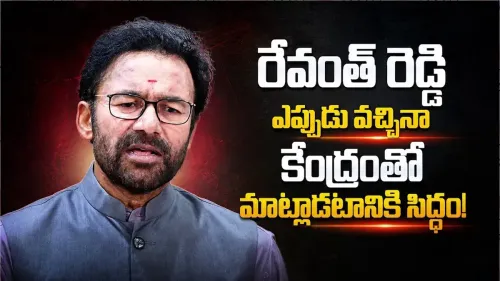
The meeting brings together a Congress-led state government and two senior central ministers from the BJP, underscoring the cross-party, administrative nature of metro expansion talks. G. Kishan Reddy, a Telangana-origin Union Minister, has historically played a bridging role in state-specific central engagements.
Policy Backdrop
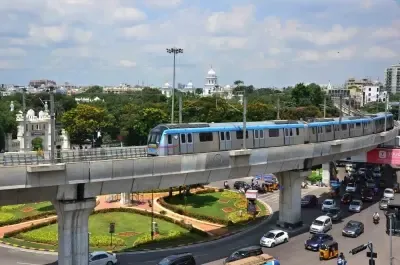
Hyderabad Metro Rail Phase 1 was sanctioned in 2008 as a public-private partnership and was progressively commissioned between 2017 and 2020, making it one of India's largest metro PPP projects. The Telangana government submitted detailed project reports for the Phase 2 expansion to the Ministry of Housing and Urban Affairs in 2022-23, outlining additional corridors and extensions beyond the existing network.
Across India, states including Karnataka, Tamil Nadu and Maharashtra have pursued similar centre-state coordination for metro expansions, seeking funding through the Ministry of Housing and Urban Affairs and the Cabinet Committee on Economic Affairs. Telangana's Congress government, in office since December 2023, has positioned urban infrastructure as a priority under its Telangana Rising 2047 vision.
Stakeholders and Impact
Hyderabad's commuters stand to benefit most directly from Phase 2, which is expected to ease congestion on road corridors not currently served by the metro. The Telangana state exchequer has a direct stake in the funding structure, as metro expansions typically involve a mix of central grants, state contributions, and external borrowings.
The Railway Ministry's involvement signals that coordination may extend beyond the Housing and Urban Affairs Ministry, potentially opening avenues for integrated rail-metro connectivity. Such multimodal linkages are a stated goal under India's National Urban Mobility Policy framework.
What's Next
Formal submission or revision of detailed project reports to the central government is expected to follow such high-level discussions, with potential inclusion in the Union Budget or a Cabinet Committee on Economic Affairs agenda for funding sanction. The Telangana government's ability to demonstrate fiscal readiness and finalised corridor alignments will be critical to securing central approval.
The hashtags #HyderabadMetroPhase2 and #TelanganaRising2047 used in the post indicate that the state government intends to keep public attention on the project's progress as a marker of its development agenda.
Point of View
A BJP minister from Telangana, was part of the meeting suggests the state is leveraging every available political channel to advance Phase 2. The engagement fits a broader national pattern where metro expansion timelines are as much a function of political negotiation as engineering readiness. Progress on Hyderabad Metro Phase 2 will serve as a key benchmark for the Revanth Reddy government's infrastructure credibility ahead of the next electoral cycle.
NationPress
21 Sept 2026
Frequently Asked Questions
What is Hyderabad Metro Phase 2?
Hyderabad Metro Phase 2 is the proposed expansion of the existing Hyderabad Metro Rail network, covering new corridors and extensions beyond the Phase 1 lines that were commissioned between 2017 and 2020.
Why did Revanth Reddy meet Ashwini Vaishnaw in Delhi?
Telangana CM Revanth Reddy met Union Railway Minister Ashwini Vaishnaw on 23 June 2026 to discuss the construction roadmap, state government actions, and fund mobilisation strategies for Hyderabad Metro Phase 2.
What is the current status of Hyderabad Metro Phase 2 approval?
As of mid-2026, the Telangana government has been in active discussions with the central government. Detailed project reports were submitted in 2022-23, and formal funding sanction from the Cabinet Committee on Economic Affairs is yet to be announced.
Who is G. Kishan Reddy and why was he at the meeting?
G. Kishan Reddy is a BJP Union Minister from Telangana who has historically played a coordination role in state-specific central engagements, making him a key interlocutor between the state and the central government on projects like Hyderabad Metro.
How was Hyderabad Metro Phase 1 funded?
Hyderabad Metro Phase 1 was developed as a public-private partnership, sanctioned by the central government in 2008, and progressively commissioned between 2017 and 2020, making it one of India's largest metro PPP projects.