Khattar meets Telangana CM on Hyderabad Metro Phase-2, UCF
Synopsis
Union Minister Manohar Lal Khattar met Telangana CM Revanth Reddy on 11 June 2026, holding detailed talks on Hyderabad Metro Phase-2 and Urban Challenge Fund proposals — a rare BJP-Congress centre-state engagement on urban infrastructure funding.
Key Takeaways
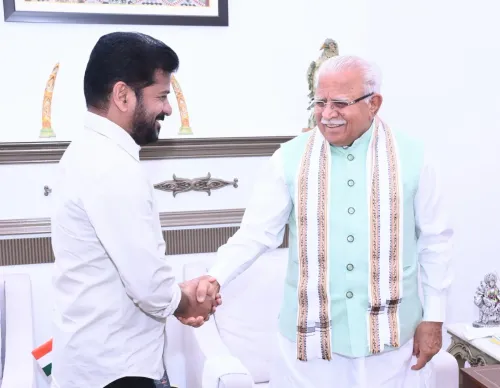
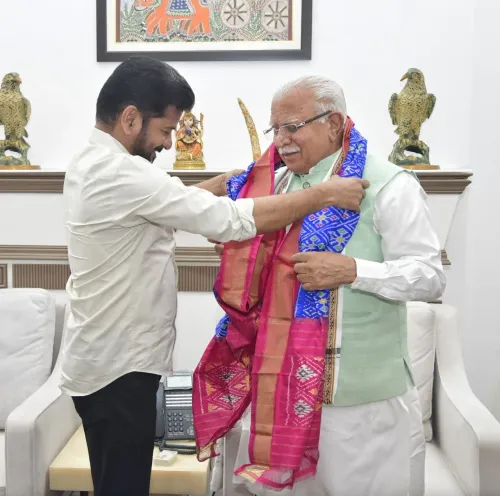
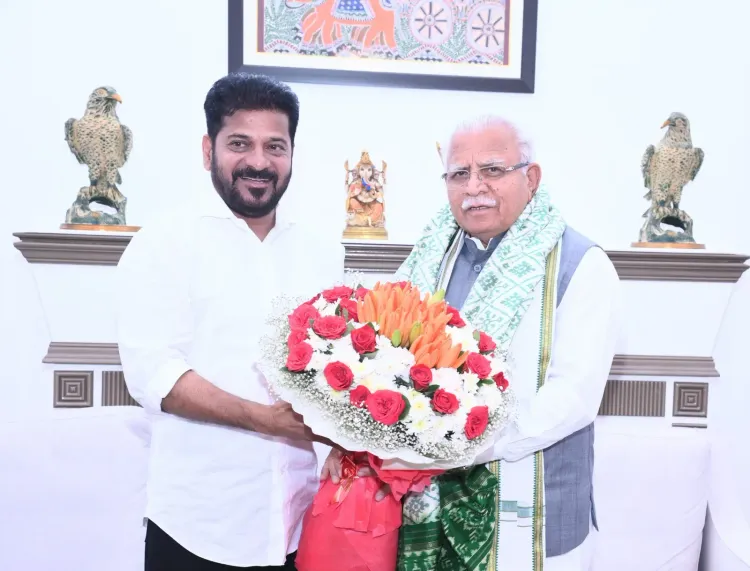
Union Minister Manohar Lal Khattar met Telangana CM Revanth Reddy at the latter's residence on 11 June 2026 .
Discussions covered Hyderabad Metro Rail Phase-2 expansion plans and related proposals.
Key proposals under the Urban Challenge Fund (UCF) , a central Ministry of Housing and Urban Affairs mechanism, were also on the agenda.
The meeting represents a cross-party ( BJP Centre, Congress state) engagement driven by project-level urban infrastructure needs.
Hyderabad Metro Phase-1 has been operational since 2017 with central viability gap funding; Phase-2 requires fresh central approvals and financing.
Formal approval of Telangana's detailed project reports through the Cabinet Committee on Economic Affairs or the next Union Budget cycle is the critical next milestone.
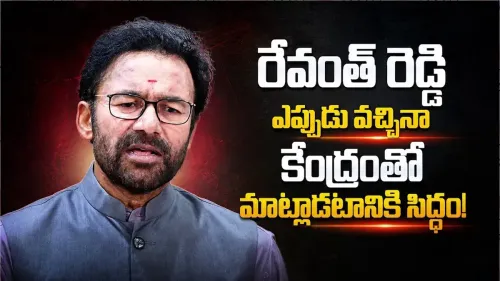
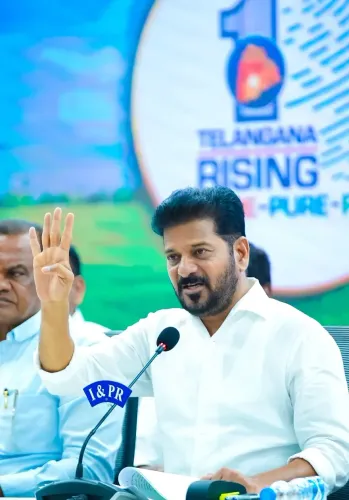
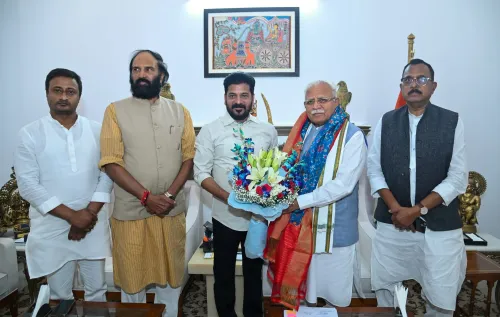
Union Minister for Housing and Urban Affairs Manohar Lal Khattar met Telangana Chief Minister Revanth Reddy at the latter's residence on Thursday, 11 June 2026, for wide-ranging discussions on the proposed Hyderabad Metro Rail Phase-2 expansion and key proposals under the Urban Challenge Fund (UCF).
Khattar confirmed the meeting on X, writing in Hindi: 'तेलंगाना के माननीय मुख्यमंत्री श्री Revanth Anumula जी से आज निवास स्थान पर भेंट हुई।' ('Today I met the honourable Chief Minister of Telangana, Shri Revanth Anumula, at his residence.'). He added that 'detailed and meaningful discussions' were held on 'various subjects related to Hyderabad Metro Phase-2' and 'important proposals linked to the Urban Challenge Fund.'
Context
The meeting brings together a senior BJP Union minister and a Congress-led state government — a combination that underscores how urban infrastructure negotiations transcend partisan lines. Revanth Reddy has been Chief Minister of Telangana since December 2023, when the Congress wrested the state from the Bharat Rashtra Samithi. Despite the political difference, the Telangana government has been actively pursuing central funding for the city's next phase of metro expansion.
The Union Ministry of Housing and Urban Affairs holds the central lever for metro project approvals, viability gap funding, and disbursements under urban missions, making such bilateral engagements essential for state governments regardless of which party holds power at the Centre.
Policy Backdrop
Hyderabad Metro Rail Phase-1, which became operational in 2017, was developed with central viability gap funding under a public-private partnership model and spans key corridors across the city. A Phase-2 extension has been on the planning table for several years, with the Telangana government working on detailed project reports covering new alignments and stations.
The Urban Challenge Fund is a central mechanism under the Ministry of Housing and Urban Affairs designed to support state and city-level proposals for urban infrastructure upgrades, channelling targeted grants to projects that demonstrate innovation and impact. Separately, the Atal Mission for Rejuvenation and Urban Transformation (AMRUT 2.0), launched in 2021, continues to provide central assistance for urban mobility and allied infrastructure. Hyderabad was also among the cities selected under the Smart Cities Mission announced in 2015, which included metro and urban mobility components.
Stakeholders and Impact
A successful Phase-2 expansion would directly benefit Hyderabad's urban commuters, easing pressure on road traffic in one of India's fastest-growing metropolitan areas. Hyderabad municipal bodies, including the Greater Hyderabad Municipal Corporation, are key implementation partners whose coordination with both state and central agencies will shape project timelines.
For the Telangana state government, securing central funding through UCF and other mechanisms is critical to keeping Phase-2 financially viable. Multi-year negotiations over land acquisition, financing models, and alignment approvals have historically characterised Hyderabad Metro expansion efforts, making early ministerial-level engagement significant.
What's Next
The immediate next step will be a formal submission and review of Telangana's detailed project reports for Hyderabad Metro Phase-2 through the appropriate central approval process, potentially timed to the next Union Budget cycle or a meeting of the Cabinet Committee on Economic Affairs. The UCF proposals discussed on Thursday would similarly need to pass through Ministry-level scrutiny before any disbursements are sanctioned.
If the Centre clears the Phase-2 proposal and approves UCF grants, it would mark a significant step toward expanding Hyderabad's metro network and could set a template for centre-state urban infrastructure cooperation under the current political configuration.
Point of View
Where project-driven necessity overrides the BJP-Congress political divide. For the Congress-led Telangana government, securing central funding for Hyderabad Metro Phase-2 is a governance priority that cannot wait for political alignment. For the Centre, approving metro extensions in major cities — including opposition-ruled ones — reinforces the National Democratic Alliance's urban development narrative ahead of future electoral cycles. The Urban Challenge Fund's inclusion in the agenda signals that Telangana is pursuing multiple central funding windows simultaneously, a strategy that reflects both the scale of Hyderabad's infrastructure ambitions and the complexity of centre-state fiscal negotiations.
NationPress
26 Oct 2026
Frequently Asked Questions
What did Khattar and Revanth Reddy discuss in their June 2026 meeting?
They held detailed discussions on Hyderabad Metro Rail Phase-2 expansion plans and important proposals linked to the Urban Challenge Fund (UCF) , a central funding mechanism under the Ministry of Housing and Urban Affairs.
What is the Urban Challenge Fund?
The Urban Challenge Fund (UCF) is a central government mechanism under the Ministry of Housing and Urban Affairs that supports state and city proposals for urban infrastructure upgrades through targeted grants.
What is Hyderabad Metro Phase-2?
Hyderabad Metro Rail Phase-2 is the planned extension of the city's metro network beyond the Phase-1 corridors that have been operational since 2017 , covering new alignments and stations across the metropolitan area.
Why is a BJP minister meeting a Congress chief minister for infrastructure talks?
Urban infrastructure projects like metro rail require central government approvals and funding regardless of which party rules the state. The Ministry of Housing and Urban Affairs controls key mechanisms like metro viability gap funding and the UCF, making such cross-party meetings routine and necessary.
What happens next for Hyderabad Metro Phase-2 approval?
Telangana must formally submit its detailed project reports for central review, with approval likely to come through the Cabinet Committee on Economic Affairs or be reflected in the next Union Budget cycle.