Khattar Holds Key Talks on Hyderabad Metro Phase-2
Synopsis
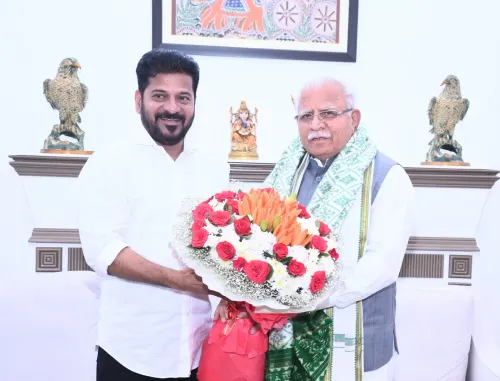
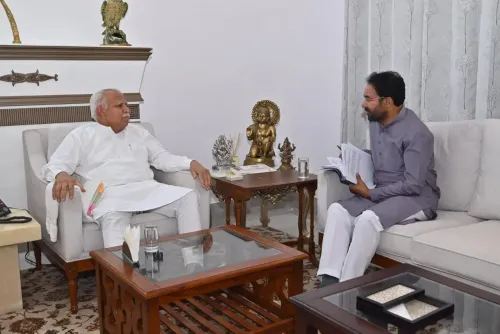
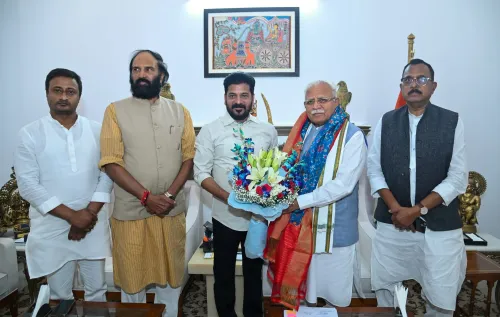
Union Minister Manohar Lal Khattar met Telangana CM Revanth Reddy and Union Cabinet colleagues G. Kishan Reddy and Ashwini Vaishnaw in Hyderabad on June 23, 2026, for detailed discussions on the expansion of Hyderabad Metro Rail Phase-2, signalling active centre-state coordination on a major urban transit project.
Key Takeaways
Manohar Lal Khattar , Union Minister of Housing and Urban Affairs, held talks in Hyderabad on June 23, 2026 on Hyderabad Metro Phase-2 .
The meeting included Telangana CM Revanth Reddy (Congress) and Union Ministers G.
Kishan Reddy and Ashwini Vaishnaw (BJP), reflecting cross-party engagement.
Hyderabad Metro Phase-1 covers 69 km across three corridors and was inaugurated in 2017 under a public-private partnership model.
Central metro policy under AMRUT 2.0 (from 2021 ) provides viability gap funding support for state metro expansions.
Formal Phase-2 approvals through PPPAC or Cabinet are expected to be the next procedural milestone.
The presence of the Railways Minister suggests possible coordination on metro-rail interchange connectivity for Hyderabad.
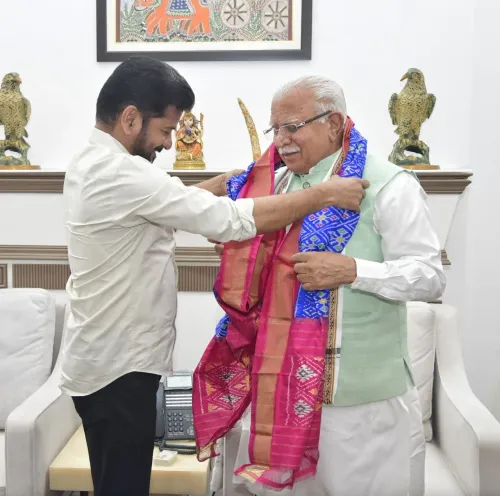
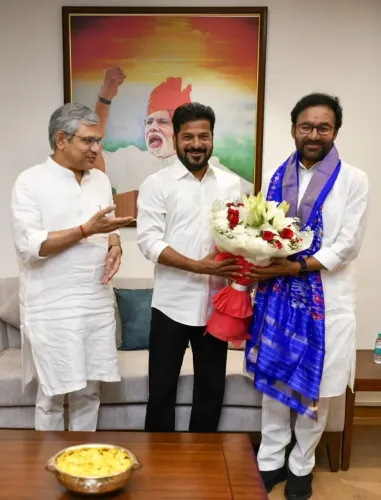
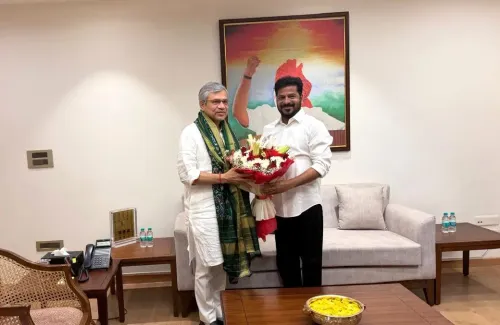
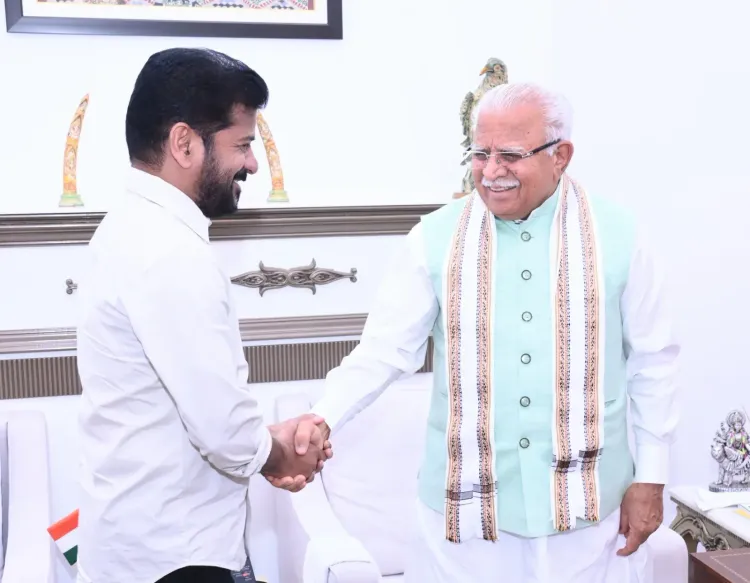
Union Minister of Housing and Urban Affairs Manohar Lal Khattar met with Telangana Chief Minister Revanth Reddy and Union Cabinet colleagues G. Kishan Reddy and Ashwini Vaishnaw in Hyderabad on Tuesday, June 23, 2026, for wide-ranging discussions on the proposed expansion of the Hyderabad Metro Rail Phase-2.
Context
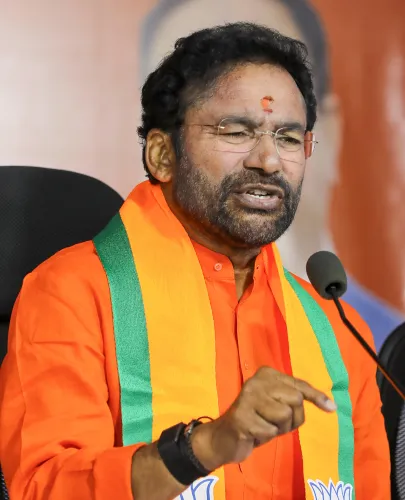
Khattar shared on X that the meeting involved 'detailed and meaningful discussion on various important aspects related to the expansion of Hyderabad Metro Phase-2' — ('हैदराबाद मेट्रो फेज़-2 के विस्तार से संबंधित विभिन्न महत्वपूर्ण पहलुओं पर विस्तृत एवं सार्थक चर्चा हुई'). The gathering brought together ministers holding the urban affairs, railways, and a senior BJP leader from Telangana alongside the state's Congress chief minister, signalling cross-party engagement on a major infrastructure project.
The meeting is notable because it involved ministers from three distinct Union portfolios — Housing and Urban Affairs, Railways, and Tourism and Culture — reflecting the multi-departmental coordination that large metro projects typically require for land acquisition, funding, and technical approvals.
Policy Backdrop
Hyderabad Metro Phase-1, spanning 69 km across three corridors, was inaugurated in 2017 and remains one of the largest metro projects executed under a public-private partnership model in India. The Central government's metro policy guidelines, updated under AMRUT 2.0 from 2021, have provided a framework for viability gap funding and state participation in such urban transit expansions.
Successive governments at the Centre have backed metro rail projects in tier-1 and tier-2 cities through a mix of central grants, PPP structures, and state co-financing. Telangana has long sought to extend the Hyderabad network to cover underserved corridors and growing suburban zones, and Phase-2 planning has been underway for several years.
Stakeholders and Impact
Urban commuters and residents of Hyderabad stand to be the primary beneficiaries of a Phase-2 expansion, which is expected to ease pressure on road infrastructure in one of India's fastest-growing metropolitan areas. The involvement of Union Minister Ashwini Vaishnaw, who also holds the Railways portfolio, points to possible coordination on interchange connectivity between metro and rail networks.
G. Kishan Reddy, a senior BJP leader from Telangana, brings local political knowledge to the table, while Chief Minister Revanth Reddy's participation underscores the Telangana government's priority of advancing the project despite the Centre and state being governed by different parties. This centre-state dynamic will be critical in determining the pace of formal approvals.
What's Next
Formal clearances for specific Phase-2 corridors are expected to move through the Cabinet or the Public Private Partnership Appraisal Committee (PPPAC) in the coming months, with funding structures and land-acquisition frameworks likely to be the next major milestones. Tuesday's discussions are a precursor to those procedural steps, and any announcement on cost-sharing or corridor alignment will be closely watched by urban planners and investors alike.
The convergence of multiple Union ministers with the Telangana Chief Minister suggests that groundwork for a formal project submission may be advancing, even as specific timelines and financial details remain to be disclosed publicly.
Point of View
Where political differences between a BJP-led Centre and a Congress-governed Telangana are set aside in the interest of a high-visibility urban project. The presence of Ashwini Vaishnaw — who holds the Railways brief — alongside the Housing and Urban Affairs Minister signals that Phase-2 planning may now be entering a stage where inter-ministerial alignment is needed, not just bilateral state-centre negotiation. For CM Revanth Reddy, securing central support for Hyderabad Metro Phase-2 is both a governance deliverable and a political win ahead of future electoral cycles. The meeting's tone, as reflected in Khattar's post emphasising 'meaningful discussion,' suggests momentum without a firm announcement — a holding pattern that typically precedes a formal Cabinet or PPPAC submission.
NationPress
22 Sept 2026
Frequently Asked Questions
What is Hyderabad Metro Phase-2?
Hyderabad Metro Phase-2 is the planned expansion of the existing Hyderabad Metro Rail network beyond the current Phase-1, which covers 69 km across three corridors inaugurated in 2017. Phase-2 aims to extend the metro to additional corridors in the city.
Who attended the Hyderabad Metro Phase-2 meeting on June 23, 2026?
The meeting was attended by Union Minister Manohar Lal Khattar (Housing and Urban Affairs), Telangana Chief Minister Revanth Reddy, Union Minister G. Kishan Reddy, and Union Minister Ashwini Vaishnaw.
What is AMRUT 2.0 and how does it relate to metro projects?
AMRUT 2.0 is a central government urban development scheme launched in 2021 that supports mass transit infrastructure including metro rail projects through viability gap funding and policy guidelines for state expansions.
Will the Centre fund Hyderabad Metro Phase-2?
The funding structure for Hyderabad Metro Phase-2 has not been publicly confirmed. Central government metro projects typically involve a mix of central grants, viability gap funding under AMRUT 2.0, state contributions, and PPP arrangements, but specific cost-sharing for Phase-2 is yet to be announced.
What is the current status of Hyderabad Metro Phase-2 approval?
As of June 2026, formal approvals for specific Phase-2 corridors are yet to be announced. The June 23 meeting between Union ministers and Telangana CM Revanth Reddy is seen as part of the groundwork ahead of a possible Cabinet or PPPAC submission.