Rijiju Meets Bhutan King, Stupa 76 Dedicated to PM Modi
Synopsis
Union Minister Kiren Rijiju met Bhutan's King Jigme Khesar in Gelephu on 1 November 2026, conveyed PM Modi's greetings, and announced that Stupa 76 — one of 108 Jangchub Chortens built by over 40,000 volunteers in six hours — had been dedicated to the Indian Prime Minister.
Key Takeaways
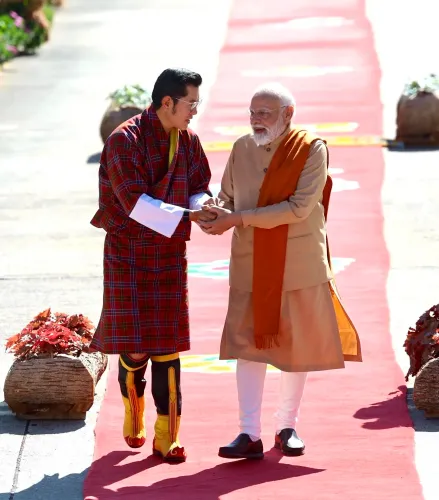
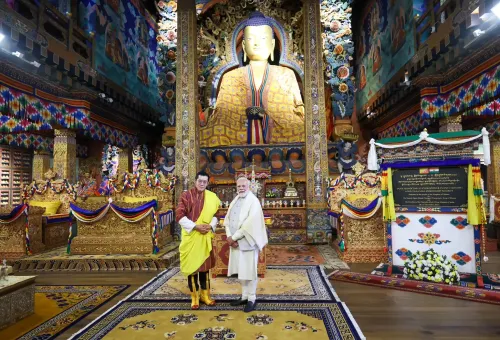
Union Minister Kiren Rijiju held a royal audience with King Jigme Khesar Namgyel Wangchuck in Gelephu, Bhutan on 1 November 2026 .
108 Jangchub Chortens (Buddhist Stupas) were constructed in just six hours with the participation of over 40,000 volunteers, monks and artisans starting after midnight.
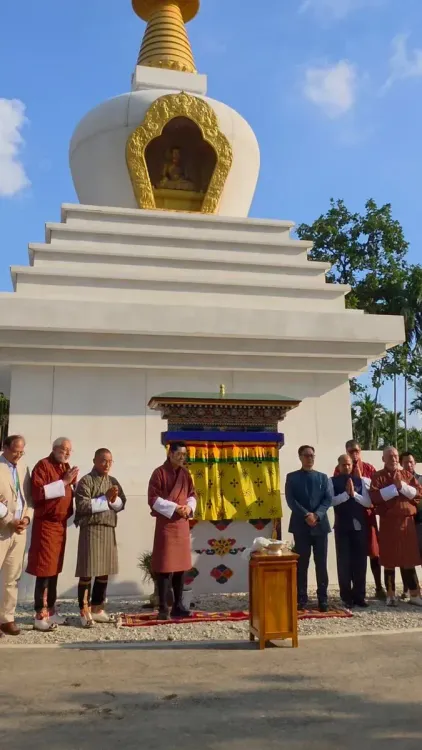
Stupa 76 was personally dedicated by the King of Bhutan to Prime Minister Narendra Modi as a symbol of bilateral spiritual and civilisational bonds.
Rijiju conveyed PM Modi's warm greetings and reaffirmed India's commitment to the India-Bhutan partnership.
The visit continues a pattern of high-priority Indian engagement with Bhutan, which PM Modi chose as his first foreign destination in 2014 .
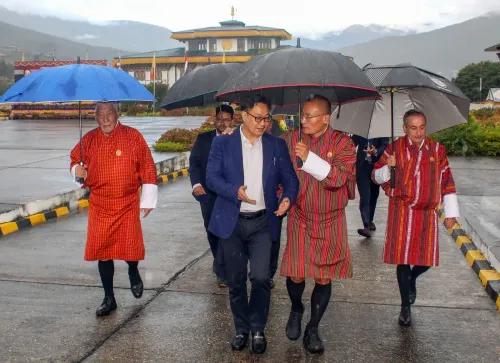
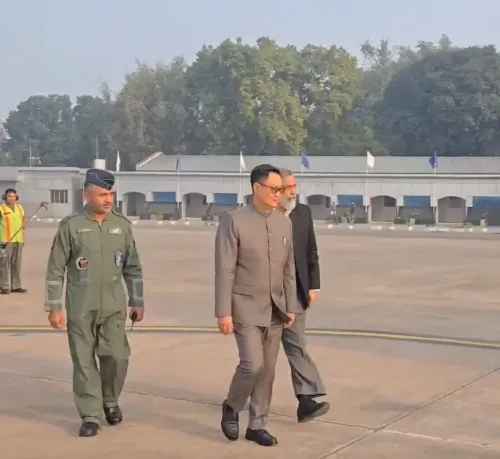
A diplomatic visit to the Himalayan kingdom carried an unexpected spiritual punctuation mark on Sunday, 1 November 2026 — Union Parliamentary Affairs and Minority Affairs Minister Kiren Rijiju held a royal audience with His Majesty King Jigme Khesar Namgyel Wangchuck in Gelephu, Bhutan, and returned with news that one of 108 newly constructed Buddhist Stupas had been personally dedicated by the King to Prime Minister Narendra Modi.
A record built after midnight — 108 Stupas in six hours
The occasion was extraordinary by any measure. Over 40,000 volunteers, monks and artisans began work after midnight on 1 November 2026, completing the construction of 108 Jangchub Chortens (Buddhist Stupas) across Bhutan in just six hours. The mass undertaking, carried out under the #Project108 banner, blended religious devotion with collective national energy on a scale rarely seen in the region.
Rijiju described it as a 'historic achievement' and extended formal congratulations from the Indian side. The sheer scale — more than forty thousand participants, dozens of sacred structures raised in a single night — signals how deeply the Bhutanese state and its people have invested in this as a civilisational statement.
Stupa 76: a stone dedication to the Indian Prime Minister
The diplomatic resonance of the event sharpened when Rijiju disclosed that His Majesty the King had graciously dedicated Stupa 76 to Prime Minister Modi. In Buddhist tradition, a stupa is not merely architecture — it is a vessel of merit, memory and aspiration. Singling out one of 108 for India's head of government transforms a cultural milestone into an enduring bilateral symbol, etched in stone.
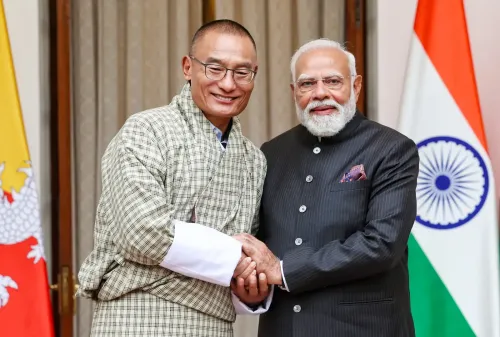
Rijiju conveyed PM Modi's warm greetings to the King and 'reaffirmed India's steadfast commitment to our unique and enduring bilateral partnership' — the language of continuity that both capitals have consistently favoured when describing a relationship built on geography, shared Buddhist heritage, and decades of development cooperation.
Gelephu and the strategic subtext of closeness
The choice of Gelephu as the venue is itself notable. The southern Bhutanese town sits near the Indian border and has become an increasingly prominent site for high-level bilateral engagement, reflecting Bhutan's own interest in developing its southern economic corridor. India-Bhutan ties — anchored in a friendship treaty updated in 2007 and reinforced by hydropower partnerships and cultural exchange — have consistently been nurtured through personal diplomacy. PM Modi made Bhutan his first foreign destination after taking office in 2014, establishing a template of early, visible priority that successive engagements have honoured.
Rijiju's visit continues that tradition, sending a senior cabinet minister to be present at a moment the Bhutanese government clearly regards as a national and spiritual landmark.
When a king dedicates a sacred structure to a neighbour's leader, the message travels far beyond the diplomatic cable — it travels in stone.
Point of View
India's visible presence at a mass national event in Gelephu sends a quiet but legible signal about depth of ties. The choice of a senior cabinet minister, rather than a routine envoy, calibrates the seriousness without escalating to prime-ministerial optics.
NationPress
1 Nov 2026
Frequently Asked Questions
Why did Kiren Rijiju visit Bhutan on 1 November 2026?
Rijiju visited Bhutan to meet King Jigme Khesar Namgyel Wangchuck in Gelephu, convey PM Modi's greetings, and attend the historic construction of 108 Buddhist Stupas completed by over 40,000 volunteers in six hours.
What is the significance of Stupa 76 being dedicated to PM Modi?
Stupa 76, one of 108 Jangchub Chortens built on 1 November 2026, was personally dedicated by Bhutan's King to PM Narendra Modi — a gesture that symbolises the deep spiritual and civilisational bonds between India and Bhutan.
What is Project108 in Bhutan?
Project108 refers to the mass construction of 108 Buddhist Stupas (Jangchub Chortens) in Bhutan, completed in just six hours on 1 November 2026 with over 40,000 volunteers, monks and artisans working from after midnight.
Why is Bhutan important to India's foreign policy?
Bhutan shares a unique treaty-based relationship with India, updated in 2007, anchored in security cooperation, hydropower development and cultural ties. PM Modi made Bhutan his first foreign destination in 2014, underlining its strategic priority.
Where is Gelephu and why was it chosen for the meeting?
Gelephu is a southern Bhutanese town near the Indian border that has emerged as a key venue for high-level India-Bhutan engagement, reflecting Bhutan's growing focus on developing its southern economic corridor.