Bhutan PM calls Modi avatar of Kalki, marks 25 years in office
Synopsis
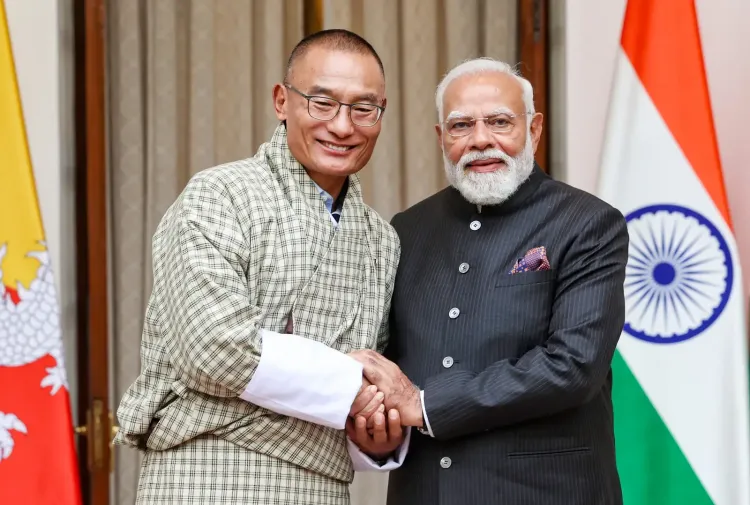
Bhutan's Prime Minister Tshering Tobgay didn't just offer diplomatic praise — he identified Narendra Modi as Kalki, Vishnu's final avatar of cosmic renewal, in a signed opinion article. Paired with the revelation that India doubled its financial support for Bhutan's 13th Plan to ₹10,000 crore, the piece underscores how deeply the B4B framework has reshaped one of India's most critical bilateral relationships.
Key Takeaways
Bhutan PM Tshering Tobgay identified PM Narendra Modi as the Kalki avatar of Lord Vishnu in a Hindustan Times opinion piece published on 7 October 2026 .
The article marks Modi's 25 years as a head of government — as Gujarat CM and then as Prime Minister.
India doubled its financial support for Bhutan's 13th Five-Year Plan to ₹10,000 crore when Tobgay returned to office in 2024 .
Tobgay credited the B4B (Bharat for Bhutan; Bhutan for Bharat) framework for transforming bilateral ties across education, healthcare, hydropower, and infrastructure.
Modi has pledged India's full support for the Gelephu Mindfulness City (GMC) , with rail links and border infrastructure already taking shape.
Tobgay praised Modi's role in bringing the African Union into the G20 as a permanent member and championing the Global South .
Bhutanese Prime Minister Tshering Tobgay on 7 October 2026 described Prime Minister Narendra Modi as an elder brother, a mentor, and — most strikingly — an avatar of Lord Vishnu, specifically identifying him with Kalki, Vishnu's prophesied final avatar associated with restoring dharma and ushering in renewal. The remarks were made in an opinion article titled 'Modi's leadership reflects wisdom, courage, empathy', published in the Hindustan Times, coinciding with Modi's completion of 25 years as a head of government.
The Vishnu-Kalki Comparison
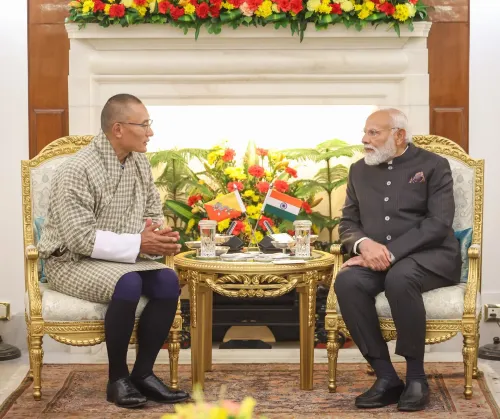
Tobgay revealed that he first made the Vishnu comparison in a conversation in 2019, and revisited it when he met Modi in Delhi on 14 March 2024 — this time as Bhutan's prime minister for a second term. 'I told him that I had thought long and hard about what I had said five years earlier, and wondered whether I had been wrong. I had concluded that I was right. Not only that. I now knew which avatar. Vishnu's final avatar — the one associated with overcoming disorder, restoring dharma and ushering in renewal. Kalki,' Tobgay wrote.
The comparison is notable for its specificity: Kalki is a figure from Hindu eschatology representing cosmic renewal, and the identification by a foreign head of government carries clear diplomatic weight beyond simple admiration.
India-Bhutan Relations and the B4B Framework
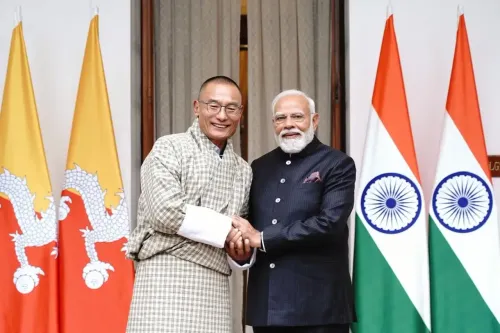
Tobgay credited Modi's Neighbourhood First policy for the depth of India-Bhutan ties, recalling that within weeks of taking office in June 2014, Modi chose Bhutan as his first foreign destination. He said the visit yielded a defining formulation: B4B — Bharat for Bhutan; Bhutan for Bharat. 'The phrase is simple yet profound. And over the years, he has lived by it,' the Bhutanese PM wrote.
The article highlighted tangible outcomes: India's assistance during Bhutan's 11th Five-Year Plan, sustained support through the 12th Plan, and a doubling of financial backing to ₹10,000 crore for the 13th Plan when Tobgay returned to office in 2024. Cooperation now spans education, healthcare, infrastructure, hydropower, technology, agriculture, and enterprise.
Gelephu Mindfulness City and New Investments
A significant portion of Tobgay's piece focused on the Gelephu Mindfulness City (GMC) — the Bhutanese king's flagship economic vision — for which Modi has pledged India's full support. According to Tobgay, that commitment is already materialising through rail links, border infrastructure, and improved air and digital connectivity. He added that leading Indian businesses, taking their cue from Modi's backing, have joined GMC as founding members.
Global South and the G20 African Union Admission
Beyond bilateral ties, Tobgay praised Modi's role in amplifying the voice of the Global South, citing the convening of the Voice of Global South Summits and the successful push to bring the African Union into the G20 as a permanent member. 'Viksit Bharat matters beyond India. PM Modi has consistently placed India's neighbours first in its international engagement,' he wrote.
'The stronger India becomes, the more it can do. A developed India will offer a larger market, have more capital and technology to share, and carry greater influence in shaping the global agenda to reflect the interests of the region and the Global South,' Tobgay added.
25 Years as Head of Government
The article was framed around the milestone of Modi's 25 continuous years as a head of government — first as Chief Minister of Gujarat and subsequently as Prime Minister. Tobgay positioned this longevity not as mere political endurance but as evidence of sustained public service, describing Modi as a mentor whose example 'has been a source of guidance.' The forward trajectory, in Tobgay's assessment, points toward a Viksit Bharat that, by extension, enables a Viksit Bhutan.
Point of View
Specifically, carries meaning beyond flattery. Bhutan's effusive framing coincides with substantive deliverables: a doubling of India's financial commitment and founding-member-level business investment in the GMC. What the piece also reveals is the strategic logic of Modi's Neighbourhood First doctrine — small neighbours with outsized geopolitical sensitivity, managed through visible personal diplomacy and concrete financial transfers, can become durable buffer relationships. The risk, critics might note, is that such personalised diplomacy is difficult to institutionalise beyond one leader's tenure.
NationPress
7 Oct 2026
Frequently Asked Questions
Why did Bhutan PM Tshering Tobgay compare Modi to the Kalki avatar?
Tobgay first called Modi an avatar of Vishnu in 2019 and later specified Kalki — Vishnu's final avatar associated with restoring dharma and renewing order — when he met Modi in Delhi on 14 March 2024. He wrote that after five years of reflection, he was more certain of the comparison than ever, and articulated it in a Hindustan Times opinion piece marking Modi's 25 years as a head of government.
What is the B4B framework in India-Bhutan relations?
B4B stands for Bharat for Bhutan; Bhutan for Bharat, a formulation Modi introduced during his first foreign visit as Prime Minister to Bhutan in June 2014. According to Tobgay, it has since defined the bilateral relationship, encompassing financial transfers, infrastructure, hydropower, education, and technology cooperation.
How much financial support has India provided for Bhutan's 13th Five-Year Plan?
India doubled its support to ₹10,000 crore for Bhutan's 13th Five-Year Plan after Tobgay returned to office in 2024, according to the Bhutanese PM's article. This followed sustained assistance through Bhutan's 11th and 12th Plans as well.
What is the Gelephu Mindfulness City and what is India's role in it?
The Gelephu Mindfulness City (GMC) is the Bhutanese king's flagship economic vision for a new urban development zone. Modi has pledged India's full support, which is reportedly materialising through rail links, border infrastructure, and improved air and digital connectivity. Leading Indian businesses have also joined GMC as founding members.
What global initiatives did Tobgay credit Modi with leading?
Tobgay credited Modi with championing the Global South by convening the Voice of Global South Summits and successfully pushing for the African Union's inclusion in the G20 as a permanent member. He argued that a stronger, developed India amplifies the region's influence on the global agenda.