Rijiju Challenges Sibal: 'New Protest Laws After 2014?'
Synopsis
Union Minister Kiren Rijiju challenged Congress leader Kapil Sibal via social media on October 30, asking whether 'new protest laws' or a 'separate Constitution' exist for the Congress party since 2014 — a sharp volley in an ongoing BJP-Congress rhetorical battle over constitutional fidelity.
Key Takeaways
Kiren Rijiju , Union Parliamentary Affairs Minister, publicly challenged Kapil Sibal on October 30, 2026 , asking if special protest laws exist for Congress post-2014.
The right to peaceful protest is protected under Article 19(1)(b) of the Indian Constitution since 1950 , with uniform restrictions under Article 19(3).
Rijiju framed his challenge through journalists, a common political amplification tactic, rather than addressing Sibal directly.
The specific statement or protest that triggered the post has not been confirmed.
The exchange is part of a recurring BJP-Congress pattern of mutual accusations about constitutional double standards since the 2014 general election .
Any response from Kapil Sibal or Congress, and any Parliament session debate on assembly laws, will be the key follow-up markers.
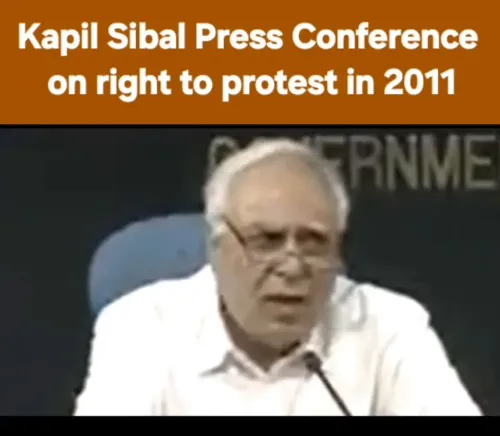
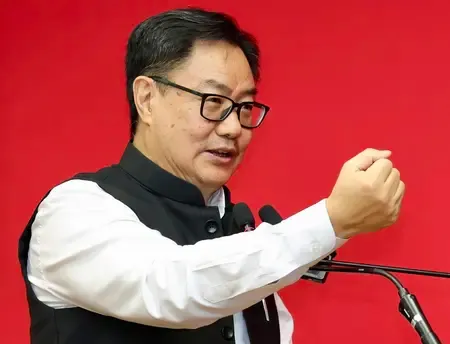
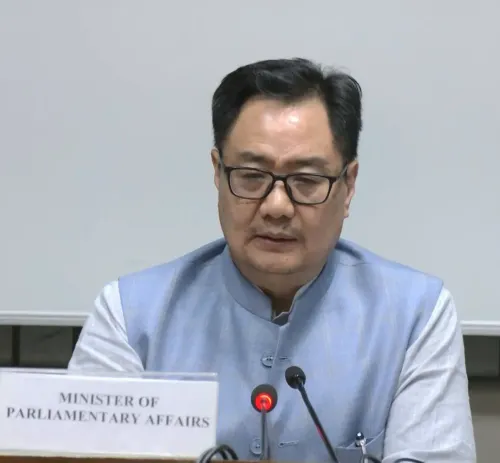
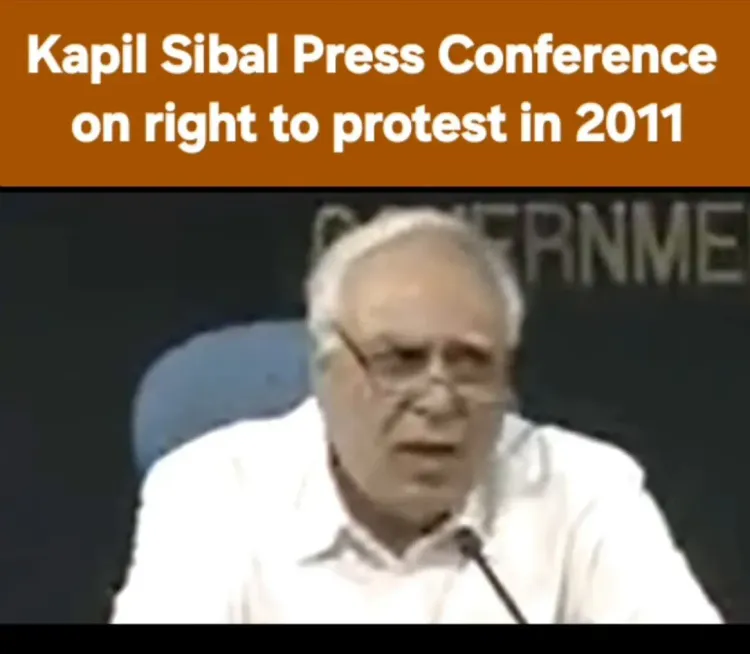
A pointed political barb landed on social media on Friday, October 30, 2026, when Union Parliamentary Affairs Minister Kiren Rijiju publicly challenged senior Congress leader Kapil Sibal to explain whether a separate constitutional rulebook applies to him and his party since 2014.
Rijiju's post read: 'I request some journalists to kindly ask Kapil Sibal, if there are 'New Laws' for protest after 2014? Or he has created a separate Constitution for himself and Congress Party after 2014!!'
The Constitutional Baseline Rijiju Is Invoking
The right to peaceful assembly and protest in India is not a post-2014 invention — it is enshrined in Article 19(1)(b) of the Constitution of India, in force since 1950. Reasonable restrictions on that right are permitted under Article 19(3), but those restrictions apply uniformly to all citizens, parties, and politicians alike. Rijiju's challenge is essentially a rhetorical assertion that no special dispensation exists for any political outfit, irrespective of which side of the treasury benches it sits on.
BJP vs Congress: A Familiar Social-Media Battleground
Kapil Sibal — a seasoned advocate, former Union Minister, and one of the Congress party's sharpest public voices — has been a frequent sparring partner for BJP leaders in exactly this kind of exchange. Since the 2014 general election brought Narendra Modi and the BJP to power, the ruling party and the opposition have repeatedly clashed over who plays by the constitutional rules and who merely invokes them for convenience.
Rijiju's framing — routing his challenge through journalists rather than addressing Sibal directly — is a well-worn parliamentary-affairs manoeuvre: it amplifies the message, forces media to carry it, and puts the opposition on the back foot without formally entering a bilateral dispute. The specific trigger for the post — whether a particular Sibal statement or a protest event — has not been confirmed.
What Sibal or Congress Says Next
The exchange will be worth tracking when Parliament's winter session convenes, where laws governing protest and assembly could easily surface as flashpoints. Sibal, who has argued constitutional cases at the Supreme Court of India, is unlikely to let the challenge pass unanswered. Whether this stays a social-media skirmish or escalates into a floor-of-the-House confrontation may depend on what, precisely, prompted the minister's broadside in the first place.
One law, one Constitution — the minister's argument is simple. Whether the political reality matches the constitutional text is the argument India's democracy is perpetually having with itself.
Point of View
Designed to keep Congress on the defensive on democratic-legitimacy terrain rather than substantive policy. Sibal's legal stature makes him a high-value rhetorical target: a successful counter from a Supreme Court advocate carries more weight than one from a career politician. Watch whether this stays digital or gets tabled in the winter session as part of a broader assault on opposition protest politics.
NationPress
30 Oct 2026
Frequently Asked Questions
Why did Kiren Rijiju target Kapil Sibal over protest laws?
Rijiju challenged Sibal with the question of whether separate protest laws or a different Constitution exist for the Congress party since 2014, suggesting the opposition applies constitutional standards selectively. The specific trigger for the post has not been confirmed.
What does the Indian Constitution say about the right to protest?
The right to peaceful assembly and protest is guaranteed under Article 19(1)(b) of the Constitution of India since 1950, subject to reasonable restrictions applicable to all citizens under Article 19(3).
Did protest laws in India change after 2014?
No new laws specifically replacing the constitutional right to protest were enacted after 2014. The framework under Article 19 of the Constitution remains the governing standard, unchanged in its fundamentals.
What is Kiren Rijiju's role in the government?
Kiren Rijiju serves as Union Minister of Parliamentary Affairs and Minister of Minority Affairs , and is a senior BJP leader from Arunachal Pradesh .