Rijiju Hails BJP's 'Unprecedented Mandate' in Gujarat Civic Polls
Synopsis
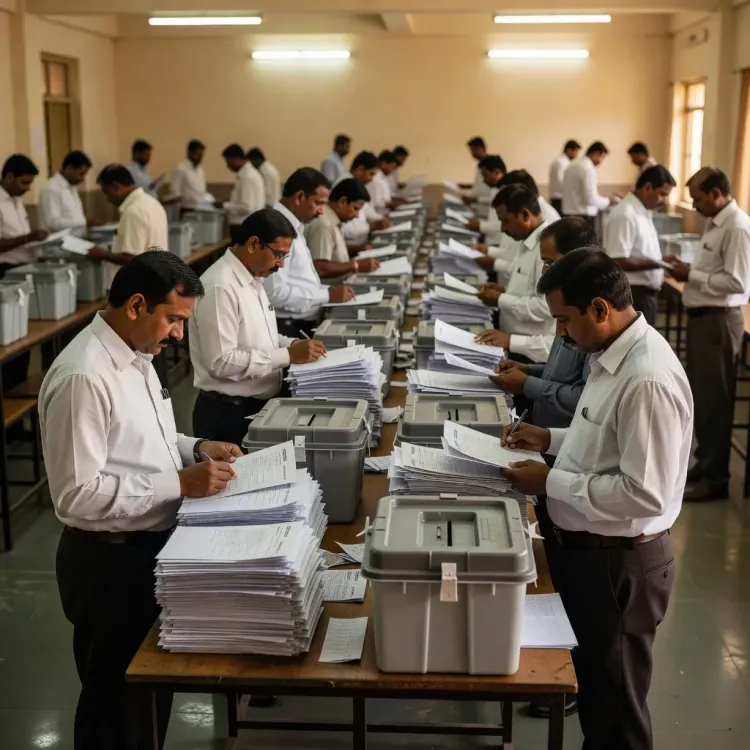
Union Minister Kiren Rijiju hailed BJP's sweeping win in Gujarat's municipal body elections on October 14, 2026, crediting Prime Minister Narendra Modi's governance and calling the result an unprecedented public mandate backed by decades of BJP dominance in the state.
Key Takeaways
Kiren Rijiju , Union Minister of Parliamentary Affairs, publicly congratulated BJP workers and Gujarat voters on October 14, 2026 .
He described the result as an 'unprecedented mandate' ( abhootpoorva janadesh ) reflecting trust in PM Narendra Modi 's leadership.
BJP has governed Gujarat continuously since 1995 , with the party holding most major municipal bodies in prior local polls.
In the 2022 state assembly elections , BJP secured a decisive majority in Gujarat, reinforcing its position as the state's dominant political force.
Rijiju's messaging explicitly links the local civic win to Modi's national governance model of development and good governance.
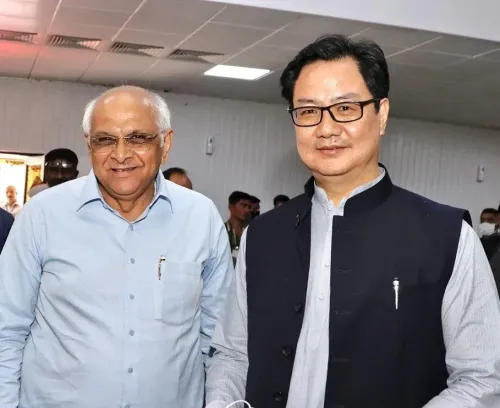
Gujarat has spoken — and once again, it has spoken decisively for the Bharatiya Janata Party. On Wednesday, October 14, 2026, Union Parliamentary Affairs Minister Kiren Rijiju took to X to thank voters across the state and salute BJP workers for what he called a 'prchanda vijay' — a resounding victory — in the Gujarat municipal body elections.
Rijiju's post, written in Hindi, expressed 'heartfelt gratitude to all voters for once again reposing trust in the BJP' and extended 'warm felicitations to the dedicated BJP workers for this landslide victory.' He described the result as a reflection of 'unshakeable public trust' in Prime Minister Narendra Modi's leadership and broad popular support for the party's policies of 'good governance and development.'
Gujarat's Political Colours — And Why They Rarely Change
Gujarat has been BJP's most reliable electoral fortress for three decades. The party has governed the state continuously since 1995, a streak that has survived national swings, coalition turbulence, and opposition campaigns. In the 2022 state assembly elections, BJP secured a decisive majority, setting a new benchmark in what was already a dominant run. Local body elections in Gujarat have followed the same pattern — municipal corporations, district panchayats, and town councils have largely remained in BJP's column across successive cycles.
That consistency is not accidental. The party's organisational machinery in Gujarat — built over generations and reinforced through successive electoral wins — remains one of the most deeply embedded in Indian politics. When senior leaders like Rijiju amplify results from the state, the messaging is deliberate: Gujarat is cast as proof-of-concept for the BJP-Modi governance model, a living argument that development-focused politics produces durable electoral dividends.
Modi's Name at the Centre of the Victory Narrative
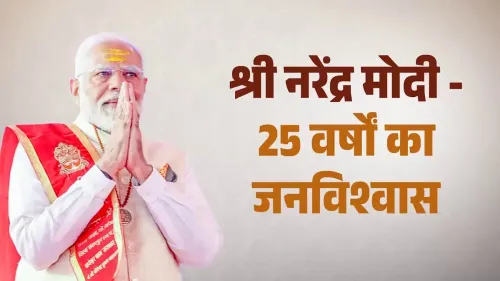
Rijiju's framing is revealing. The win is attributed not merely to the BJP as an organisation but explicitly to Prime Minister Modi's leadership — a rhetorical move that ties local civic results to the national brand. This is a well-worn but effective playbook: local victories become testimonials for central governance, and central governance in turn energises local workers heading into the next contest.
For the tens of thousands of BJP workers who ran the ground campaign — booth management, voter outreach, last-mile mobilisation — Rijiju's public acknowledgement carries practical as well as symbolic weight. In a party as organisationally intensive as BJP, recognised effort is an investment in the next election cycle.
Gujarat's verdict is in. If history is any guide, New Delhi is already reading what it means for the battles ahead.
Point of View
As framed by Rijiju, serve a dual purpose in BJP's political communication strategy: they validate the Modi governance brand at the grassroots level while energising the party's organisational machinery ahead of future electoral contests. The explicit invocation of the Prime Minister's name in a civic-level result signals how tightly the party centralises its victory narrative around Modi's personal popularity. For BJP, Gujarat remains both a stronghold and a showcase — its electoral durability in the state is regularly deployed as evidence that the party's development-and-governance pitch translates into sustained voter loyalty. Sustaining this narrative is critical as BJP eyes upcoming state election cycles across India.
NationPress
14 Oct 2026
Frequently Asked Questions
What elections did BJP win in Gujarat in October 2026?
BJP won Gujarat's municipal body (nikay) elections, with Union Minister Kiren Rijiju describing the result on October 14, 2026, as an 'unprecedented mandate' for the party.
What did Kiren Rijiju say about the Gujarat election result?
Rijiju expressed heartfelt gratitude to voters and congratulated BJP workers, attributing the victory to public trust in PM Narendra Modi's leadership and the party's policies of good governance and development.
How long has BJP dominated Gujarat politics?
BJP has governed Gujarat continuously since 1995 and has maintained control of most municipal corporations in successive local body elections.
Who is Kiren Rijiju?
Kiren Rijiju is Union Minister of Parliamentary Affairs and Minority Affairs, and a senior BJP leader from Arunachal Pradesh.
Why does BJP consistently win in Gujarat?
BJP's three-decade dominance in Gujarat is attributed to its deep organisational network, strong brand association with PM Modi (who served as Gujarat's Chief Minister before becoming Prime Minister), and a sustained focus on development and infrastructure messaging.