Mahua Moitra Tells Protestors: Record Police Brutality, Name Officers

Synopsis
TMC MP Mahua Moitra called on protestors to record and preserve evidence of police brutality on October 14, 2026, explicitly warning that no officer would escape accountability by claiming they followed Home Minister Amit Shah's orders.
Key Takeaways
TMC MP Mahua Moitra posted on October 14, 2026 urging protestors to record evidence of police brutality.
She warned that individual officers who 'acted illegally' would face justice, ruling out the defence of 'following orders'.
She specifically named Union Home Minister Amit Shah , framing alleged excesses as a chain of command issue.
Amit Shah has been Union Minister of Home Affairs since 2019 , overseeing central law enforcement and state police coordination.
The post follows a documented pattern of opposition MPs advising demonstrators to gather evidence during protests against central government actions.
Documented video and photographic evidence can form the basis of complaints before Human Rights Commissions and High Courts in India.
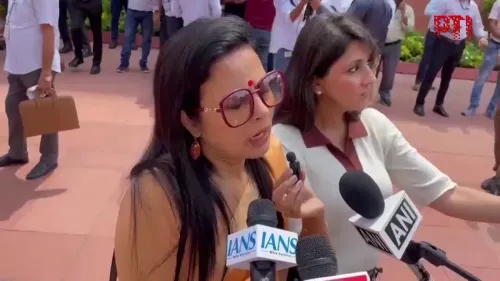
With a direct call to action aimed at demonstrators on the streets, TMC MP Mahua Moitra on Wednesday, October 14, 2026 urged all protestors to methodically document instances of police excess — and warned that no officer would be shielded by claiming they followed orders from Union Home Minister Amit Shah.
The Warning Behind the Post
Moitra's message was blunt: 'Each officer who acted illegally will face justice. Nobody will escape on the excuse they were following Amit Shah's orders.' The explicit naming of the Home Minister — the constitutional head of internal security and the authority that coordinates with state police forces — was deliberate. It frames the alleged brutality not as local excess but as a chain of command reaching the top of the central government.
The instruction to record and preserve evidence is legally significant. In Indian courts, video and photographic documentation of police conduct has repeatedly formed the basis of complaints before State Human Rights Commissions, the National Human Rights Commission, and even High Courts. Moitra is, in effect, crowd-sourcing a future legal brief.
Opposition MPs and the Pattern of Evidence-Gathering Advisories
This is not the first time an opposition MP has moved quickly to arm demonstrators with a documentation strategy. Across multiple protest cycles in recent years — from agrarian agitations to citizenship-law demonstrations — opposition leaders have publicly advised protestors to record everything, anticipating that evidence gathered in the moment becomes irreplaceable once crowds disperse and memories blur.
What distinguishes Moitra's post is the explicit accountability trail she draws: individual officers, not just a faceless institution, will be held responsible. That framing sidesteps the familiar governmental defence that 'forces acted as per procedure' and puts personal legal jeopardy on the table for constables and commanders alike.
Amit Shah's Role and Why the Name Lands Hard
As Union Minister of Home Affairs since 2019, Amit Shah oversees the Central Armed Police Forces, coordinates intelligence inputs with state governments, and is the political face of India's internal security architecture. Invoking his name in a police-accountability context is a pointed political choice — it elevates a ground-level confrontation between protestors and police into a question of federal authority and ministerial responsibility.
Opposition parties have repeatedly accused the Home Ministry of directing state police action against anti-government demonstrations. The government has consistently denied political interference in operational law-enforcement decisions. That unresolved tension is exactly what Moitra's post thrusts back into public view.
Whether the evidence protestors gather translates into formal complaints, court proceedings, or parliamentary questions will be the real measure of this call to action — and the next chapter of this story.
Point of View
She attempts to personalise accountability at the ministerial level — a direct challenge to the standard government defence of institutional procedure. The post also reflects a broader tension in India's federal policing architecture, where the Home Ministry's political authority and state law enforcement's operational autonomy are routinely contested. If formal complaints or court cases follow citing this evidence, the post could acquire significance well beyond a social media call-to-action.
NationPress
14 Oct 2026
Frequently Asked Questions
What did Mahua Moitra say about police brutality?
Mahua Moitra urged all protestors to record and preserve evidence of police brutality, stating that every officer who acted illegally would face justice and could not hide behind claims of following Amit Shah's orders.
Why did Mahua Moitra name Amit Shah in her post?
Amit Shah is India's Union Minister of Home Affairs and is responsible for central law enforcement policy and coordination with state police. By naming him, Moitra framed alleged police excess as potentially originating from the top of the central government's security apparatus.
Can protestors use video evidence against police in Indian courts?
Yes. In India, video and photographic documentation of police conduct has been admitted in proceedings before State Human Rights Commissions, the National Human Rights Commission, and High Courts, and can support complaints of unlawful use of force.
Is Mahua Moitra's call to record police a new tactic in Indian politics?
No. Opposition MPs across multiple protest cycles have advised demonstrators to document police conduct, recognising that real-time evidence is far harder to challenge legally than retrospective accounts.
What happens if police claim they were following orders from the Home Ministry?
Under Indian law, 'following orders' is not an absolute defence for illegal conduct. Individual officers can be held personally liable for acts that violate fundamental rights, regardless of instructions from superiors.