Shekhawat at 'Brihat Bharat' Conference on Cultural Diplomacy
Synopsis
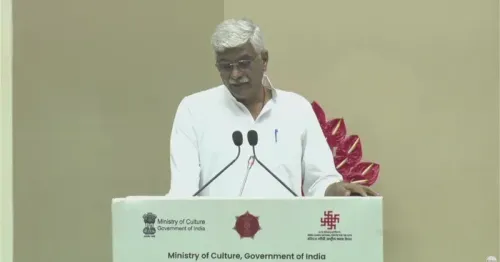
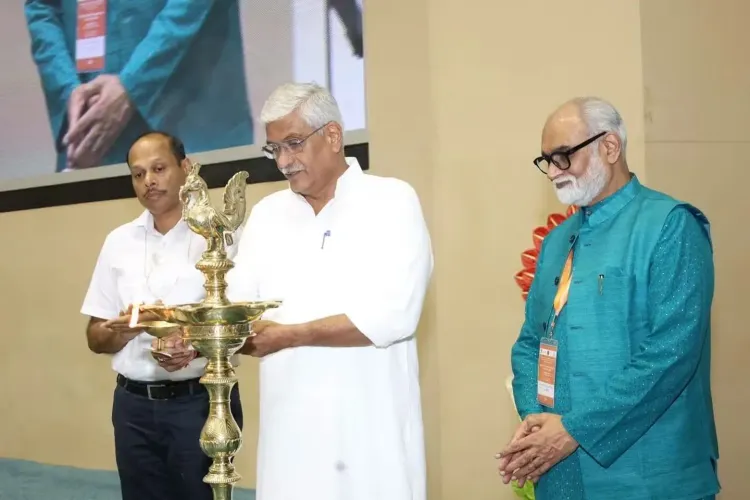
Union Culture and Tourism Minister Gajendra Singh Shekhawat addressed the 'Brihat Bharat' International Conference in New Delhi on October 14, 2026, highlighting India's cultural heritage as a civilisational bridge and reaffirming the government's commitment to its global promotion under PM Modi's leadership.
Key Takeaways
Gajendra Singh Shekhawat participated in the 'Brihat Bharat' International Conference held in New Delhi on October 14, 2026 .
He described India's cultural heritage as a 'powerful bridge' for historical and civilisational ties with the world.
The conference aims to advance research on shared heritage, international cooperation, and cultural dialogue.
Shekhawat reaffirmed the government's commitment to preservation, promotion, and global dissemination of Indian culture under PM Narendra Modi's leadership.
India's cultural diplomacy has institutional roots in the Indian Council for Cultural Relations (ICCR) , established in 1950 .
Follow-up bilateral cultural agreements or research collaborations from the conference are the key outcomes to watch.
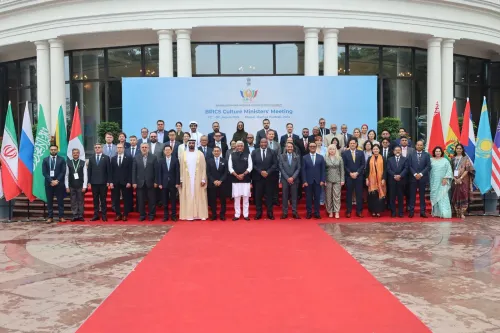
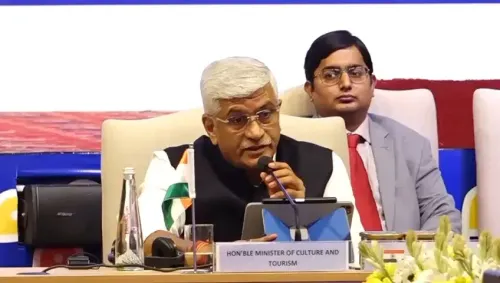
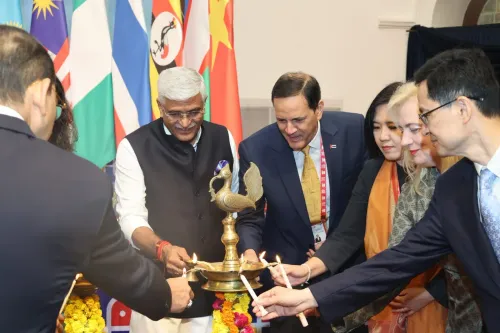
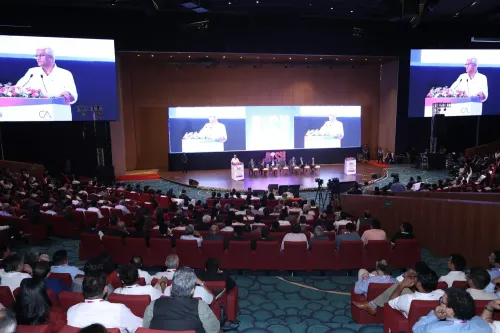
India's cultural heritage is not just a relic of the past — it is, as Union Culture and Tourism Minister Gajendra Singh Shekhawat framed it on Wednesday, October 14, 2026, a living bridge between civilisations. Addressing the 'Brihat Bharat' International Conference in New Delhi, Shekhawat underlined the urgency of surfacing India's cultural connections with the world — the threads that have quietly stitched nations and societies together for centuries.
Posting on X, the Minister wrote: 'भारत की सांस्कृतिक विरासत विश्व के साथ हमारे ऐतिहासिक और सभ्यतागत संबंधों का सशक्त सेतु भी है' — 'India's cultural heritage is also a powerful bridge for our historical and civilisational ties with the world.' He added that conferences like 'Brihat Bharat' are poised to give fresh direction to research on shared heritage, international cooperation, and cultural dialogue, while strengthening India's global cultural identity.
What 'Brihat Bharat' Signals About India's Civilisational Ambition
The term 'Brihat Bharat' — literally 'Greater India' — evokes the vast arc of Indian civilisational influence that once stretched across South Asia, Southeast Asia, and East Asia: the temple-building traditions of the Khmers in Cambodia, the Sanskrit inscriptions of Java, the Buddhist corridors linking Nalanda to Nara. Convening an international conference under this banner in New Delhi is a deliberate signal that India intends to claim this civilisational story as a live diplomatic asset — not merely an academic footnote.
Shekhawat specifically invoked Prime Minister Narendra Modi's leadership as the frame within which the government is committed to 'preservation, promotion and global dissemination' of India's rich cultural heritage. The formulation is familiar in Modi-era cultural policy — but the conference format, drawing international delegates and scholars, marks a concrete institutional attempt to convert that commitment into research outputs and bilateral cultural agreements.
From ICCR to Heritage Diplomacy: A Policy Line Decades in the Making
India's use of culture as soft power has institutional roots going back to 1950, when the Indian Council for Cultural Relations (ICCR) was established specifically to promote India's civilisational links abroad through exchanges, scholarships, and cultural centres across the world. What has shifted under the current administration is the explicit integration of this tradition into official diplomatic strategy — culture is no longer a quiet background hum but a front-row instrument of foreign policy.
The Ministry of Culture, which Shekhawat leads alongside the Tourism portfolio, has been at the centre of this pivot — from the high-profile return of antiquities from foreign museums to the projection of sites like Nalanda and Varanasi as symbols of India's continuing global relevance. The 'Brihat Bharat' conference fits squarely into this arc: use scholarship and dialogue to document shared heritage, then let the documentation do diplomatic work.
Research, Cooperation, and What Comes Next
The Minister's post tagged @PMOIndia, @MinOfCultureGoI, and @tourismgoi — a coordination signal suggesting outcomes from the conference are expected to move through official channels. Cultural scholars and international delegates at the event are understood to be among the stakeholders whose engagement could shape follow-up bilateral cultural agreements or joint research collaborations.
The immediate watch-point: whether the Ministry translates the conference's momentum into concrete announcements — a joint research programme, a new cultural-exchange framework, or a formal 'Brihat Bharat' initiative with partner nations. India's civilisational story has never lacked for material. The question has always been institutional will. Today, the Minister made clear, that will is present and officially on the record.
Point of View
Research-backed heritage diplomacy with global partners. Shekhawat's framing of culture as a 'civilisational bridge' is a deliberate soft-power positioning that aligns India's domestic heritage narrative with its foreign policy ambitions, particularly in Southeast and East Asia. By invoking PM Modi's leadership explicitly, the Minister signals this is a top-down strategic priority, not a departmental side-project. The real test will be whether institutional follow-through — joint programmes, bilateral agreements, research outputs — matches the rhetorical investment.
NationPress
14 Oct 2026
Frequently Asked Questions
What is the 'Brihat Bharat' International Conference?
'Brihat Bharat' — meaning 'Greater India' — is an international conference held in New Delhi focused on India's historical and civilisational cultural connections with other nations and societies around the world. It brings together cultural scholars and international delegates to advance research and dialogue on shared heritage.
What did Gajendra Singh Shekhawat say at the Brihat Bharat conference?
Minister Shekhawat emphasised that India's cultural heritage is a powerful bridge for its historical and civilisational ties with the world. He called for greater research, international cooperation, and cultural dialogue, and reaffirmed the government's commitment to preserving and globally promoting Indian culture under PM Modi's leadership.
What is India's cultural diplomacy strategy under PM Modi?
Under PM Modi, India has explicitly integrated cultural heritage into its foreign policy as a soft-power instrument. This includes returning antiquities from abroad, promoting heritage sites like Nalanda and Varanasi globally, and organising international conferences like 'Brihat Bharat' to document shared civilisational ties with other nations.
What is the Indian Council for Cultural Relations (ICCR)?
The ICCR was established in 1950 to promote India's cultural exchanges and civilisational links abroad. It operates cultural centres and scholarship programmes across the world and remains one of India's primary institutions for cultural diplomacy.
What are the expected outcomes of the Brihat Bharat conference?
The Ministry of Culture is expected to announce follow-up measures such as bilateral cultural agreements, joint research programmes, or a formal 'Brihat Bharat' initiative with partner nations. Minister Shekhawat's tagging of PMO India and both ministry handles suggests outcomes are intended to move through official government channels.