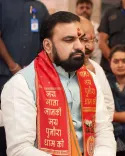
Rijiju Hails PM Modi at IIT Delhi Convocation 2026

Synopsis
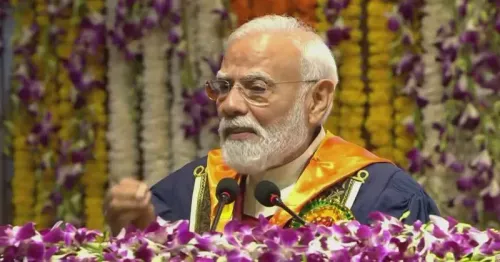
Union Parliamentary Affairs Minister Kiren Rijiju marked IIT Delhi Convocation 2026 with a heartfelt post urging graduates to recall their first day at the institute, as Prime Minister Narendra Modi addressed the ceremony on 8 August 2026.
Key Takeaways
Kiren Rijiju posted on X on 8 August 2026 marking IIT Delhi Convocation 2026 .
He urged graduates to contrast the memory of their first orientation day with the pride of convocation.
Prime Minister Narendra Modi addressed the IIT Delhi convocation, continuing a pattern of senior leadership engagement at IIT ceremonies.
IIT Delhi , founded in 1961 , is one of India's five original IITs and among its most competitive engineering institutions.
The government has expanded the IIT network since 2014 , adding campuses to broaden access to premier technical education.
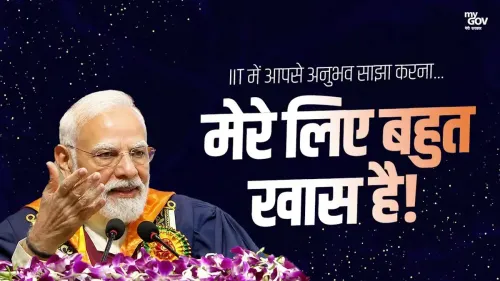
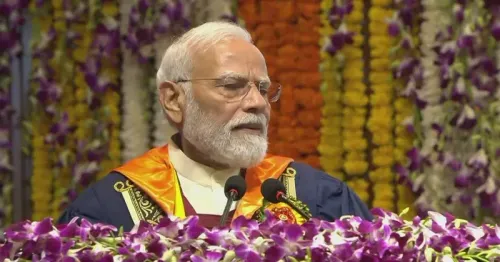
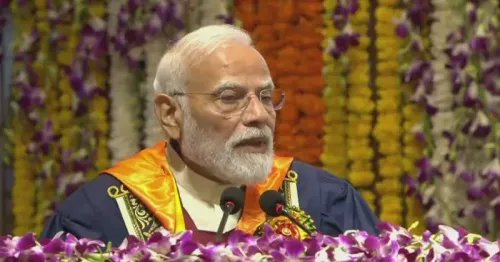
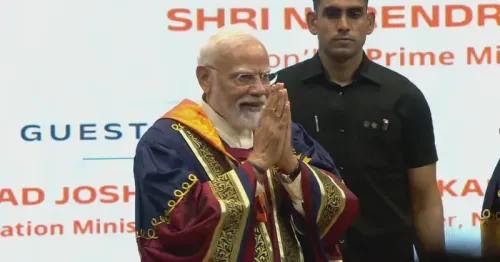
From the nervous first steps of orientation to the pride of a convocation stage — that arc, compressed into four years, is what Union Parliamentary Affairs Minister Kiren Rijiju invoked on Saturday, 8 August 2026, as Prime Minister Narendra Modi addressed the IIT Delhi Convocation 2026.
Posting on X in Hindi, Rijiju asked graduates to recall the emotion of their very first day at IIT Delhi — the orientation, the uncertainty, the scale of it all — and then hold that memory against the moment they stood in their convocation gowns. 'वो दिन याद करिए जब आपका IIT दिल्ली में पहला दिन था' ('Remember the day that was your first day at IIT Delhi'), he wrote, capturing the bittersweet speed at which four years collapse into a single ceremony.
IIT Delhi, established in 1961, is one of India's original five Indian Institutes of Technology and remains among the country's most competitive engineering institutions. Its convocations routinely draw senior government figures, and PM Modi has addressed IIT gatherings in prior years, consistently emphasising self-reliance, research, and India's ambition to lead in technology.
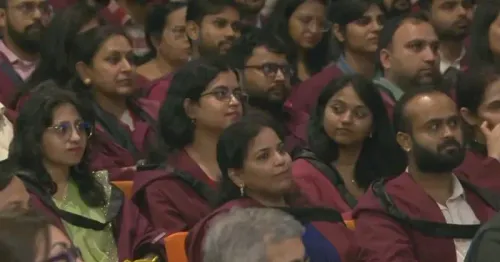
For the graduating class, the minister's words framed the convocation not merely as a credential milestone but as a full-circle human moment — the gap between who walked in and who walks out. It is a register that resonates precisely because IIT admissions remain among the most fiercely contested in the world, making every graduation stage a culmination years in the making.
The government has significantly expanded the IIT system since 2014, adding new campuses to widen access to premier technical education — a policy context that gives each convocation address added weight as a signal of where the administration wants India's engineering talent pipeline to go next.
Point of View
A minister from the Northeast, the post also subtly underscores the government's pitch that premier institutions are now accessible to students from every corner of the country. The IIT expansion drive since 2014 gives these ceremonial moments a policy backbone: each convocation is framed as proof of a widening opportunity funnel. Watch whether PM Modi's address carries any specific policy announcement for the higher education or deep-tech sectors.
NationPress
8 Aug 2026
Frequently Asked Questions
Who addressed IIT Delhi Convocation 2026?
Prime Minister Narendra Modi addressed the IIT Delhi Convocation 2026 on 8 August 2026, as noted by Union Parliamentary Affairs Minister Kiren Rijiju on X.
What did Kiren Rijiju post about IIT Delhi Convocation 2026?
Rijiju posted a Hindi message urging IIT Delhi graduates to recall the emotion of their first day at the institute and compare it with the pride of their convocation moment, tagging PM Modi.
When was IIT Delhi established?
IIT Delhi was established in 1961 and is one of India's original five Indian Institutes of Technology.
Has PM Modi addressed IIT convocations before?
Yes, PM Modi has addressed IIT convocations in prior years, including 2023, typically stressing themes of self-reliance, research, and India's technology ambitions.
How has the government expanded IITs since 2014?
Since 2014, the government has added new IIT campuses across India to increase capacity in premier technical education and widen access for students nationally.