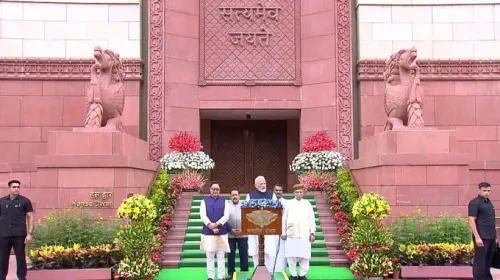
Rijiju Hails Private Space Feat in Parliament Session
Synopsis
Union Parliamentary Affairs Minister Kiren Rijiju highlighted a major achievement by an Indian private space startup on 18 July 2026, sharing the milestone during Parliament's Monsoon Session and crediting Prime Minister Modi's policy vision for enabling private enterprise in space.
Key Takeaways
Union Minister Kiren Rijiju posted on X on 20 July 2026 about a major space milestone achieved by an Indian private startup on 18 July 2026 .
Rijiju stated that very few countries in the world have seen private enterprise reach space, placing India in rare company.
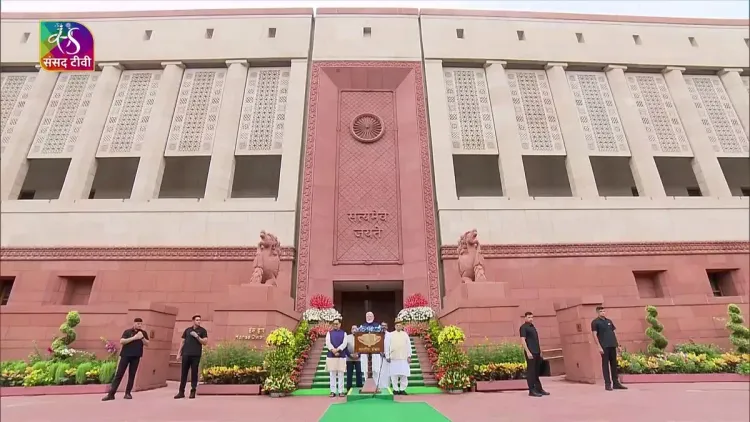
The post was made in the context of the Monsoon Session 2026 of Parliament, with hashtags #Parliament and #MonsoonSession2026.
India's private space sector was opened through the Space Sector Reforms of 2020 and is regulated by IN-SPACe .
Prime Minister Narendra Modi was tagged in the post, with Rijiju framing the achievement as a result of the PM's vision.
Legislative follow-up — including a possible Space Activities Bill or ministerial statement — is anticipated during the ongoing session.
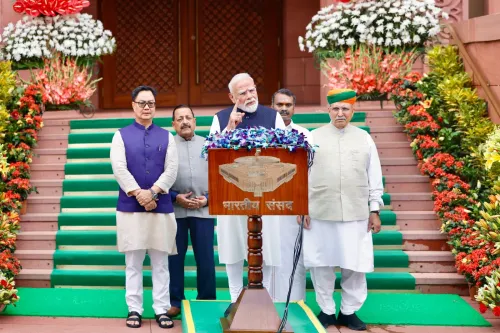
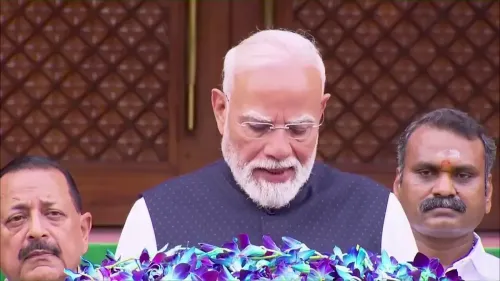
Union Parliamentary Affairs Minister Kiren Rijiju on Monday, 20 July 2026, highlighted a milestone achievement by an Indian private space startup, citing 18 July 2026 as the date on which the feat was accomplished. Speaking in the context of the ongoing Monsoon Session 2026 of Parliament, Rijiju invoked the achievement as a mark of India's growing stature in the global space economy, crediting Prime Minister Narendra Modi for enabling the conditions that made it possible.
Context
Rijiju posted on X, writing in Hindi: '18 जुलाई को भारत के एक युवा स्टार्टअप ने एक बड़ी सिद्धी प्राप्त की है' ('On 18 July, a young Indian startup has achieved a great feat'). He added that very few countries in the world have seen private enterprise of this kind, and that India's youth have now taken flight into space. The post was shared during the Monsoon Session, signalling the government's intent to project this development as a legislative and policy win.
The minister tagged Prime Minister @narendramodi in the post, framing the achievement as a product of the Prime Minister's vision for a self-reliant and innovation-led India. The hashtags #Parliament and #MonsoonSession2026 indicate the post was made in the context of ongoing parliamentary proceedings.
Policy Backdrop
India's private space sector was formally opened through the Space Sector Reforms of 2020, which ended the near-total monopoly of the Indian Space Research Organisation (ISRO) over launch and satellite activities. The government simultaneously established the Indian National Space Promotion and Authorisation Centre (IN-SPACe) to regulate, authorise, and promote private participation in space missions.
Since 2020, IN-SPACe has worked to create a level playing field for startups seeking to build rockets, satellites, and allied space infrastructure. The reforms are part of a broader ambition to grow India's share of the global space economy, which is projected to be worth hundreds of billions of dollars in the coming decades. Several Indian startups have received IN-SPACe authorisation and have been in various stages of development and test launches.
Stakeholders and Impact
India's space startup ecosystem has expanded considerably since the 2020 reforms, with young entrepreneurs and engineering graduates forming companies focused on small satellite launches, propulsion systems, and space-based data services. A successful private spaceflight, if confirmed, would place India among a very small group of nations — including the United States — where privately funded entities have independently achieved human or orbital spaceflight.
For the broader startup community, such a milestone carries significant symbolic weight, reinforcing the narrative that India's policy environment is now capable of nurturing deep-technology ventures. Investors, academic institutions, and defence-adjacent firms are all stakeholders watching the pace of private space activity closely.
What's Next
Attention will now turn to whether the Monsoon Session 2026 produces legislative action — such as a dedicated Space Activities Bill or amendments to IN-SPACe's mandate — to further consolidate the regulatory framework for private space players. Official confirmation of the specific startup and mission details will be key to establishing the full significance of the 18 July event. As Parliament is in session, a formal ministerial statement on the floor of the House remains a possibility, which could provide authoritative details and set the stage for India's next phase of space sector liberalisation.
Point of View
Designed to associate the ruling dispensation's policy record with a tangible technological milestone. By tagging the Prime Minister and framing the achievement as rare on a global scale, the minister is building a narrative of governance-driven innovation ahead of what could be formal legislative action on space sector regulation. The move reflects a broader BJP pattern of using Parliament sessions as platforms to amplify technology and infrastructure wins. Whether the specific startup and mission are officially confirmed will determine how durable this narrative proves to be.
NationPress
21 Jul 2026
Frequently Asked Questions
What did Kiren Rijiju say about India's space startup in Parliament?
Rijiju posted on X during the Monsoon Session 2026 that a young Indian startup had achieved a major feat on 18 July 2026, stating that very few countries have seen private enterprise reach space in this manner.
Which startup achieved a space milestone on 18 July 2026?
The specific startup has not been officially named or confirmed in Rijiju's post; official details are awaited from the government or IN-SPACe.
What is IN-SPACe and what role does it play in India's private space sector?
IN-SPACe, or the Indian National Space Promotion and Authorisation Centre, was established in 2020 to regulate and promote private sector participation in India's space activities, replacing ISRO's earlier near-monopoly.
How has India's space policy changed to allow private companies to launch rockets?
The Space Sector Reforms of 2020 opened satellite launches, manufacturing, and data services to private entities, with IN-SPACe as the authorising body, enabling startups to build and launch their own rockets.
What is expected from the Monsoon Session 2026 on space regulation?
Observers are watching for a possible Space Activities Bill or a formal ministerial statement on the floor of Parliament that could further strengthen the regulatory framework for India's growing private space industry.