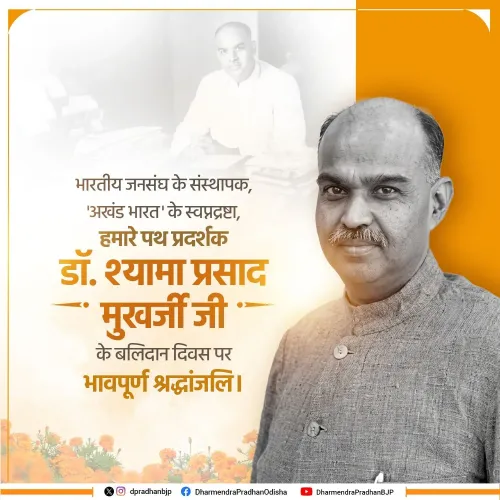
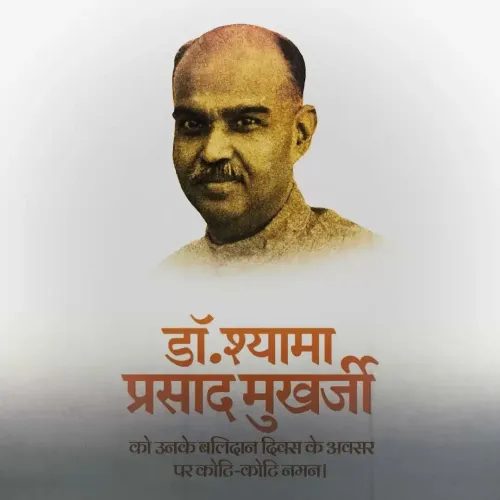
Rijiju Pays Tribute to Syama Prasad Mukherjee on Balidan Diwas
Synopsis
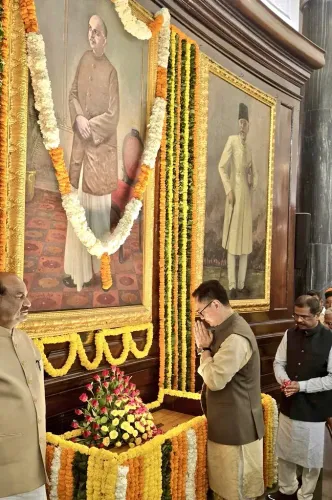
Union Parliamentary Affairs Minister Kiren Rijiju on 23 June 2026 paid tribute to Dr. Syama Prasad Mukherjee on Balidan Diwas, invoking his iconic slogan 'Ek Vidhan, Ek Samvidhan, Ek Nishan' and calling his ideals an inspiration for a strong and united Bharat.
Key Takeaways
Balidan Diwas falls on 23 June each year, marking the death of Dr.
Syama Prasad Mukherjee in custody in Jammu and Kashmir in 1953 .
Union Minister Kiren Rijiju invoked Mukherjee's slogan 'Ek Vidhan, Ek Samvidhan, Ek Nishan' — One Law, One Constitution, One Flag.
Mukherjee founded the Bharatiya Jana Sangh in 1951 , the ideological predecessor of the BJP .
The BJP has linked the 2019 abrogation of Article 370 to the fulfilment of Mukherjee's demand for constitutional uniformity in Jammu and Kashmir .
Annual tributes by senior BJP ministers on this date form part of a broader pattern of reinforcing ideological continuity with the party's founding figures.
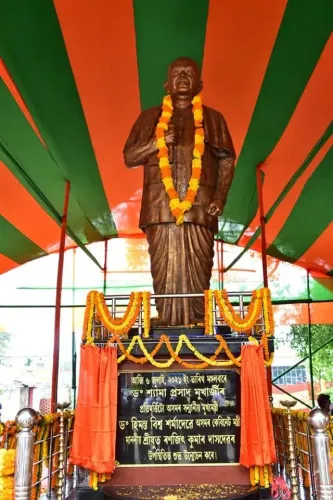
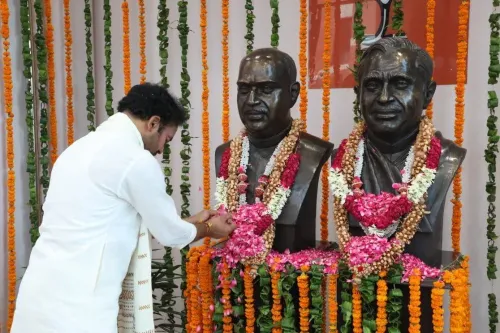
Union Parliamentary Affairs Minister Kiren Rijiju on Tuesday, 23 June 2026 paid tribute to Dr. Syama Prasad Mukherjee on Balidan Diwas, honouring the founding ideologue of the Bharatiya Jana Sangh on the 73rd anniversary of his death in custody in Jammu and Kashmir. Rijiju invoked Mukherjee's defining slogan — 'Ek Vidhan, Ek Samvidhan, Ek Nishan' (One Law, One Constitution, One Flag) — as a continuing inspiration for a 'strong and united Bharat'.
Context
Dr. Syama Prasad Mukherjee died on 23 June 1953 while detained in Jammu and Kashmir, where he had entered in deliberate defiance of a permit system that required citizens from other parts of India to obtain prior permission before entering the state. His protest was directed at the special constitutional status accorded to Jammu and Kashmir under Article 370, which he argued created a state within a state. His death in custody transformed him into a martyr figure for the nationalist movement he had championed, and 23 June has since been observed annually as Balidan Diwas — Martyrdom Day.
Rijiju wrote: 'On #BalidanDiwas, I pay heartfelt tributes to Dr. Syama Prasad Mukherjee. A staunch nationalist and committed to the unity and integrity of India, his ideals of Ek Vidhan, Ek Samvidhan, Ek Nishan inspire all of us for a strong and united Bharat.'
Policy Backdrop
The slogan 'Ek Vidhan, Ek Samvidhan, Ek Nishan' became the ideological cornerstone of the Bharatiya Jana Sangh, the party Dr. Mukherjee founded in 1951 and the principal predecessor of today's Bharatiya Janata Party. The BJP has consistently presented the August 2019 abrogation of Article 370 and the bifurcation of Jammu and Kashmir into two Union Territories as the legislative fulfilment of Mukherjee's seven-decade-old demand. Annual commemorations on Balidan Diwas serve to reinforce that ideological continuity between the party's founding vision and its recent governance decisions.
Successive BJP ministers and chief ministers across states have institutionalised tributes on this date, linking contemporary federal-uniformity policies to Mukherjee's original campaign. The practice has intensified on social media in recent years, with senior leaders amplifying the message simultaneously to maximise reach.
Stakeholders and Impact
BJP workers, affiliated nationalist organisations, and ideological outfits rooted in the RSS ecosystem regard Balidan Diwas as a significant occasion for reaffirming their commitment to constitutional uniformity across all states and Union Territories. For them, Rijiju's post — shared from his official account — carries the weight of a government endorsement of Mukherjee's legacy. Civil society groups and opposition parties that have historically contested the interpretation of Article 370's abrogation view such commemorations as politically charged messaging dressed in the language of martyrdom.
As Union Minister of Parliamentary Affairs, Rijiju's voice carries institutional weight beyond that of a rank-and-file legislator. His ministry coordinates government business in both Houses of Parliament, making his public statements on constitutional themes particularly resonant during legislative sessions.
What's Next
The annual observance of Balidan Diwas is expected to see events organised by BJP units and affiliated bodies across the country, including wreath-laying ceremonies and public meetings invoking Mukherjee's legacy. Observers will watch for any statements from the Ministry of Home Affairs or the Prime Minister's Office indicating fresh legislative or administrative steps toward greater constitutional uniformity across states — the policy direction most directly linked to Mukherjee's original demand. As long as the BJP holds the reins of government, Balidan Diwas is likely to remain a fixture in the official commemorative calendar, its messaging tightly woven into the party's constitutional and nationalist narrative.
Point of View
Presenting the latter as a historic promise kept. By invoking 'Ek Vidhan, Ek Samvidhan, Ek Nishan', a cabinet minister lends institutional authority to what is simultaneously a party-ideological message. The consistency of this messaging across successive years suggests it is a deliberate, coordinated communication strategy rather than spontaneous tribute. As long as questions around constitutional uniformity remain live in Indian politics, Balidan Diwas will continue to serve as a high-visibility moment for the BJP to anchor its governance record in a deeper nationalist lineage.
NationPress
21 Sept 2026
Frequently Asked Questions
Who was Dr. Syama Prasad Mukherjee and why is Balidan Diwas observed?
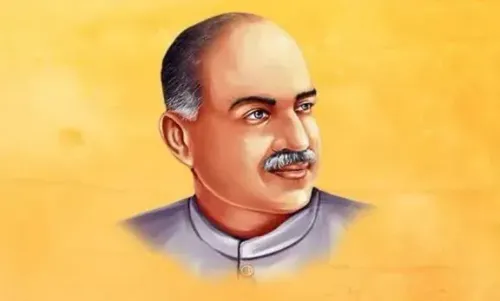
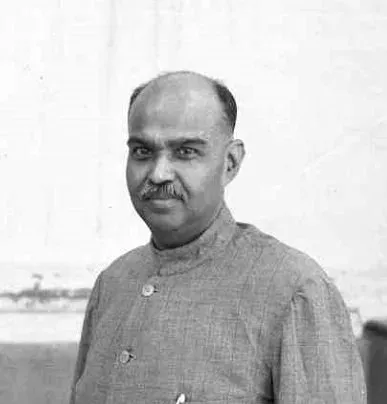
Dr. Syama Prasad Mukherjee was an Indian politician and educationist who founded the Bharatiya Jana Sangh in 1951 . He died on 23 June 1953 while in detention in Jammu and Kashmir , where he had gone to protest the state's special constitutional status. Balidan Diwas — Martyrdom Day — is observed annually on 23 June to commemorate his sacrifice.
What does 'Ek Vidhan, Ek Samvidhan, Ek Nishan' mean?
The slogan translates as 'One Law, One Constitution, One Flag.' It was the central demand of Dr. Syama Prasad Mukherjee and the Bharatiya Jana Sangh , calling for the abolition of the separate constitutional arrangements that gave Jammu and Kashmir a distinct status within the Indian Union.
What did Kiren Rijiju say on Balidan Diwas 2026?
Kiren Rijiju , Union Parliamentary Affairs Minister, posted a tribute calling Dr. Syama Prasad Mukherjee 'a staunch nationalist committed to the unity and integrity of India' and said his ideals of 'Ek Vidhan, Ek Samvidhan, Ek Nishan' inspire all for a 'strong and united Bharat.'
How is Syama Prasad Mukherjee connected to the BJP?
Dr. Mukherjee founded the Bharatiya Jana Sangh in 1951 , which merged with other parties to form the Janata Party in 1977 and subsequently gave rise to the Bharatiya Janata Party in 1980 . The BJP regards him as a founding ideological figure.
How does Balidan Diwas connect to the abrogation of Article 370?
The BJP has consistently presented the August 2019 abrogation of Article 370 and the reorganisation of Jammu and Kashmir as the fulfilment of Dr. Mukherjee 's demand for a single constitution and flag across all of India, making Balidan Diwas an occasion to reaffirm that policy legacy.