RJD fan walks from Barh to Patna with Gangajal for 'Lord Lalu Yadav'
Synopsis
An RJD supporter walked on foot from Barh to Patna carrying Gangajal for 'Lord Lalu Yadav' — just a day after 251 litres of milk were poured over the RJD chief's portrait in a ritual at Bhagwanpur. The incidents are part of a wider pattern of political supporters across India invoking religious imagery for their leaders, cutting across party lines from the RJD and SP to the Congress.
Key Takeaways
Jitendra Kumar Bharti of Mokama walked from Umanath to Patna on 24 August carrying Gangajal to offer to Lalu Prasad Yadav .
A day earlier, RJD leader Kedar Prasad Yadav organised a ritual at Bhagwanpur in which 251 litres of milk were poured over Lalu Prasad Yadav's portrait.
The ritual was conducted under the supervision of Pandit Abhay Acharya with prayers and Vedic rites.
In July , Samajwadi Party workers in Uttar Pradesh compared Akhilesh Yadav to Lord Krishna during birthday celebrations.
In June , Congress workers performed a 'Rudrabhishek' before a poster depicting Rahul Gandhi as Lord Parshuram .
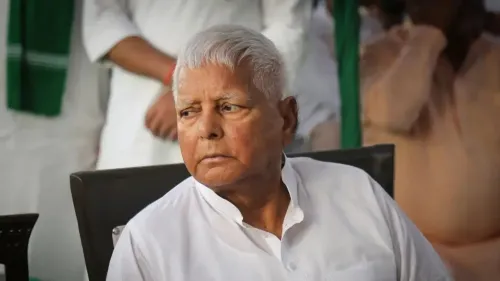
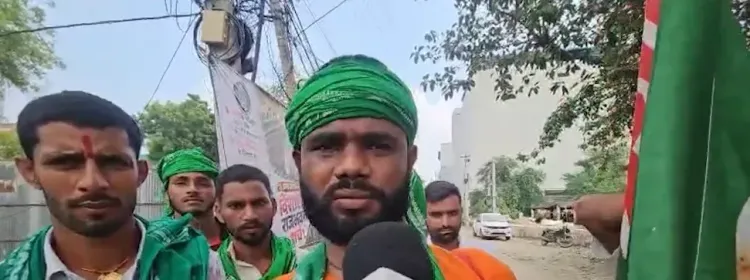
An ardent supporter of Rashtriya Janata Dal (RJD) chief Lalu Prasad Yadav walked from Barh to Patna on Monday, 24 August, carrying Gangajal to offer to the veteran Bihar leader, whom he addressed as 'Lord Lalu Yadav'. The act of devotion is the latest in a series of incidents where supporters across India have drawn religious parallels to their political leaders.
The Journey and the Devotee
Jitendra Kumar Bharti, a resident of Mokama in Patna district, said he undertook the journey on foot from Umanath to Patna city to offer the holy water to Lalu Prasad Yadav. Bharti said he has regarded the RJD chief as a deity since childhood.
'I have come to offer Gangajal to Lord Lalu Yadav. Everyone worships Lord Shankar. I will worship the person I believe in. I have considered him God since childhood. I will continue to come and offer him Gangajal for five years. This is the first time,' Bharti said.
Milk Abhishek a Day Earlier
The development came a day after RJD leader and social worker Kedar Prasad Yadav organised a ritual at Bhagwanpur in which 251 litres of milk were poured over a picture of Lalu Prasad Yadav. The event was held under the supervision of Pandit Abhay Acharya and included prayers and rituals before the RJD chief's portrait.
Kedar Prasad Yadav described Lalu Prasad Yadav as an 'incarnation of Kaliyuga' and a form of God, drawing a comparison with Lord Krishna. 'Lalu Prasad Yadav is truly a form of God. Today, we consider Lalu Prasad Yadav our God, so we are worshipping his picture by pouring milk over it,' he said.
A Pattern Across Party Lines
This is not an isolated phenomenon. In July, workers of the Samajwadi Party (SP) marked party chief Akhilesh Yadav's birthday with a hawan and celebrations across Uttar Pradesh, with some supporters depicting him as Lord Krishna in posters. The events drew both praise from supporters and criticism from political opponents on social media.
In June, Congress workers poured milk over a poster depicting party leader Rahul Gandhi as Lord Parshuram and performed a 'Rudrabhishek' with Vedic chants. The poster showed Gandhi holding an axe in one hand and a copy of the Constitution of India in the other.
Broader Context
The trend of political supporters invoking religious imagery around leaders has drawn attention from commentators and critics alike, who note that such displays blur the lines between political loyalty and religious veneration. Notably, the practice appears across party affiliations — from the RJD and SP in Bihar and Uttar Pradesh to the Congress at the national level. How political parties respond to or distance themselves from such displays remains a recurring question in Indian public discourse.
Point of View
But they point to something more structurally significant: the deepening personalisation of Indian party politics, where loyalty to a leader increasingly takes on devotional characteristics. What is notable is that this is not a Bihar or RJD-specific phenomenon — it cuts across the SP in Uttar Pradesh and the Congress at the national level. Parties rarely distance themselves from such displays, calculating that the optics of mass devotion outweigh the risk of being seen as encouraging religious conflation. The real question is whether this trend, left unchecked, normalises the sacralisation of political figures in ways that further erode institutional accountability.
NationPress
24 Aug 2026
Frequently Asked Questions
Who is Jitendra Kumar Bharti and why did he walk to Patna?
Jitendra Kumar Bharti is an RJD supporter from Mokama in Patna district who walked on foot from Umanath to Patna on 24 August to offer Gangajal to Lalu Prasad Yadav, whom he has regarded as a deity since childhood. He said he plans to repeat the journey annually for five years.
What happened at Bhagwanpur a day before the Gangajal offering?
RJD leader and social worker Kedar Prasad Yadav organised a ritual at Bhagwanpur on 23 August in which 251 litres of milk were poured over a portrait of Lalu Prasad Yadav. The event was conducted under the supervision of Pandit Abhay Acharya and included prayers and Vedic rituals.
Is this the first time a political leader has been compared to a Hindu deity by supporters?
No. In July, Samajwadi Party workers in Uttar Pradesh depicted Akhilesh Yadav as Lord Krishna during birthday celebrations, and in June, Congress workers performed a Rudrabhishek before a poster showing Rahul Gandhi as Lord Parshuram. Such incidents have been reported across party lines.
What did Kedar Prasad Yadav say about Lalu Prasad Yadav at the Bhagwanpur event?
Kedar Prasad Yadav described Lalu Prasad Yadav as an 'incarnation of Kaliyuga' and compared him to Lord Krishna, saying Lalu had raised his voice for the poor just as Krishna liberated people by defeating Kansa. He said the RJD chief is 'truly a form of God.'
What is the broader significance of supporters worshipping political leaders as deities?
Commentators note that such displays reflect the deepening personalisation of Indian politics, where loyalty to individual leaders takes on religious dimensions. The trend has been observed across parties and states, raising questions about the blurring of political and religious identity in public life.