Opposition demands proof on Amit Shah's 3 crore infiltrators claim; BJP backs SIR
Synopsis
Amit Shah's claim that three crore Bangladeshi infiltrators were listed as absent voters in the SIR exercise has drawn a sharp rebuttal from the Opposition, which is demanding digitised records and pointing to the government's own deportation numbers. With no post-2011 Census data to settle the dispute, this row is less about verifiable fact and more about the electoral framing battle heading into the next cycle of state polls.
Key Takeaways
Union Home Minister Amit Shah claimed roughly three crore Bangladeshi infiltrators were listed as absent voters in the Special Intensive Revision (SIR) of electoral rolls.
Shah also attributed the broader 13 crore voter deletions cited by the Opposition to 6.25 crore address changes, three crore deceased voters, and one crore duplicate entries.
BJP leaders alleged demographic changes in Jharkhand — Santhal tribal share reportedly fell from 44% in 1951 to 28% in 2011 ; Muslim share rose from 9% to 23% .
Congress leader Udit Raj alleged that fewer than 3,000 infiltrators were deported under the current government versus nearly one lakh under Dr Manmohan Singh .
The Opposition has demanded that the government digitise and publish the voter data underpinning Shah's claim.
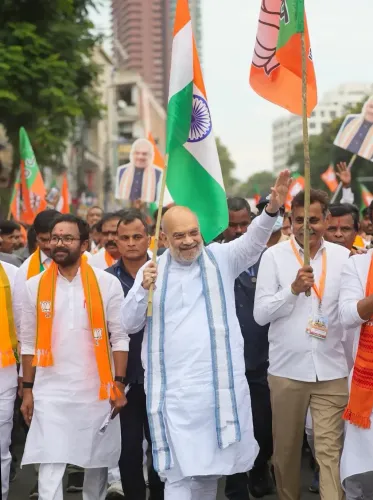
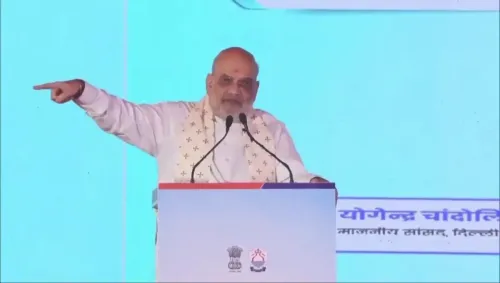
The remarks were made at the BJP's 'Loktantra Bachao, Arajakta Hatao' march in Hyderabad on 3 November 2026 .
Union Home Minister Amit Shah's assertion that roughly three crore Bangladeshi infiltrators were counted among voters classified as absent during the Special Intensive Revision (SIR) of electoral rolls has ignited a sharp political confrontation in New Delhi. BJP and NDA leaders have rallied behind the claim and accused the Opposition of shielding illegal immigrants, while Opposition parties have demanded documentary evidence and questioned the government's record on deportations.
BJP's Defence of the Claim
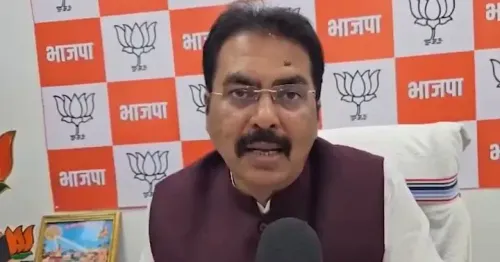
BJP Jharkhand spokesperson Pratul Shah Deo alleged that illegal immigration had significantly altered the demographic composition of certain regions, particularly Jharkhand. He claimed that the proportion of the Santhal tribal community in the state had declined from 44 per cent in 1951 to 28 per cent in 2011, while the Muslim population had risen from 9 per cent to 23 per cent over the same period. Deo accused the Indian National Congress (Congress) of allowing Bangladeshi infiltrators and Rohingyas to enter India during its years in power at the Centre, and alleged that Jharkhand Mukti Morcha (JMM) leaders had welcomed infiltrators to consolidate electoral support.
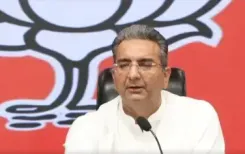
Shiv Sena leader Shaina NC echoed those charges, labelling the INDIA Bloc's ongoing campaign a 'Ghuspethiya Bachao Yatra' — a direct counter to the bloc's self-described 'Vote Bachao Yatra'. She questioned why opposition leaders were resisting the SIR exercise if they had nothing to hide. BJP National Spokesperson Guru Prakash argued that the public had a right to know why three crore voters had been listed as untraceable or absent in the electoral rolls. 'We need to understand who these three crore people are who are untraceable and absent. Why were they listed in the electoral roll till now? The nation has the right to know,' he said.
Opposition Demands Evidence and Accountability
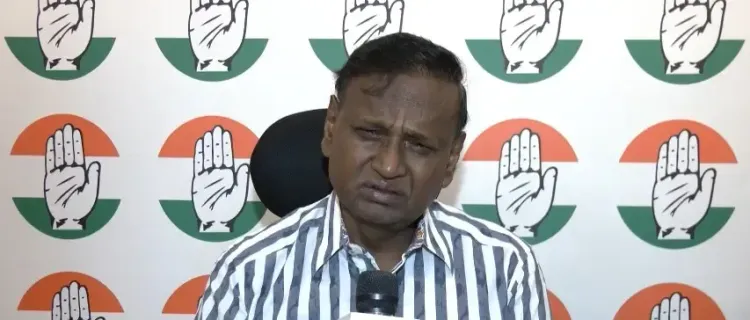
Congress leader Udit Raj challenged Shah to digitise and make public the relevant voter records. 'If you are claiming that three crore people are there, then show the record; digitise the list. A lot of commotion was raised in Jharkhand, Delhi, Bihar and Bengal that there are infiltrators. How many infiltrators were found in Jharkhand? How many were found in Delhi and Bihar?' Raj asked. He further alleged that nearly one lakh infiltrators were deported during Dr Manmohan Singh's tenure, contrasting that with what he described as fewer than 3,000 deportations under the current government despite more than 12 years in power.
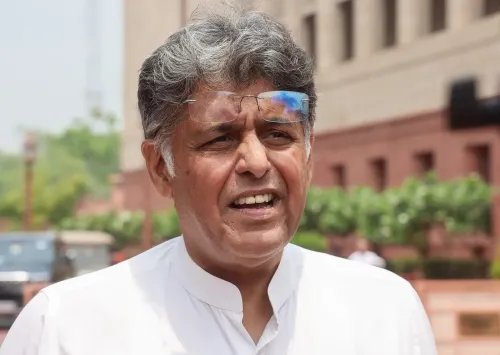
Congress leader Tewari pressed Shah to disclose the nationalities of those he had described as infiltrators, arguing that if infiltration had occurred on such a scale, it would represent a serious failure of the Union Home Ministry itself. 'If infiltration has occurred, then it is the biggest shortcoming of the Home Ministry,' he said. Samajwadi Party (SP) MP Awadhesh Prasad questioned whether the Home Minister had an accurate definition of who constituted an infiltrator, cautioning against conflating long-settled communities with illegal entrants.
What Shah Actually Said
Shah made the contested remarks while addressing the BJP's 'Loktantra Bachao, Arajakta Hatao' march in Hyderabad, held as part of the party's nationwide campaign against the INDIA Bloc's criticism of the SIR exercise and its attacks on Chief Election Commissioner Gyanesh Kumar. Responding to Congress leader Rahul Gandhi's allegation that 13 crore voter names had been deleted during SIR, Shah offered a breakdown: approximately 6.25 crore voters had shifted residences, around three crore were deceased voters, and nearly one crore were duplicate entries. He separately identified three crore as Bangladeshi infiltrators categorised as absent. He also described the INDIA Bloc's rally in Delhi as a 'Save the Infiltrators Rally'.
Broader Context: SIR and Electoral Roll Controversy
The Special Intensive Revision of electoral rolls has become a flashpoint in the run-up to electoral cycles, with the INDIA Bloc alleging mass disenfranchisement and the ruling coalition insisting the exercise is necessary to weed out fraudulent entries. Notably, this is not the first time allegations of demographic change linked to cross-border migration have surfaced in national political discourse — similar claims have historically preceded assembly elections in border states such as Jharkhand, West Bengal, and Assam. The absence of a post-2011 Census continues to fuel disputes over demographic data, with both sides citing figures that are difficult to independently verify.
What Happens Next
The Opposition is expected to press the government in Parliament to table the voter-roll data and deportation figures. The BJP, for its part, is likely to sustain its campaign framing, using the infiltration narrative ahead of upcoming state elections. Whether the Election Commission of India (ECI) will clarify the methodology behind the SIR categorisations — particularly the basis for identifying three crore voters as infiltrators — could determine how this controversy plays out in the public arena.
Point of View
The logical question — raised pointedly by the Opposition — is why deportations over 12 years have been negligible by their own reckoning. Shah's Hyderabad speech reframes the SIR controversy as a national security issue rather than an electoral integrity one, a calculated pivot that puts the Opposition on the defensive. But the claim rests on demographic inference drawn from a Census that is now 15 years old, with no current enumeration to validate or refute it. Without a credible, publicly accessible methodology from the Election Commission, both sides are essentially arguing about a number that neither can prove — and that ambiguity is, for now, politically convenient for the BJP.
NationPress
3 Nov 2026
Frequently Asked Questions
What did Amit Shah claim about the SIR electoral roll exercise?
Home Minister Amit Shah claimed that roughly three crore Bangladeshi infiltrators had been categorised as absent voters in the Special Intensive Revision (SIR) of electoral rolls. He also said the broader 13 crore figure cited by the Opposition included 6.25 crore address-change cases, three crore deceased voters, and one crore duplicate entries.
Why is the Opposition demanding proof from the government?
Opposition leaders, including Congress's Udit Raj and Tewari, say no documentary evidence has been made public to support Shah's claim. They argue that if three crore infiltrators are identifiable, the government should digitise and release the list, and also explain why deportations under the current government have been far fewer than those recorded during the previous administration.
What is the Special Intensive Revision (SIR) of electoral rolls?
The SIR is an exercise conducted by the Election Commission of India to update voter rolls by verifying entries, removing deceased or duplicate registrations, and adding eligible new voters. It has become politically contentious, with the Opposition alleging mass disenfranchisement and the ruling BJP maintaining it is necessary to remove fraudulent entries.
How has the BJP responded to allegations of disenfranchisement?
BJP leaders argue that the names removed include genuine non-residents, deceased voters, and duplicates — not valid voters. They accuse the INDIA Bloc of opposing SIR to protect infiltrators who were fraudulently enrolled, and have labelled the bloc's campaign a 'Ghuspethiya Bachao Yatra'.
What demographic data has the BJP cited in this dispute?
BJP Jharkhand spokesperson Pratul Shah Deo cited Census figures showing the Santhal tribal community's share in Jharkhand fell from 44 per cent in 1951 to 28 per cent in 2011, while the Muslim population rose from 9 per cent to 23 per cent over the same period. Critics note the last Census was conducted in 2011, making these figures over a decade old and difficult to extrapolate from.