CM Office: Rs 44 Crore Hospital Coming to Yamuna Valley
Synopsis
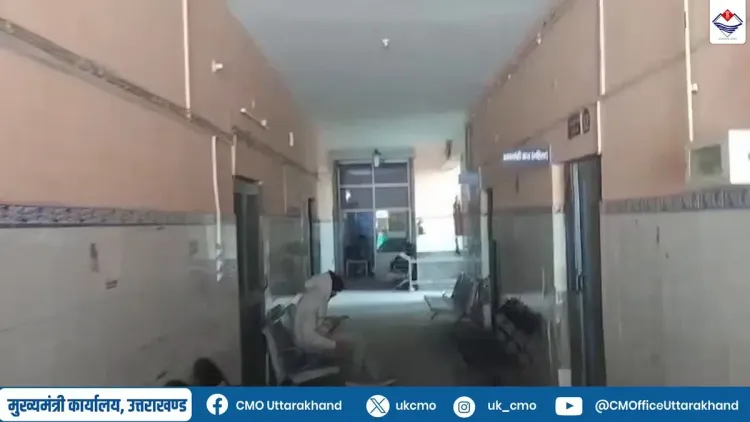
The Chief Minister's Office of Uttarakhand says a Rs 44 crore sub-district hospital — the first modern facility of its kind — is being rapidly built in the remote Yamuna Valley of Uttarkashi, aiming to bridge a long-standing healthcare access gap in the Garhwal Himalayas.
Key Takeaways
The Chief Minister's Office of Uttarakhand announced on 21 July 2026 that a new sub-district hospital is under construction in Yamuna Valley, Uttarkashi .
The project is estimated to cost Rs 44 crore and is described as progressing rapidly.
It will be the first state-of-the-art sub-district hospital in the Yamuna Valley region.
The facility is intended to address severe healthcare access gaps in one of Uttarakhand's most geographically isolated areas.
The project aligns with the National Health Mission framework of expanding secondary care to remote Himalayan populations.
Completion timeline, staffing plans, and Ayushman Bharat PM-JAY empanelment status are yet to be formally announced.
The Chief Minister's Office of Uttarakhand announced on Tuesday, 21 July 2026 that the state's remote Yamuna Valley in Uttarkashi district is getting its first modern sub-district hospital, being built at a cost of Rs 44 crore. The post described the facility as rapidly taking shape and framed it as a significant strengthening of healthcare access in one of the state's most geographically isolated regions.
Context
The Yamuna Valley, nestled in the high-altitude Garhwal Himalayas of Uttarkashi, has long been among the districts where residents must travel considerable distances to reach any secondary or tertiary medical facility. The Chief Minister's Office described the project as 'क्षेत्र का पहला अत्याधुनिक उप जिला अस्पताल' ('the region's first state-of-the-art sub-district hospital'), underscoring that no comparable facility has existed there before. The announcement signals that construction is already under way and progressing at pace.
Policy Backdrop
Uttarakhand's push to build secondary care infrastructure in its hilly and border districts draws on a long lineage of centrally sponsored health programmes. The National Health Mission (NHM), which subsumed the earlier National Rural Health Mission (NRHM) of 2005, has consistently channelled funds toward upgrading community and sub-district health facilities in remote Himalayan states. Uttarakhand, formed in 2000, has repeatedly cited terrain-related access gaps as the primary justification for such capital investments, and this project fits squarely within that rationale.
Across Indian Himalayan states, the preferred model has shifted toward placing sub-district hospitals closer to scattered mountain populations rather than concentrating services in plains or urban district headquarters. A Rs 44 crore outlay for a single sub-district facility reflects the elevated construction costs typical of high-altitude, difficult-terrain projects in the region.
Stakeholders and Impact
The most direct beneficiaries are the residents of the Yamuna Valley and the broader rural population of Uttarkashi district, who currently have limited access to structured inpatient and specialist care without travelling to the district headquarters or beyond. For pregnant women, elderly patients, and those requiring emergency stabilisation, a local sub-district hospital can be the difference between timely intervention and preventable deterioration. The facility, once operational, could also reduce the burden on the district hospital at Uttarkashi town.
Healthcare workers and paramedical staff posted to the valley stand to gain a better-equipped workplace, which is a factor in attracting and retaining medical personnel in remote postings — a persistent challenge for hill states.
What's Next
The government has not yet announced a formal completion or inauguration date in this communication. Key milestones to watch include the finalisation of construction, the procurement and installation of medical equipment, and the deployment of a full complement of doctors, nurses, and support staff. Integration with the Ayushman Bharat PM-JAY scheme for cashless treatment empanelment would determine how accessible the facility is to the valley's economically weaker residents. The pace of operationalisation — not just construction — will define the real-world impact of this investment on Yamuna Valley communities.
Point of View
Where political visibility of development spending is high and the baseline is low. At Rs 44 crore, the outlay is substantial for a sub-district facility and reflects both the logistical premium of high-altitude construction and the state's intent to signal delivery in a region that has historically been underserved. The announcement without a firm completion date, however, leaves the project open to the familiar critique of infrastructure promises that outlast electoral cycles. Whether this becomes a genuine healthcare milestone for Yamuna Valley residents will depend entirely on how quickly the facility is staffed and made operational after the bricks are in place.
NationPress
20 Oct 2026
Frequently Asked Questions
Where is the new sub-district hospital being built in Uttarakhand?
The hospital is being built in the Yamuna Valley area of Uttarkashi district in Uttarakhand, one of the state's most remote and geographically isolated regions.
What is the cost of the Uttarkashi Yamuna Valley hospital?
The sub-district hospital is being constructed at a cost of Rs 44 crore , according to the Chief Minister's Office of Uttarakhand.
Is this the first hospital in Yamuna Valley Uttarkashi?
Yes, the Chief Minister's Office described it as the region's first state-of-the-art sub-district hospital, indicating no comparable modern facility has existed in the valley before.
When will the Yamuna Valley hospital be completed?
No formal completion or inauguration date has been announced yet. The government stated construction is progressing rapidly as of July 2026 .
Which government scheme is funding the Uttarkashi hospital?
The announcement did not specify a single funding source, but such sub-district hospital projects in Uttarakhand typically draw on the National Health Mission (NHM) , a centrally sponsored scheme for healthcare infrastructure in remote areas.