CM Dhami Drives AYUSH Healthcare to Uttarakhand's Remote Hills
Synopsis
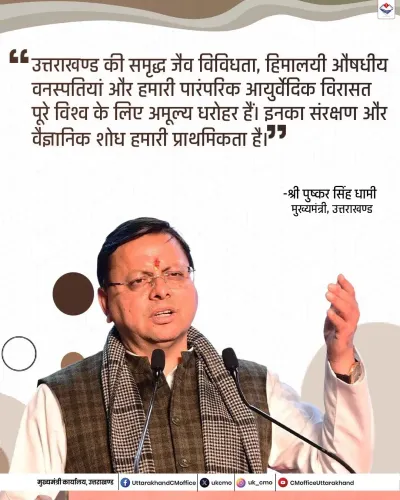
The Chief Minister's Office of Uttarakhand says AYUSH medical services are being taken to rural and remote districts including Chamoli under CM Pushkar Singh Dhami's direction, leveraging the National AYUSH Mission framework and the state's Himalayan medicinal plant heritage.
Key Takeaways
The Chief Minister's Office of Uttarakhand announced on 14 August 2026 that AYUSH healthcare is being extended to rural and remote areas of the state.
CM Pushkar Singh Dhami is cited as the guiding force behind the outreach initiative.
Chamoli district , a hilly and geographically isolated region, is specifically highlighted as part of the coverage area.
The push is backed by the National AYUSH Mission , a centrally sponsored scheme operational since 2014–15 that funds rural AYUSH dispensaries and wellness centres.
Uttarakhand's Himalayan medicinal plant resources provide a natural foundation for cost-effective AYUSH-based primary care delivery.
Potential integration with Ayushman Bharat health and wellness centres is a key development to watch.
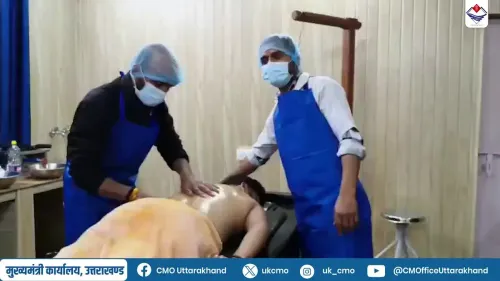
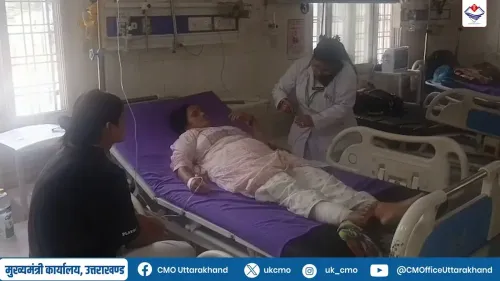
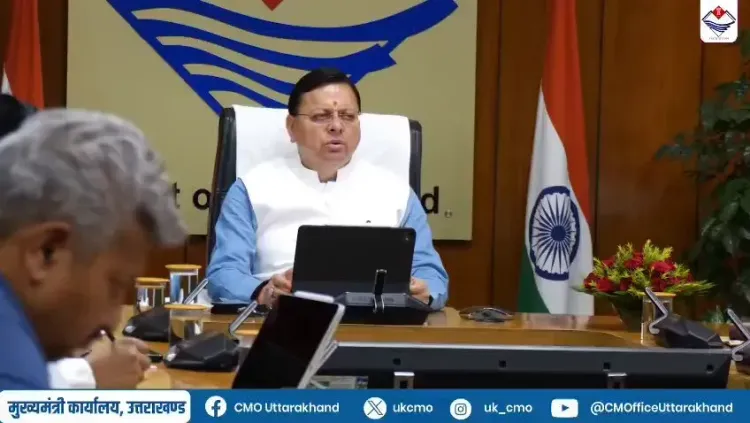
In the high-altitude villages of Chamoli and across Uttarakhand's most difficult terrain, traditional medicine is making its way to doorsteps that modern healthcare has long struggled to reach. The Chief Minister's Office of Uttarakhand announced on 14 August 2026 that AYUSH medical services are being actively extended to the state's rural and remote regions under the guidance of Chief Minister Pushkar Singh Dhami.
What AYUSH Outreach Means for Hill Communities
AYUSH — the umbrella framework covering Ayurveda, Yoga, Unani, Siddha, and Homeopathy — has been India's answer to the chronic shortage of allopathic infrastructure in geographically isolated regions. For Uttarakhand, a state where dozens of villages sit hours from the nearest hospital, this is not a symbolic gesture. It is a primary care lifeline.
The state sits on one of India's richest repositories of Himalayan medicinal plants, giving AYUSH-based outreach a natural and cost-effective foundation. Practitioners trained in traditional systems can be deployed to remote blocks far more readily than specialists in tertiary medicine.
National AYUSH Mission: The Policy Engine Behind the Push
The expansion draws on the National AYUSH Mission, a centrally sponsored scheme launched in 2014–15 that funds states to build AYUSH dispensaries and wellness centres in rural blocks. Uttarakhand has used this framework over the past decade to steadily grow its network of community-level AYUSH facilities, particularly in Himalayan districts like Chamoli — a hilly district whose scattered settlements make conventional outreach expensive and slow.
The broader national direction is clear: AYUSH services are increasingly being positioned to complement, not merely supplement, primary healthcare — with potential integration alongside Ayushman Bharat health and wellness centres on the horizon.
Chamoli in Focus
Chamoli district features prominently in the announcement, signalling that some of Uttarakhand's most remote communities are now within the programme's active reach. The district's rugged topography has historically made it a test case for last-mile health delivery — if AYUSH outreach works here, it works anywhere in the state.
For rural residents who have relied on informal remedies or faced multi-hour journeys to access any qualified care, trained AYUSH practitioners arriving at the village level represent a measurable shift in access.
Uttarakhand's hills have always held the ingredients for healing — the question has always been whether the system could reach the people who need it most. Under this push, the answer is beginning to look like yes.
Point of View
Low-cost health delivery strategy in constituencies where allopathic infrastructure remains thin. For Uttarakhand specifically, the political calculus is straightforward: hill districts like Chamoli carry significant electoral weight, and tangible healthcare access — even through traditional medicine — translates into grassroots goodwill. The deeper policy question is whether AYUSH outreach is being scaled as a genuine complement to primary care or as a substitute for the harder, more expensive work of building allopathic infrastructure in remote terrain. Integration with Ayushman Bharat facilities will be the real test of intent.
NationPress
29 Sept 2026
Frequently Asked Questions
What is the AYUSH mission in Uttarakhand?
AYUSH in Uttarakhand refers to the state's implementation of India's traditional medicine framework — covering Ayurveda, Yoga, Unani, Siddha, and Homeopathy — through the National AYUSH Mission, which funds rural dispensaries and wellness centres across the state's hill districts.
What is the National AYUSH Mission?
The National AYUSH Mission is a centrally sponsored scheme launched in 2014–15 by the Government of India to strengthen AYUSH infrastructure and services in states, including building dispensaries and health centres in rural and remote areas.
Why is Chamoli important for Uttarakhand's health outreach?
Chamoli is a hilly, geographically isolated district in Uttarakhand where conventional healthcare access is limited. It is frequently cited in outreach programmes as a test case for last-mile health delivery in the state.
Who is Pushkar Singh Dhami?
Pushkar Singh Dhami is the Chief Minister of Uttarakhand, in office since 2021. He oversees state health, infrastructure, and development programmes including the expansion of AYUSH services.
How does AYUSH help remote villages in Uttarakhand?
AYUSH practitioners can be deployed to remote Himalayan villages more readily than specialists in modern medicine, providing basic healthcare access to communities that are hours away from the nearest hospital. Uttarakhand's rich Himalayan medicinal plant resources also make AYUSH outreach cost-effective.