RSS to launch anti-drug campaign nationwide after Indore ABKM meet
Synopsis
The RSS used its three-day ABKM meeting in Indore to announce two consequential moves: a nationwide anti-drug campaign backed by a network of nearly 3.8 lakh community leaders, and a structural overhaul that will more than double its operational divisions from 40 prants to 88 sambhags — the most significant internal restructuring the organisation has signalled in recent memory.
Key Takeaways
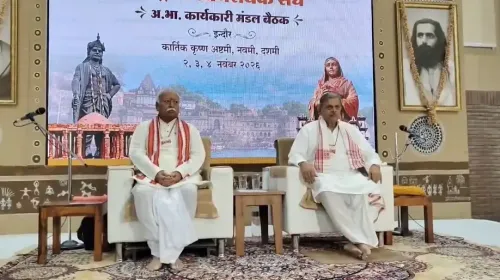
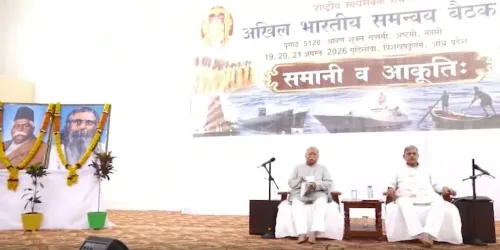
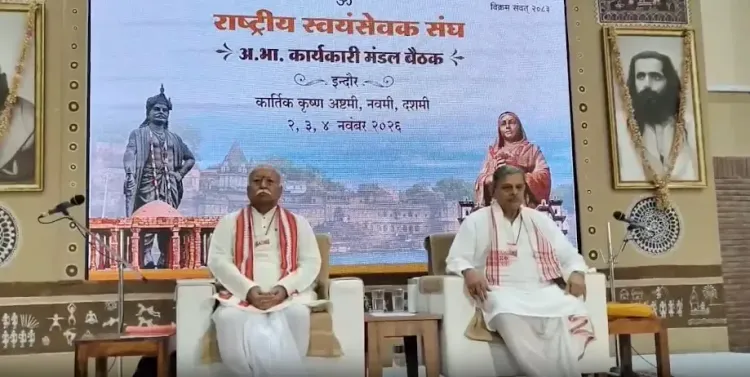
The RSS announced a nationwide campaign against drug abuse at the ABKM meeting in Indore , held 2–4 November 2026 .
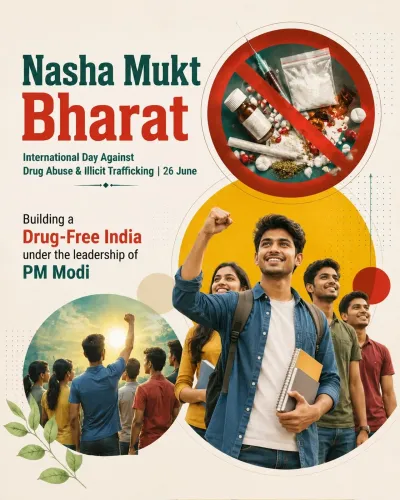
RSS Sarkaryavah Dattatreya Hosabale described narcotics addiction as driven by an 'organised international network' and called for a broader societal response.
The Sangh's existing outreach had already engaged 3,79,581 community leaders across 8,346 towns and 5,028 clusters.
The RSS will restructure from 40 prants to 88 sambhags after Sanghchalak elections in November–December .
Resolutions honoured Swami Shraddhanand (centenary of martyrdom), Swami Sadanand , and Rajnarayan Basu (200th birth anniversary).
Sarsanghchalak Mohan Bhagwat's visits to the US, UK, and Canada were reviewed; overseas interest in the RSS's shakha model was noted.
The Rashtriya Swayamsevak Sangh (RSS) announced plans on 4 November 2026 to launch a nationwide campaign against substance abuse among youth and undertake a sweeping organisational restructuring, following the conclusion of the three-day Akhil Bharatiya Karyakari Mandal (ABKM) meeting in Indore, Madhya Pradesh. The decisions signal a significant expansion of the Sangh's social outreach agenda heading into the new year.
Anti-Drug Drive: Scope and Strategy
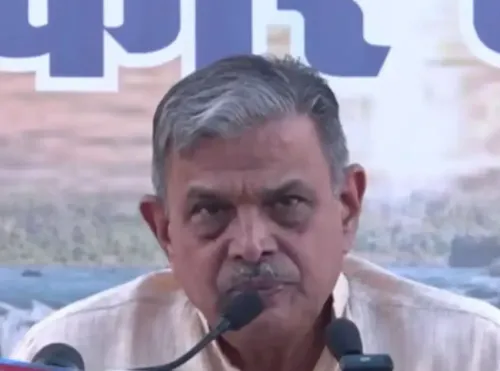
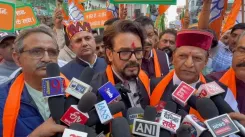
RSS Sarkaryavah Dattatreya Hosabale, addressing a press conference after the meeting's conclusion, described drug addiction as a 'serious social challenge' being fuelled by an 'organised international network.' While acknowledging efforts by the Central government and security agencies to curb trafficking, he stressed that society must play an equally active role in prevention.
The RSS plans to partner with social organisations and institutions to run awareness programmes, provide mental health counselling to those affected by addiction, and extend support to their families. A comprehensive coordination strategy for these efforts was reportedly finalised during the deliberations.
Notably, the Sangh had already conducted a large-scale outreach exercise ahead of this meeting, engaging 3,79,581 community leaders and representatives across 8,346 towns and 5,028 clusters — underlining the scale of infrastructure the organisation intends to deploy for the drug-awareness push.
Organisational Restructuring: From 40 Prants to 88 Sambhags
On the structural front, Hosabale announced a major overhaul of the RSS's internal architecture. The Sangh currently operates through 40 prants (provinces), but following the election of Sanghchalaks and formation of new executive committees in November and December, the organisation will be reorganised into 88 sambhags (divisions). The ABKM discussed tailoring operational plans to the specific conditions of each new division, aiming for more granular grassroots engagement.
Resolutions Honouring Hindu Social Reformers
The ABKM also adopted resolutions commemorating three prominent figures associated with Hindu social awakening. The meeting marked the centenary of the martyrdom of Swami Shraddhanand and recalled the contributions of Swami Sadanand — both recognised for efforts to prevent religious conversions, promote education and healthcare in tribal communities, and strengthen cultural awareness.
A separate resolution marked the 200th birth anniversary of Rajnarayan Basu, regarded as a pioneering figure in India's cultural renaissance. The RSS called upon society to carry forward the service activities initiated by these figures.
Bhagwat's Overseas Tour Reviewed
The meeting also discussed RSS Sarsanghchalak Mohan Bhagwat's recent visits to the United States, the United Kingdom, and Canada. According to the organisation, Bhagwat engaged with members of the Indian diaspora, academics, and community leaders, conveying India's message of global unity and the oneness of humanity.
During the tour, he attended programmes at institutions including a Swaminarayan temple and a Khalsa Gurdwara, and held discussions on the RSS's organisational model and its approach to character building. Hosabale noted there was 'considerable curiosity' among overseas audiences about the Sangh's shakha-based system and long-term community service philosophy.
What Comes Next
With the restructuring set to take shape over November and December and the anti-drug campaign expected to mobilise an already-activated network of nearly 3.8 lakh community leaders, the RSS appears poised for one of its more operationally intensive cycles in recent years. The effectiveness of the drug-awareness initiative will hinge on how tightly it coordinates with state governments and health agencies on the ground.
Point of View
One that positions the organisation as a first-responder alongside the state rather than subordinate to it. The restructuring from 40 prants to 88 sambhags is structurally significant: more granular divisions mean tighter command-and-control at the district level, which matters ahead of a busy electoral calendar. What remains untested is whether a volunteer-driven awareness model can meaningfully complement clinical addiction treatment — the gap between mobilisation optics and measurable outcomes in public health is wide, and the Sangh has not yet detailed how it will measure impact.
NationPress
4 Nov 2026
Frequently Asked Questions
What did the RSS announce at the Indore ABKM meeting in November 2026?
The RSS announced a nationwide campaign against drug abuse and a major internal restructuring, reorganising from 40 prants into 88 sambhags. The decisions came after the three-day Akhil Bharatiya Karyakari Mandal meeting held in Indore from 2 to 4 November 2026.
What is the RSS's plan to fight drug abuse among youth?
The RSS plans to work with social organisations to run awareness campaigns, provide mental health counselling to addiction-affected individuals, and support their families. The organisation intends to leverage its existing network of nearly 3,79,581 community leaders across towns and clusters for outreach.
What is the RSS organisational restructuring from prants to sambhags?
The RSS currently operates through 40 prants (provinces) but will reorganise into 88 sambhags (divisions) following the election of Sanghchalaks and formation of new executive committees in November and December 2026. The change is aimed at more localised, ground-level operational planning.
Who were the personalities honoured in the ABKM resolutions?
The ABKM adopted resolutions honouring Swami Shraddhanand on the centenary of his martyrdom, Swami Sadanand for his contributions to education and tribal welfare, and Rajnarayan Basu on his 200th birth anniversary. All three are regarded as figures associated with Hindu social and cultural awakening.
What was discussed about RSS Sarsanghchalak Mohan Bhagwat's overseas visits?
The ABKM reviewed Bhagwat's recent visits to the United States, the United Kingdom, and Canada, during which he engaged with the Indian diaspora, academics, and community leaders on India's message of global unity. He also visited a Swaminarayan temple and a Khalsa Gurdwara, and held discussions on the RSS's shakha model and community service approach.