Is RSS's Contribution to Nation-Building Truly Selfless and Apolitical?
Synopsis
BJP MP Praveen Khandelwal commends RSS chief Mohan Bhagwat for clarifying the organization's role in nation-building. Khandelwal highlights the RSS's selfless and political neutrality, countering recent criticisms from opposition parties. This article delves into the ongoing debate regarding the RSS’s influence and intentions in India's socio-political landscape.
Key Takeaways
Mohan Bhagwat clarifies RSS’s ideology amidst criticism.
BJP MP Praveen Khandelwal praises the RSS's selfless contributions.
RSS operates as a collective of individuals without needing registration.
Criticism from Congress highlights the debate over nationalism .
Importance of understanding RSS's dual role in society.
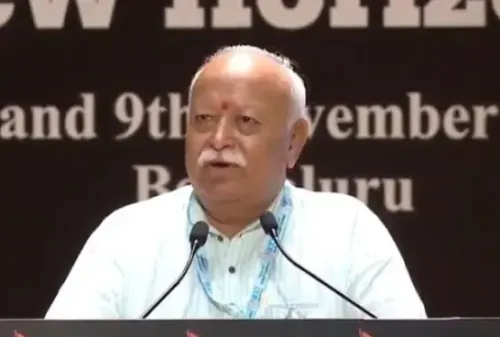
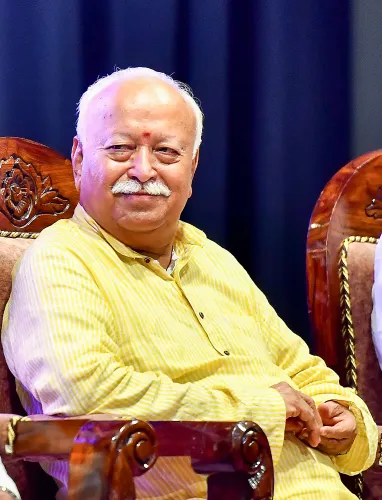
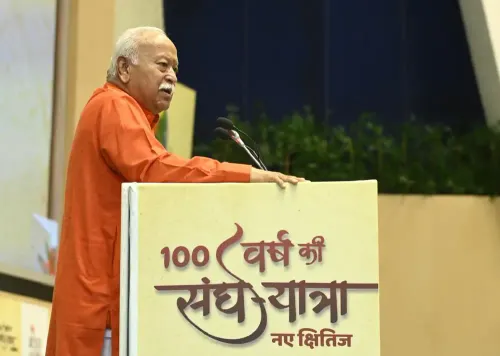
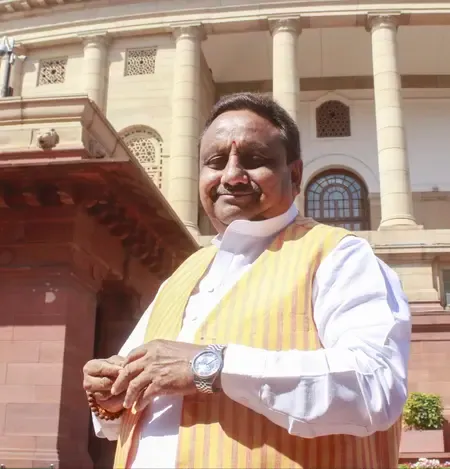
New Delhi, Nov 10 (NationPress) In response to the recent comments made by Rashtriya Swayamsevak Sangh (RSS) chief Mohan Bhagwat, BJP MP Praveen Khandelwal lauded Bhagwat for articulating the essence of the RSS and dispelling misconceptions surrounding its ideology. Khandelwal asserted that the organisation’s role in nation-building has always been selfless and devoid of political bias.
“Mohan Bhagwat has distinctly articulated the principles of the RSS. It is widely recognized that the Rashtriya Swayamsevak Sangh stands as the largest volunteer organization globally, and it is always the first to step in when the nation is in need,” Khandelwal remarked.
He emphasized that the Sangh’s efforts towards nation-building and providing disaster relief have consistently been selfless and non-political, showcasing its dedication to a unified and resilient India.
Khandelwal’s comments followed Bhagwat’s response to political leaders in Karnataka who had alleged the need to ban the Sangh.
Bhagwat clarified that the RSS does not require registration or taxation, as it operates as a “collective of individuals” within the parameters set by the Indian Constitution.
“Founded in 1925, do you expect us to have registered with the British authorities? Post-Independence, registration was never mandated by the Government of India. We are recognized as a collective of individuals,” Bhagwat explained during his speech.
In addressing his critics, he stated, “We have faced bans three times, which indicates government recognition. If we weren’t significant, why were we banned?”
Nevertheless, the Congress party sharply criticized Bhagwat’s statements. Congress state general secretary Rakesh Sinha accused the RSS of hypocrisy, claiming that it seeks political power under the pretense of nationalism.
“The RSS desires power while claiming to represent national interests. How can an organization that did not display the national flag at its headquarters for 52 years post-independence speak of nationalism? This is the same RSS that celebrated after Mahatma Gandhi’s assassination yet claims to serve the nation’s welfare?” Sinha questioned.
Point of View
It is crucial to approach the ongoing discourse surrounding the RSS with a balanced perspective. While the organization's contributions to societal welfare are acknowledged, the critiques regarding its political affiliations must also be taken into account. This duality reflects the complexities of India's socio-political fabric, warranting a nuanced understanding.
NationPress
2 Oct 2026
Frequently Asked Questions
Who is Mohan Bhagwat?
Mohan Bhagwat is the current chief of the RSS, responsible for articulating its ideology and addressing public misconceptions.
What are the criticisms against the RSS?
Critics, particularly from opposition parties, accuse the RSS of seeking political dominance under the guise of nationalism.
How does the RSS contribute to disaster relief?
The RSS has a longstanding history of mobilizing volunteers for disaster relief efforts across India, showcasing its commitment to social service.
What is the significance of the RSS in Indian politics?
The RSS plays a pivotal role in shaping the ideological framework of the BJP and influences various aspects of Indian socio-political life.