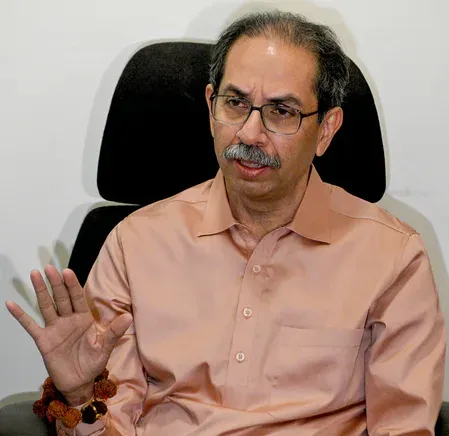
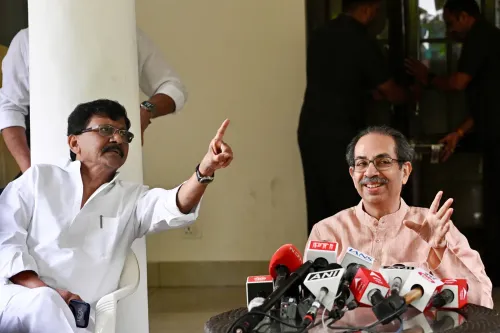
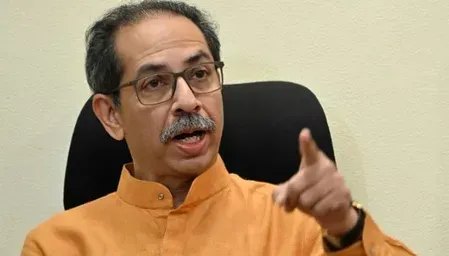
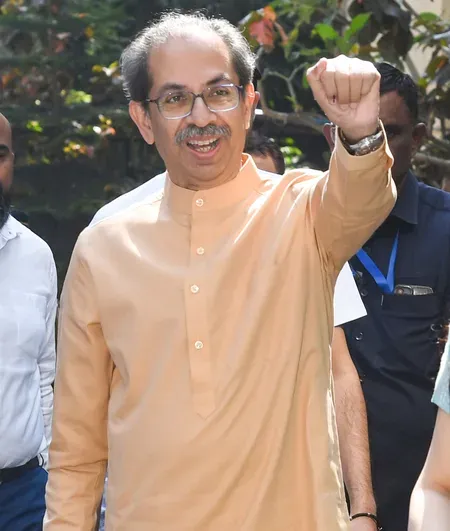
Shiv Sena (UBT) draws Bengal-Maharashtra parallel in Saamana editorial
Synopsis
The Thackeray-led Shiv Sena (UBT) has drawn a pointed parallel between the BJP's alleged party-splitting operations in Maharashtra and what it claims is now unfolding in West Bengal — arguing that a 'Khela Hobe' of political engineering has left Mamata Banerjee in the same legal and institutional bind that ensnared both the original Shiv Sena and Sharad Pawar's NCP.
Key Takeaways
Shiv Sena (UBT) published an editorial in Saamana on 6 June alleging the BJP is replicating its Maharashtra party-splitting strategy in West Bengal .
The editorial claimed Mamata Banerjee lost her Bhabanipur seat and the TMC was subsequently split 'vertically and horizontally'.
It alleged the West Bengal Assembly Speaker visited PM Modi and Home Minister Amit Shah in Delhi, signalling anti-defection law relief is unlikely.
The piece cited similar patterns involving the LJP in Bihar, the Shiromani Akali Dal in Punjab, and AAP as earlier instances of the alleged strategy.
The editorial warned India is drifting toward a 'one-party, one election' framework that undermines federal autonomy and regional parties.
Shiv Sena (UBT) on Saturday, 6 June published a sharp editorial in its mouthpiece Saamana, alleging that the Bharatiya Janata Party (BJP)'s purported strategy of splitting regional parties — first deployed in Maharashtra — has now been replicated in West Bengal following the state's Assembly election results. The Thackeray camp described the pattern as having reached what it called 'dangerous levels' for Indian democracy.
The Bengal-Maharashtra Parallel
The editorial claimed that immediately after the West Bengal Assembly election results, a swift political realignment — framed as a 'Khela Hobe' — unfolded. It alleged that Chief Minister Mamata Banerjee's All India Trinamool Congress (TMC) suffered an unexpected defeat, with Banerjee herself reportedly losing her Bhabanipur constituency, after which the party was split 'vertically and horizontally' across both the Assembly and Parliament.
The Saamana editorial drew a direct line between these developments and what it described as the BJP's earlier manoeuvres in Maharashtra, where the original Shiv Sena and its 'bow and arrow' symbol were, according to the Thackeray faction, handed to a rival group, while Sharad Pawar's political legacy within the Nationalist Congress Party (NCP) was transferred to Ajit Pawar.
Legal Recourse Seen as Limited
According to the editorial, with the BJP holding a majority in the West Bengal Assembly and the Speaker having recently visited New Delhi to meet Prime Minister Narendra Modi and Union Home Minister Amit Shah, legal remedies under the anti-defection law are unlikely to offer relief. The piece claimed that the Election Commission is 'acting in tandem' and that the Supreme Court appears 'structurally passive' — leaving Banerjee in what it described as the same prolonged legal struggle faced by the Shiv Sena and NCP factions loyal to the Thackeray and Sharad Pawar camps respectively.
Broader Pattern of Weakening Regional Parties
The editorial broadened its critique beyond Maharashtra and Bengal, citing what it described as a recurring pattern. It referenced developments involving Chirag Paswan's Lok Janshakti Party (LJP) in Bihar, the Shiromani Akali Dal (SAD) in Punjab, and the targeting of Arvind Kejriwal's Aam Aadmi Party (AAP) as earlier instances of the same alleged strategy.
The piece warned that India is being pushed towards a 'one-party, one election' framework, raising concerns over the erosion of federal autonomy and the weakening of opposition-led regional formations. 'A new political mechanism has emerged where power is maintained through the alleged misuse of state machinery, financial inducements and political pressure,' the editorial stated.
Questions Over Governance in West Bengal
Responding to remarks by West Bengal Chief Minister Suvendu Adhikari that 'the rule of law has been established' in the state, the editorial questioned whether engineering defections within the TMC is consistent with that assertion. It also raised concerns about the constitutional neutrality of Assembly Speakers, arguing that the role appeared compromised — as was allegedly the case during the Maharashtra political crisis.
The editorial additionally alleged that the BJP-led administration in West Bengal has permitted cattle slaughter, arguing this contradicts the party's earlier criticism of the Mamata Banerjee government on the issue of minority appeasement. 'Indian democracy is being openly undermined. The question is how long the country will continue to witness this decline,' the piece concluded.
These are the claims of the Shiv Sena (UBT) editorial; the BJP has not yet issued a formal response to the specific allegations raised in Saamana.
Point of View
Now with Bengal as exhibit B. The argument has internal coherence: the anti-defection law has proved slow and inconsistent, and the Election Commission's symbol rulings in Maharashtra set a precedent that opposition parties across India are watching nervously. What the editorial sidesteps is that several of the splits it cites — including the LJP and Akali Dal — had organic internal causes that predate any alleged external engineering. The more pointed question it raises, but does not fully answer, is whether India's constitutional guardrails — the Speaker's role, the Election Commission's quasi-judicial function, the Supreme Court's timeline on disqualification petitions — are structurally adequate for the pace of modern political realignments.
NationPress
21 Oct 2026
Frequently Asked Questions
What did the Shiv Sena (UBT) allege in its Saamana editorial about West Bengal?
The Shiv Sena (UBT) alleged in its Saamana editorial on 6 June that the BJP has replicated in West Bengal the same party-splitting strategy it allegedly used in Maharashtra — engineering a division within the TMC after the Assembly election results. The editorial described the development as a 'Khela Hobe' moment mirroring the Shiv Sena and NCP splits.
What is the 'Khela Hobe' reference in the Saamana editorial?
'Khela Hobe' — Bengali for 'the game will be played' — was a campaign slogan used by the TMC. The Saamana editorial used the phrase ironically to describe what it called a political game being played against the TMC itself, drawing a parallel with events in Maharashtra.
Why does the editorial say legal recourse under the anti-defection law is unlikely to help?
The editorial argued that with the BJP holding a majority in the West Bengal Assembly and the Speaker reportedly visiting PM Modi and Home Minister Amit Shah in Delhi, the anti-defection proceedings are unlikely to succeed. It cited the prolonged and inconclusive legal battles faced by the Shiv Sena and NCP factions as precedent.
Which other parties did the Shiv Sena (UBT) cite as targets of the same alleged strategy?
The editorial referenced Chirag Paswan's Lok Janshakti Party in Bihar, the Shiromani Akali Dal in Punjab, and Arvind Kejriwal's Aam Aadmi Party as earlier instances of the pattern it alleges the BJP has deployed against regional parties.
Has the BJP responded to the allegations in the Saamana editorial?
As of the time of publication, the BJP had not issued a formal response to the specific allegations raised in the Saamana editorial. The claims in the piece represent the position of the Shiv Sena (UBT) and have not been independently verified.