Attack on Mamata Banerjee a strike on democracy: Shiv Sena(UBT)
Synopsis
Shiv Sena (UBT) used its mouthpiece Saamana to frame the mob attack on Mamata Banerjee not as a law-and-order incident but as a constitutional crisis — accusing the Centre of deploying paramilitary forces during elections while staying silent as senior TMC leaders face street violence. The editorial's sharpest line: if this is what the Centre calls restoring the rule of law in West Bengal, the definition itself is broken.
Key Takeaways
Shiv Sena (UBT) called the mob attack on Mamata Banerjee a direct strike on India's democratic fabric, in a Tuesday editorial in Saamana .
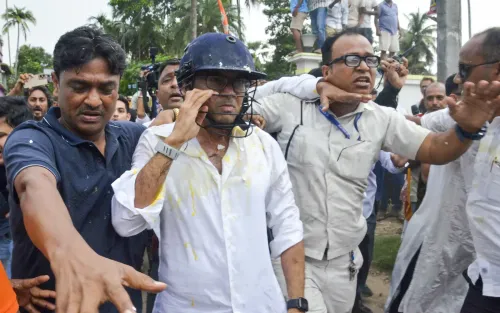
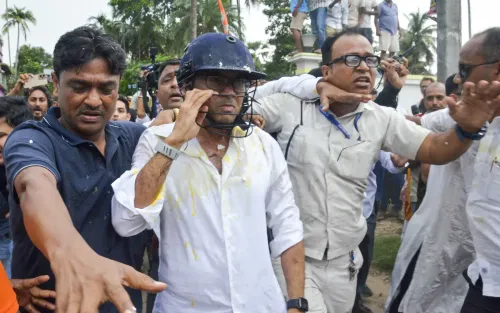
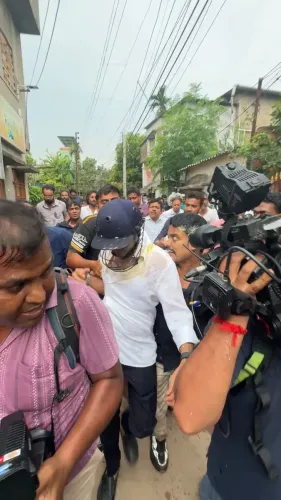
The editorial described a mob armed with stones, sticks, and iron rods surrounding Banerjee's vehicle with apparent intent to harm her.
The party accused the Centre of a double standard — deploying Central forces during West Bengal elections but staying silent on escalating political violence against TMC leaders.
Abhishek Banerjee and Kalyan Banerjee were cited as TMC leaders facing relentless targeting.
The Thackeray camp warned that allowing violent elements to operate with impunity signals 'a descent into anarchy' that undermines constitutional institutions.
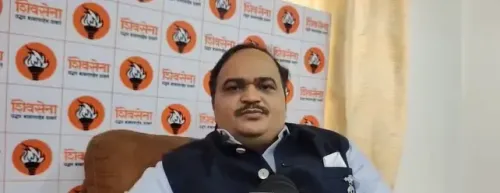
Shiv Sena (Uddhav Balasaheb Thackeray) on Tuesday declared that the violent assault on West Bengal Chief Minister Mamata Banerjee is not simply an attack on one political leader — it is, in the party's words, a direct blow to the democratic foundations of the republic. The remarks appeared in an editorial in the party's mouthpiece Saamana.
What Saamana's Editorial Said
The editorial described a mob armed with stones, sticks, and iron rods surrounding Banerjee's vehicle with what it characterised as a clear intent to eliminate a formidable opposition voice. 'That she survived is a matter of pure luck, but the incident leaves behind a chilling realisation: the state of political violence in West Bengal has breached all acceptable thresholds,' the party said in its editorial.
The Thackeray camp noted that since recent shifts in the state's political dynamics, senior All India Trinamool Congress (TMC) leaders — including Abhishek Banerjee and Kalyan Banerjee — have faced what it termed relentless targeting.
Charge of Double Standards Against the Centre
The editorial drew a sharp contrast between the Centre's past and present conduct in West Bengal. During Assembly elections, the Union government deployed hundreds of thousands of Central paramilitary personnel under the stated rationale of ensuring fair procedures and maintaining order. 'Today, as targeted political violence escalates, that urgency has conspicuously vanished,' the editorial argued, calling the reluctance to deploy Central forces a 'troubling double standard.'
The party further challenged the ruling establishment's framing: 'When the Central government previously cited a collapse of the rule of law in West Bengal to justify its interventions, one must ask: Is this current environment of unchecked hostility and state-sanctioned impunity what they define as the rule of law?'
Criticism of the Opposition's Response
The Shiv Sena (UBT) also trained its criticism on what it described as the official response from the state's opposition leadership. Characterising a violent physical assault on a senior political figure as merely a 'battle between the public and a political party' was, the editorial said, 'both irresponsible and dangerous.' The party argued such framing effectively rationalises mob violence and signals an abdication of state responsibility.
Drawing a pointed analogy, the editorial said that by such logic, the protests by youth at Jantar Mantar could similarly be mischaracterised as a personal conflict between citizens and the Prime Minister — stripping the state of its fundamental duty to maintain order.
Broader Warning on Democratic Norms
The Uddhav Thackeray-led party argued that in a functional democracy, electoral contests are decided at the ballot box, not through iron rods and physical intimidation. It warned that the current trajectory — where dissent is met with excessive force, student movements are suppressed, and opposition figures face persistent physical threats — emboldens non-state actors to enforce political will outside constitutional channels.
'Democracy cannot survive if the political opposition is treated as an enemy to be physically eliminated rather than an essential pillar of governance,' the editorial concluded, adding that permitting violent elements to operate with impunity signals 'a descent into anarchy' that ultimately undermines the very institutions meant to uphold the nation. With political temperatures in West Bengal showing no sign of cooling, the incident is likely to remain a flashpoint in national political discourse.
Point of View
The Thackeray camp is attempting to build a pan-opposition narrative ahead of future electoral contests. What the editorial does not address is the TMC's own well-documented record of political violence in the state — a silence that weakens the credibility of its democratic argument. The double-standards charge is pointed, but it cuts both ways.
NationPress
25 Sept 2026
Frequently Asked Questions
What did Shiv Sena (UBT) say about the attack on Mamata Banerjee?
Shiv Sena (UBT) said the violent assault on Mamata Banerjee is not merely an attack on an individual but a direct strike against India's democratic fabric. The party made the remarks in an editorial in its mouthpiece Saamana on Tuesday, describing a mob armed with stones, sticks, and iron rods surrounding her vehicle.
What is the Saamana editorial and why does it matter?
Saamana is the official mouthpiece of Shiv Sena (UBT), led by Uddhav Thackeray, and its editorials are considered authoritative statements of the party's political position. The Tuesday editorial on the Mamata Banerjee attack signals the party's intent to frame West Bengal's political violence as a national democratic concern.
What double standard did Shiv Sena (UBT) accuse the Centre of?
The party argued that the Centre deployed hundreds of thousands of Central paramilitary personnel in West Bengal during Assembly elections citing law-and-order concerns, but has shown no similar urgency as senior TMC leaders face targeted physical attacks. It called this a 'troubling double standard.'
Which TMC leaders has Shiv Sena (UBT) said have been targeted?
The Saamana editorial specifically named Abhishek Banerjee and Kalyan Banerjee — both TMC MPs — as leaders who have faced relentless targeting since recent shifts in West Bengal's political dynamics.
What was Shiv Sena (UBT)'s criticism of the opposition's response to the attack?
The party criticised what it described as the state opposition leadership's framing of the assault as merely a 'battle between the public and a political party,' calling it irresponsible and dangerous. It argued such language rationalises mob violence and amounts to an abdication of state responsibility.