Shiv Sena (UBT) alleges Maharashtra-style defections now playing out in West Bengal
Synopsis
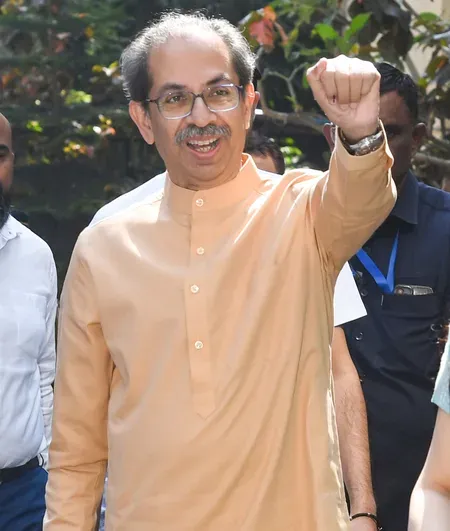
Uddhav Thackeray's Shiv Sena (UBT) says the BJP has transplanted Maharashtra's defection machine to West Bengal — inducting the very TMC leaders it branded corrupt during the election campaign. The editorial in Saamana frames it as a 12-year pattern: constitutional bodies bent, investigations dropped, and 'turncoats' rebranded as 'rebels.'
Key Takeaways
Shiv Sena (UBT) alleged on 10 June that the BJP is replicating Maharashtra -style defections in West Bengal , barely a month after assembly election results.
The party's mouthpiece Saamana alleged a significant bloc of TMC lawmakers has broken away to join the BJP .
The editorial accused PM Modi and Home Minister Amit Shah of inducting the very TMC leaders they publicly labelled corrupt during the campaign.
Shiv Sena (UBT) alleged that constitutional institutions — including the Speaker , the Election Commission of India , and the judiciary — are being used to facilitate defections.
The Thackeray camp urged Mamata Banerjee not to capitulate, framing the exit of opportunists as a chance to rebuild with principled leadership.
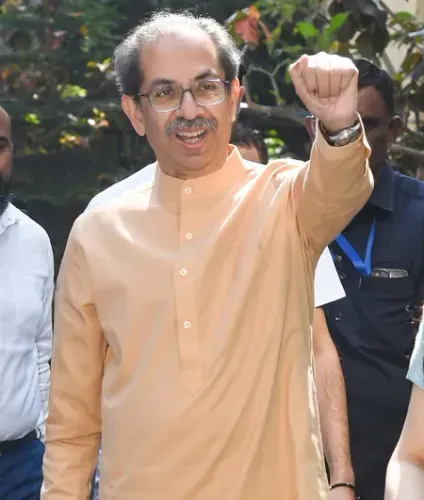
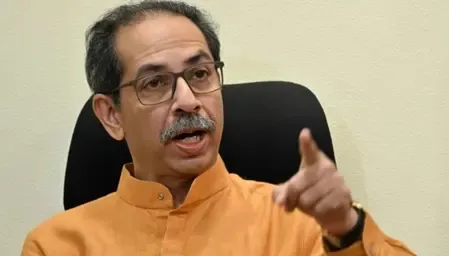
Shiv Sena (UBT), the faction led by Uddhav Thackeray, on Wednesday, 10 June accused the Bharatiya Janata Party (BJP) of replicating the political defection playbook used in Maharashtra now in West Bengal, alleging that constitutional institutions are being weaponised to engineer mass crossovers from the All India Trinamool Congress (TMC). The charge came through an editorial in the party's mouthpiece, Saamana, as the country marked 12 years of Prime Minister Narendra Modi's tenure.
The Maharashtra Parallel
The Saamana editorial drew a direct line between the political upheaval that split the Shiv Sena in Maharashtra and what it described as an unfolding drama in West Bengal, barely weeks after the state assembly election results. According to the editorial, a significant bloc of TMC legislators has broken ranks to align with the BJP, a development the Thackeray camp characterised as scripted and familiar.
'The “washing machine” of Maharashtra was lifted and brought to West Bengal, and all the corrupt Trinamool members were thrown into it. Barely a month has passed since the assembly election results, and already the entire Trinamool Congress is seemingly being merged into the BJP,' the editorial stated.
The Uddhav Thackeray-led faction alleged that constitutional bodies — including the Speaker, the Election Commission of India (ECI), and elements of the judiciary — are being deployed to legitimise defections rather than uphold democratic norms.
Accusations of Political Opportunism
Shiv Sena (UBT) zeroed in on what it called a glaring contradiction: during the West Bengal election campaign, Prime Minister Modi and Home Minister Amit Shah had publicly branded the TMC government as corrupt, anti-Hindu, and a protector of illegal Bangladeshi immigrants. Yet, the editorial argued, the BJP has since inducted the very same leaders it condemned.
'Terror, threats, money, and investigative agencies were weaponised to break the Trinamool Congress. Local Trinamool leaders are being attacked and publicly humiliated. What kind of way is this to treat opponents? Prime Minister Modi must answer this,' the editorial demanded, also targeting Suvendu Adhikari by name alongside Modi and Shah.
The editorial further alleged that once defectors join the BJP, all pending investigations against them are quietly dropped — suggesting that the promise of clean governance is subordinated to the pursuit of political numbers.
What the Thackeray Camp Said About TMC's Future
Despite the sharp critique of the BJP, the Saamana editorial also carried a message for West Bengal Chief Minister Mamata Banerjee, urging her not to capitulate to those switching sides. The Thackeray camp framed the departure of opportunistic leaders as a potential opportunity for the TMC — and the broader opposition — to rebuild with what it called 'fresh, self-respecting leadership.'
'Mamata Banerjee should not grovel before these treacherous people. Let those who want to leave, leave. A new dawn of self-respect and patriotism will blossom in the country,' the editorial said.
Broader Context: Defections and Democratic Norms
This is not the first time Shiv Sena (UBT) has trained its editorial guns on the BJP over defections. The party's own split in 2022, when the Eknath Shinde-led faction broke away and subsequently claimed the Shiv Sena name and symbol with the ECI's backing, remains a raw wound. Critics argue that India's anti-defection law has proven increasingly porous against well-resourced political operators. The West Bengal developments, coming so soon after a bitterly contested election, are likely to intensify the national debate over floor-crossing and the role of central investigative agencies in state politics.
Point of View
Uddhav Thackeray's party speaks from direct experience when it describes how constitutional machinery can be turned against incumbents. What the editorial misses — or sidesteps — is that the TMC itself has a documented history of absorbing defectors from other parties when it held the advantage. The more pointed question is structural: India's anti-defection law, designed in 1985, was never built to handle the scale or resourcing of modern floor-crossing operations. Until that law is strengthened with independent adjudication and time-bound rulings, the 'washing machine' metaphor will apply equally to every party in power.
NationPress
26 Oct 2026
Frequently Asked Questions
What has Shiv Sena (UBT) alleged about West Bengal politics?
Shiv Sena (UBT) alleged in a Saamana editorial on 10 June that the BJP is engineering mass defections from the TMC in West Bengal, mirroring the defection pattern seen in Maharashtra. The party claimed that constitutional bodies including the Speaker and the Election Commission are being used to facilitate the crossovers.
What is the 'washing machine' reference in the Saamana editorial?
The 'washing machine' is a metaphor used by Shiv Sena (UBT) to describe what it alleges is a BJP tactic of absorbing leaders from rival parties accused of corruption, effectively clearing their records once they switch sides. The editorial claimed this mechanism, used in Maharashtra, has now been deployed in West Bengal.
Why does Shiv Sena (UBT) say the BJP's position is contradictory?
During the West Bengal election campaign, PM Modi and Home Minister Amit Shah publicly accused TMC leaders of corruption and supporting illegal Bangladeshi immigrants. Shiv Sena (UBT) argues that the BJP has since inducted those very leaders into its fold, undermining its own anti-corruption platform.
What did the editorial say about Mamata Banerjee?
The Saamana editorial urged West Bengal Chief Minister Mamata Banerjee not to capitulate to defecting leaders, framing their departure as an opportunity to rebuild the TMC with principled, self-respecting leadership rather than chasing those who have already switched allegiance.
How does this connect to the 2022 Maharashtra political crisis?
In 2022, the Eknath Shinde-led faction broke away from Shiv Sena, eventually claiming the party's name and election symbol with the Election Commission's backing — a split Uddhav Thackeray's camp has consistently attributed to BJP support. Shiv Sena (UBT) draws a direct parallel between that episode and the current West Bengal defections.