Is the Sabarimala Gold Theft Case a Political Setup by the Vijayan Government?

Synopsis
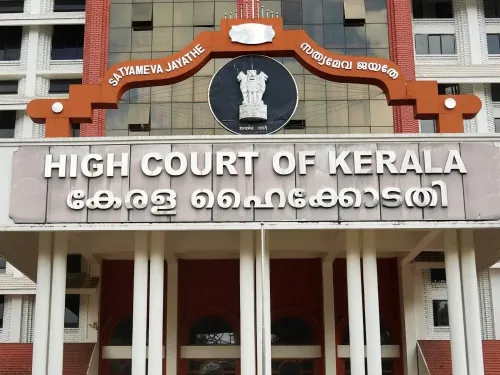
In a stunning development in the Sabarimala gold theft case, Tantri Kantarar Rajeevar alleges political revenge behind his arrest by the Vijayan government. The Kollam Vigilance Court's decision to grant him bail after 41 days in custody has intensified the controversy surrounding this high-profile incident.
Key Takeaways
Tantri Kantarar Rajeevar claims his arrest was politically motivated.
The Kollam Vigilance Court granted him bail after 41 days.
The prosecution could not establish a direct link to the gold theft.
Political tensions are heightened in light of these allegations.
The case continues to ignite debate across Kerala.
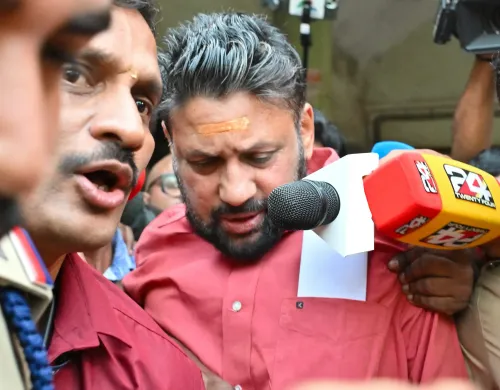
Kollam, Feb 20 (NationPress) In a surprising twist in the Sabarimala gold theft case, Tantri Kantarar Rajeevar has claimed that the Pinarayi Vijayan government orchestrated his arrest as a form of political retaliation. This comes after the Kollam Vigilance Court granted him bail following 41 days in custody.
The tantri was released on bail last Thursday.
These explosive claims, as highlighted in the court's bail order, have introduced a new political angle to this high-profile case.
The tantri asserted in court that he was unjustly implicated due to his strong opposition to allowing women of menstruating age to enter the Sabarimala temple during the controversial period in 2018, when the state was embroiled in the issue for two months during the festival.
He maintained that he had insisted on upholding temple rituals and customs amid the controversy.
This position, he alleged, provoked the ire of senior police officials stationed at Sannidhanam and others.
Additionally, he claimed that a false narrative was constructed to depict him as complicit in the gold theft alongside certain leaders from the ruling party.
However, the Vigilance Court found that the prosecution had not established a prima facie case linking the tantri to the alleged theft.
The Special Investigation Team (SIT) was unable to demonstrate a direct connection between him and the prime suspect, Unnikrishnan Potti.
The court accepted the defense's argument that the tantri's authority was limited to ritual matters and concluded there was insufficient material evidence to support claims of his involvement in the gold theft.
Furthermore, it upheld that the permission to remove the Dwarapalaka panels was granted solely for repair purposes.
The court observed that there was no evidence indicating that the tantri had directed the panels to be handed over to Potti.
Moreover, vigilance reports compiled by the Devaswom Board did not contain any negative findings against him.
Ultimately, the court noted that the prosecution had failed to present adequate evidence, despite extensive arguments from both sides.
This bail order is viewed as a setback for the investigating team and marks a significant development in this politically sensitive case, which continues to ignite debate across the state.
Point of View
I believe this case exemplifies the intersection of politics and law in India. The serious accusations made by Tantri Kantarar Rajeevar highlight the challenges faced by individuals caught in politically charged investigations. While the court's decision to grant bail suggests a lack of concrete evidence, the ongoing debate surrounding this case is reflective of broader societal issues. It's essential to remain objective and scrutinize all aspects while respecting the judicial process.
NationPress
6 Oct 2026
Frequently Asked Questions
What is the Sabarimala gold theft case?
The Sabarimala gold theft case involves the alleged theft of gold offerings from the Sabarimala temple, a significant pilgrimage site in Kerala, India.
Who is Tantri Kantarar Rajeevar?
Tantri Kantarar Rajeevar is the chief priest of the Sabarimala temple who has been accused in the gold theft case.
Why was Tantri Rajeevar arrested?
He claims his arrest was politically motivated due to his opposition to the entry of women of menstruating age into the temple.
What did the court say about the prosecution's case?
The court found that the prosecution failed to establish a prima facie case linking him to the theft.
What are the implications of this case?
This case raises significant questions about political influence in legal matters and the integrity of investigations.