Sahaj Yoga bid for UNESCO heritage status: What practitioners are demanding
Synopsis
Ahead of World Yoga Day, practitioners of Sahaj Yoga have formally appealed to UNESCO to recognise the movement as Intangible Cultural Heritage of Humanity — while simultaneously raising urgent internal concerns about succession, property rights, and governance that reveal a movement navigating both outward ambition and inward tension.
Key Takeaways
Sahaj Yoga practitioners have appealed to UNESCO to formally recognise the practice as an Intangible Cultural Heritage of Humanity ahead of World Yoga Day on 21 June .
The appeal calls for legal protection of ashrams and holy sites associated with founder Shri Mataji Nirmala Devi against inheritance claims and financial mismanagement.
Practitioners assert that Shri Mataji declared no successor, and that her biological family holds no governance or property rights over the movement.
The appeal demands standardised global trust laws to prevent fragmentation or reinterpretation of the founder's teachings.
UNESCO recognised yoga broadly as Intangible Cultural Heritage in 2016 ; a separate listing for Sahaj Yoga would require a formal member-state dossier.
The appeal was authored by Ashwani Kaushik , a practitioner since 2004 and former trustee of The Life Eternal Trust, Delhi .
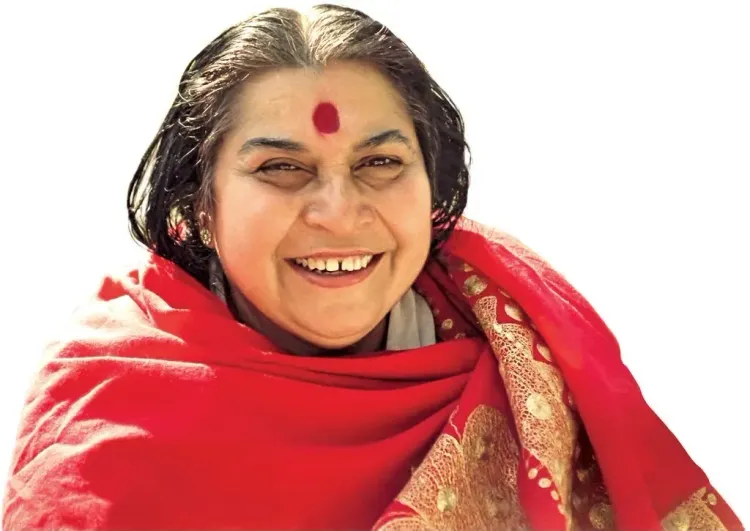
As International Day of Yoga approaches on 21 June, a section of practitioners of Sahaj Yoga — the meditation system founded by Shri Mataji Nirmala Devi — has issued a formal appeal urging UNESCO and international heritage bodies to recognise Sahaj Yoga as an Intangible Cultural Heritage of Humanity. The call, articulated from New Delhi, also demands stronger institutional and legal protections for the movement's global assets and teachings.
The Core Demand: UNESCO Recognition
Proponents argue that Sahaj Yoga's contribution to human well-being, global peace, and what they describe as 'spiritual ascension' qualifies it for formal protection under international heritage frameworks. The appeal specifically calls on UNESCO to register and protect Sahaj Yoga as an intangible cultural heritage, and urges world heritage councils to designate the holy sites, ashrams, and international centres established by Shri Mataji Nirmala Devi as sacred monuments of global spiritual history.
According to the appeal, this designation is sought not for prestige, but for 'structural preservation' — ensuring that the practice is shielded by international protocols for future generations.
What Is Sahaj Yoga?
Sahaj Yoga was founded by Shri Mataji Nirmala Devi and is described by its practitioners as a form of meditation centred on spontaneous Kundalini awakening — the activation of a subtle energy said to reside at the base of the spine. Practitioners claim it operates on the body's subtle energy centres, known as chakras, and influences the sympathetic and parasympathetic nervous systems. The movement has centres across multiple countries and has been practised globally for several decades.
The appeal's author, Ashwani Kaushik, a practitioner since 2004 and a former trustee of The Life Eternal Trust, Delhi, cites a personal account of an individual who reportedly recovered from severe psychiatric illness and epilepsy-like disorders — including sixteen Electroconvulsive Therapy (ECT) sessions within a single month — and subsequently stabilised through Sahaj Yoga practice. The account is presented as illustrative of the practice's claimed therapeutic impact, though no independent clinical verification is cited.
The Call for Stronger Internal Governance
Beyond external recognition, the appeal raises pointed concerns about the movement's internal institutional framework. It calls for standardised trust laws worldwide to codify the teachings of Shri Mataji Nirmala Devi into legally binding frameworks — preventing what the author describes as 'divergent views, personal interpretations, or ego-driven distortions' from diluting the original teachings.
The appeal also demands legal protection for properties and ashrams that Shri Mataji visited or resided in, warning that weak trust rules leave these sites vulnerable to 'local disputes, financial mismanagement, or secular inheritance claims.'
The Succession Question
A significant portion of the appeal addresses the question of spiritual and administrative succession. The author states that Shri Mataji Nirmala Devi never declared a successor, and that her spiritual authority 'cannot be inherited, passed down, or claimed by any individual, council, or biological family member.' The appeal explicitly notes that, according to practitioners, Shri Mataji herself stated on multiple occasions that her biological family has no role in the spiritual domain of Sahaj Yoga.
The author urges the global Sahaj Yoga collective to ensure that private family claims 'never supersede or interfere' with the governance of the movement, which, the appeal argues, belongs to 'genuine seekers of truth' guided by the founder's original teachings.
Context and What Comes Next
The appeal comes as World Yoga Day on 21 June draws renewed global attention to India's diverse yoga traditions. UNESCO recognised yoga as an Intangible Cultural Heritage in 2016, a designation that covered the broader tradition. Whether a specific sub-tradition such as Sahaj Yoga can secure a separate or supplementary listing would depend on UNESCO's evaluation criteria and the submission of a formal dossier by a member state. No official government endorsement of this particular appeal has been reported. The movement's next steps in formalising this bid will be closely watched by both heritage observers and the broader yoga community.
Point of View
Family claims, and trust law occupy more space than the UNESCO ask itself, signalling that the movement faces live institutional tensions. The heritage argument, while earnest, faces a structural hurdle: UNESCO's 2016 yoga listing covered the broader tradition, and carving out a sub-tradition requires a government-backed dossier, not a practitioner petition. More significantly, the appeal's insistence on legally codifying a single interpretation of the founder's teachings — and explicitly excluding biological family from governance — suggests disputes that formal recognition alone cannot resolve. The movement's credibility in the eyes of international bodies will depend less on the strength of its heritage claim and more on whether it can demonstrate transparent, accountable governance at home.
NationPress
16 Sept 2026
Frequently Asked Questions
What is Sahaj Yoga and who founded it?
Sahaj Yoga is a meditation system founded by Shri Mataji Nirmala Devi, centred on what practitioners describe as spontaneous Kundalini awakening and the activation of subtle energy centres called chakras. It has been practised globally for several decades and has centres across multiple countries.
What are Sahaj Yoga practitioners demanding from UNESCO?
Practitioners are calling on UNESCO to formally register Sahaj Yoga as an Intangible Cultural Heritage of Humanity, and on world heritage councils to designate ashrams and sites associated with Shri Mataji Nirmala Devi as sacred monuments of global spiritual history. The appeal seeks structural preservation, not prestige.
Has UNESCO already recognised yoga as a heritage practice?
Yes. UNESCO inscribed yoga on its Representative List of Intangible Cultural Heritage of Humanity in 2016, covering the broader tradition. A separate or supplementary listing for Sahaj Yoga specifically would require a formal dossier submitted by a UNESCO member state — no such government endorsement has been reported.
Why does the appeal address succession and family claims?
The appeal states that Shri Mataji Nirmala Devi never declared a successor and that her biological family holds no governance or property rights over the movement. The author warns that weak institutional laws leave sacred sites and teachings vulnerable to inheritance claims and fragmentation, and calls for legally binding global trust frameworks to prevent this.
Who authored this appeal and what is their standing in the movement?
The appeal was written by Ashwani Kaushik, who has practised Sahaj Yoga since 2004 and is a former trustee of The Life Eternal Trust, Delhi. The views expressed are stated to be his own and do not represent an official position of any Sahaj Yoga organisation.